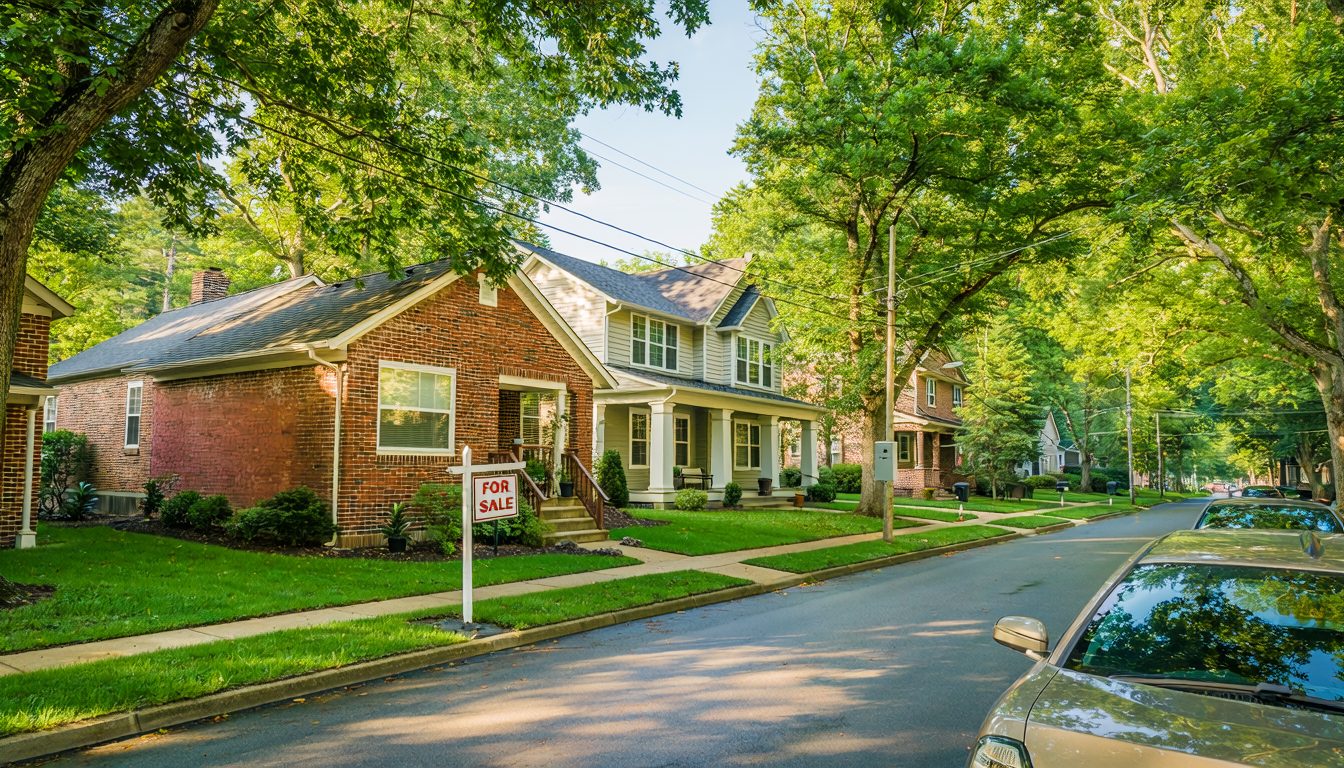
Nashville’s housing market has tilted toward buyers, but the shift is far from uniform. Conditions vary sharply by price point, property type, and neighborhood, so the leverage a buyer holds depends on what and where they’re shopping.
National rankings capture the tilt but not the variation: Redfin has named Nashville America’s strongest buyer’s market twice this year, and Greater Nashville Realtors counted nearly seven months of inventory across the region in October, past the roughly six months generally considered a balanced market, with the average single-family home taking about two months to sell, slightly longer than a year earlier and long enough to give buyers time to compare and negotiate.
“A buyer’s market doesn’t automatically mean you get to negotiate down,” says Josh Anderson, founder of The Anderson Group Real Estate Services in Nashville. “We’re still getting multiple offers right now, we’re still getting over asking price, and we’re also still getting close to asking price.”
A Divided Market
The sharpest divide in Nashville runs along price. Below $500,000, sales have dipped, and deals that reach contract can unravel at inspection. Anderson traces the problem to cash flow: owners at lower price points are more likely to put off routine servicing on major systems, and that deferred maintenance surfaces when a buyer’s inspector walks through. “For somebody that’s already strapped from a cash flow perspective, an extra $250 is a big deal,” he says.
The upper end tells a different story. Sales between $1.5 million and $5 million have actually risen, and by Anderson’s count, more than a third of September’s sales in that range closed at or above asking price. Inspections rarely derail those deals, he says, because owners of higher-end homes keep their houses maintained. “Every major component of their home is on a service contract,” he says.
Downtown condominiums are where buyers hold the most leverage. Anderson puts downtown condo inventory at 22 months of supply, more than three times the regional level, and calls the glut “massive.” Buyers there can pick and choose, and those willing to make offers across several buildings can likely land a strong deal. Still, not every seller is motivated. “You just got to find the one that is or that wants to be done with it,” Anderson says.
How Nashville Buyers Search
Beyond price point, Nashville’s buyers search with a distinctly local set of questions, and those questions narrow the competition far below what regional inventory suggests. Many are relocating, and Anderson says his daily calls cover the same ground: Franklin or Brentwood, which public and private schools, which private clubs, and where in the area someone can live on a lake, a short list in Nashville. Some are still choosing among Nashville, Knoxville, and Chattanooga.
Once those choices are made, buyers set their must-haves and a price ceiling on the major portals, and only a handful of homes lands side by side on their screen. Anderson builds his pricing around that comparison set: homes within a mile with the same bedroom count and square footage, then finer distinctions such as a two-car garage, hardwood floors, or distance from an interstate or a rail line. Even in Nashville’s most sought-after family neighborhoods, he adds, not every house draws the same demand.
Within that small set of rivals, presentation decides which home a buyer picks, and that works in favor of sellers who prepare. Anderson stresses positioning: curb appeal, finishes, and floor plan, all judged against the homes a buyer will see alongside the listing. One recent seller spent roughly $25,000 on pressure washing, window cleaning, a deep clean, fresh paint, and updates. The home drew a full-price offer from its first showing, and the buyer asked that the listing come down by midnight.
Where Buyers Come From
Nashville’s pull on outsiders keeps relocating buyers in the market even as local demand cools. Agents in other markets refer about a fifth of the Anderson Group’s business each year. Historically, the largest share of those buyers came from the Los Angeles area and greater Chicago. Californians, Anderson says, often arrive tired of the state’s rules and tax burden and drawn by Tennessee’s lack of a state income tax, while Chicago-area buyers cite weak job creation and high property taxes.
Over the past year or two, Anderson has seen growing interest from Texas and Florida, including buyers from Palm Beach, Orlando, and Tampa. One Orlando client told him he was drawn by Nashville’s green space and the sight of residents out walking with strollers and dogs. For all that inbound movement, Nashville isn’t losing many residents to other metros, Anderson says; its biggest outflow runs from the city to its own suburbs.
Beyond the Headline
That range of buyers, price points, and neighborhoods explains why Anderson considers Nashville one of the most misunderstood markets in the country. Consumers read the headline, he says, and assume a buyer’s market entitles them to 10 or 20 percent off any asking price. Buyers do have more choices and more time than they’ve had in years, and some homes sit because sellers overpriced them. But many sellers aren’t desperate, and the best homes still draw competition.
The segment matters more than the label. A downtown condo buyer holds real leverage, while a family competing for a home in one of the city’s most desirable neighborhoods may still face multiple offers and a sale in under 30 days. “Every market is kind of a market of markets,” Anderson says. “There are tons of real estate markets inside of Nashville.”
About the Expert: Josh Anderson is the founder and CEO of The Anderson Group Real Estate Services, a residential real estate team in Nashville, Tennessee.
This article is intended for informational purposes only and does not constitute legal, financial, or investment advice. The views and opinions expressed herein reflect those of the individuals quoted and do not represent an endorsement of any company, product, or service mentioned. Readers should conduct their own due diligence and consult qualified professionals before making any investment decisions.