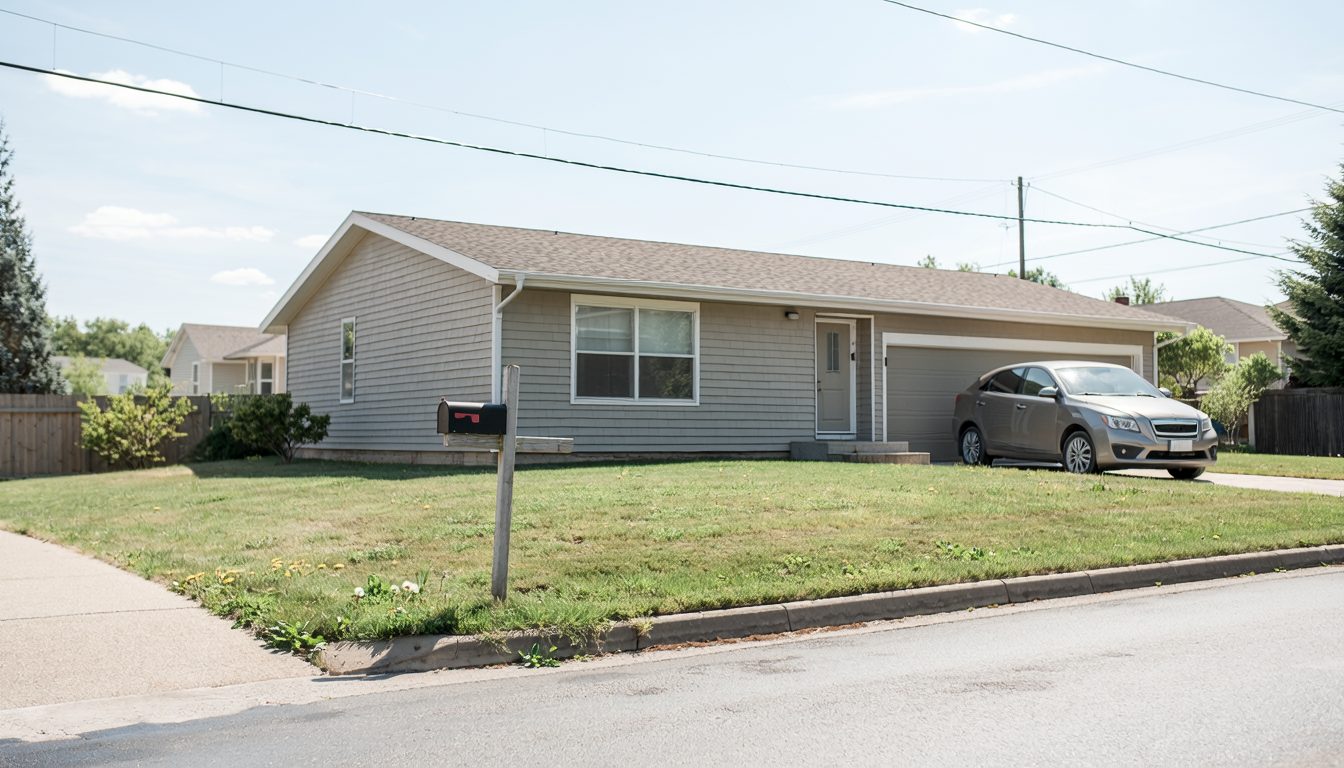
In Hampton Roads, Virginia, military families who transfer out often keep their homes rather than sell them, renting them out and watching the market from a distance while they decide whether to return or liquidate. For those families, renting is a hedge against the military’s next move: they hold on to the house so they won’t have to buy all over again if new orders bring them back.
Because that wait can stretch for years, each family that chooses to rent rather than sell keeps a home off the resale market for as long as the question stays open. In a metro built around one of the largest concentrations of military installations in the country, those decisions, repeated with every round of transfers, help determine how much of the region’s housing ever reaches buyers.
That restraint on supply comes as the broader market changes. After roughly six years as a seller’s market, Hampton Roads is shifting toward buyers: inventory is slowly growing, and the competing bids and escalation clauses of the post-2020 period are giving way to something closer to balance. The homes military families hold as rentals haven’t reversed that shift, but they help explain why more listings haven’t brought lower prices.
Orders Over Preferences
Much of the housing demand in Hampton Roads runs on a military calendar rather than on interest rates or personal timing. The region is home to Naval Station Norfolk, the world’s largest naval base, and more than a dozen other installations, and their transfer cycles set the pace for a large share of local buyers and sellers.
Kelly Hollowell, who has worked the Hampton Roads market for more than 31 years with the Hollowell Group, estimates that military buyers and sellers make up roughly a third of her business. Their buying process is compressed by design. Service members often arrive for three or four days, tour 20 to 30 homes, rank their top choices, and try to secure one before returning to their current duty station to pack up. They typically make the move within 45 to 60 days.
Orders govern the entire process. “Without final orders, you can’t follow through on the purchase,” Hollowell says. Agents and sellers have learned not to accept a contract until a buyer’s orders are final, because the military can change a duty station late. One of Hollowell’s buyers this year learned of a change roughly 30 days before he was due to report. When that happens after a contract is signed, the seller bears most of the damage, having taken the house off the market for nothing.
The Reluctant Landlords
The same orders that compress the buying process also decide what happens when those owners leave. Whether a departing family sells or holds depends on the cost of living at the next duty station and on whether they expect to come back. When the next station costs more than Norfolk, families often sell to free up capital for a purchase there, according to Hollowell. But if they bought within their financial comfort zone and see a chance of returning, they rent the home out, typically for two to five years, rather than face buying all over again when they come back.
That holding period is what turns a personal decision into a supply question. Each of those homes is one a transferred family might otherwise have listed, and it stays off the resale market for as long as its owners wait on the military’s next decision. If orders never bring them back, the property shifts from placeholder to long-term hold. “They become an investor versus the property becomes an investment,” Hollowell says. “And they’re looking to figure out when the best market is to liquidate it.” At that point, market conditions rather than a moving date decide when the house finally sells.
An Aging Client Base
A second, slower pattern is reshaping Hollowell’s business from the other end of the age spectrum. As her longtime clients age, a growing share of her transactions involves elderly homeowners downsizing or liquidating, often to move into assisted living or closer to children and grandchildren in other states. She has handled three such sales in the past six months, with more in progress.
The friction in these deals is rarely financial, since many of these owners have paid off their homes. Nor are low mortgage rates holding them in place, Hollowell says. The obstacle is emotional and logistical. “They don’t really want to leave their familiar grocery store, dry cleaner, medical people,” she says.
Hollowell urges these clients to start passing along what matters most to them while they still can, calling it the best gift they can give their families. When owners don’t plan ahead, the work falls to their children, and communication among siblings becomes the biggest bottleneck, from establishing who can legally sell to going through the house. With heirs often living out of state and working full time, clearing out an inherited home commonly takes 10 to 12 months or longer.
The Affordability Ceiling
Across all of these groups, from military families to downsizers and heirs, the constraint Hollowell watches most closely is cost. Hampton Roads has historically avoided the pricing extremes of larger metros in the region; its highs and lows have never matched those of Richmond, Washington, D.C., or Charlotte, she notes.
That relative calm hasn’t made the region cheap, though, and Hollowell expects what it actually costs to rent or buy in Hampton Roads to be the biggest hurdle heading into 2027.
Demand, meanwhile, hasn’t stalled. Homes are still going under contract at a steady weekly pace even though fall is outside the peak military relocation season, which Hollowell attributes to move-up buyers and to first-time buyers leaving apartments.
Why Newcomers Stay
What keeps demand steady despite those costs is the region’s ability to hold on to people who arrive for other reasons. Hollowell points to Old Dominion University, which absorbed Eastern Virginia Medical School in 2024, and Norfolk State University as a pipeline of residents who come for school or training and decide to stay. Military families follow the same arc, returning to retire in a place they already know. Part of the appeal is ease of movement: from Chesapeake, the beach is 30 minutes away or less, and Hollowell says most of what the region offers lies within 20 to 30 minutes.
That steady inflow helps keep prices firm even as inventory grows, and firm prices favor the transferred military families holding rentals across the region. With values still climbing, little pushes them to sell before their next set of orders settles whether they’re coming back.
About the Expert: Kelly Hollowell is a real estate agent with the Hollowell Group at Berkshire Hathaway HomeServices RW Towne Realty in the Norfolk and Chesapeake, Virginia, area.
This article is intended for informational purposes only and does not constitute legal, financial, or investment advice. The views and opinions expressed herein reflect those of the individuals quoted and do not represent an endorsement of any company, product, or service mentioned. Readers should conduct their own due diligence and consult qualified professionals before making any investment decisions.