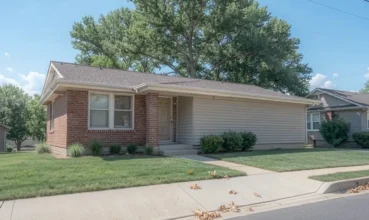
The assumption that New York City homeownership requires seven figures or generational wealth is so entrenched that many buyers never bother to look. But in the outer boroughs, entry-level properties are closing right now at prices that contradict that narrative entirely.
Jonathan Ettricks, a Realtor with Berkshire Hathaway HomeServices Laffey International Realty, works across Queens, Brooklyn, and the Bronx. He recently closed a one-bedroom cooperative apartment in the Bronx for $150,000. The buyer relocated from Manhattan’s East Side. In another deal, a young couple expecting their first child purchased a co-op townhouse in Bayside, Queens, for $400,000. These are not outliers buried in a data set. They are closed transactions that push back against the blanket assumption that buying in New York City is out of reach.
Where the Affordable Inventory Actually Sits
The disconnect starts with how people think about the city’s geography. When most out-of-state buyers picture New York, they picture Manhattan pricing. But Ettricks says Queens alone contains multiple distinct markets. “Queens is not one real estate market,” he says. “You have different neighborhoods and different property types and even sometimes different blocks.”
Northwest Queens – Astoria, Long Island City – draws buyers who want walkability and proximity to Manhattan. Prices there run higher. Central Queens neighborhoods like Forest Hills and Kew Gardens offer lower prices while still providing subway access to Midtown, according to Ettricks. Further-out communities like Queens Village and Bayside feature single-family homes and co-ops at levels that would surprise anyone anchored to Manhattan benchmarks.
Co-ops represent the most accessible entry point. They tend to cost less than condos or single-family homes in the same area. The trade-off is a longer, more complex purchase process. Ettricks says some co-op transactions have taken as long as a year to close due to board approvals and paperwork – a timeline that can test a buyer’s patience and is worth understanding before committing.
Why the Myth Persists
National media coverage of New York housing almost always focuses on the most expensive segments – luxury penthouses, bidding wars in Brooklyn brownstone territory, record-setting condo sales. That coverage shapes perception far beyond the city’s borders.
“There’s this myth that New York City is completely unaffordable, and that’s not the reality,” Ettricks says. He sees the myth doing real damage because it keeps qualified buyers from starting the search. A buyer who assumes the city is out of reach never talks to a lender, never learns about assistance programs, and never discovers that a $400,000 townhouse in Bayside might actually fit their budget.
About 60 percent of Ettricks’s clients are local, but he is seeing a growing share – roughly 40 percent – coming from out of state or internationally. Many of those relocating buyers initially looked only at Manhattan or Brooklyn before discovering that Queens offered more for their money.
The Barriers That Remain
None of this means Queens is cheap in an absolute sense. Single-family homes in Queens Village are listing at $600,000 to $900,000, which is steep by most national standards. And low inventory across the borough means well-priced properties attract serious competition quickly.
Financing remains a real barrier. Ettricks says qualifying criteria have tightened, and the combination of higher interest rates and sticky prices means monthly payments are harder to stomach than they were a few years ago. Deals that fall apart during the financing process are a persistent challenge.
Pricing and presentation also determine how long a property sits. Ettricks says that in a low-inventory environment, some sellers assume any listing will sell at any price. “There’s this idea that you can just put anything on the market and it will sell at any price point. This is not the case,” he says. “Pricing and presentation still matter.” Properties that linger on the market are most often overpriced or poorly marketed, according to Ettricks.
He also points to alternative deal structures gaining visibility in the market. Seller financing, lease-to-own arrangements, and other non-traditional approaches are appearing more frequently in listings. “I am seeing more brokers advertise seller financing in their advertising than I probably have ever seen,” he says. In a seller-financed deal, the seller holds the debt rather than a bank – an arrangement that does not work for every seller but can make terms as important as price when conventional financing is difficult to secure.
For buyers who have written off the entire city without examining the numbers, the gap between perception and reality is wide. The $150,000 Bronx co-op and the $400,000 Bayside townhouse are recent closings, not fantasy listings. As Ettricks frames it, “The question isn’t simply whether it’s a good time to buy or sell. The question I ask is whether it’s a good time for you.”
About the Expert: Jonathan Ettricks is a Realtor with Berkshire Hathaway HomeServices Laffey International Realty, working across Queens, Brooklyn, the Bronx, and Manhattan.
This article is intended for informational purposes only and does not constitute legal, financial, or investment advice. The views and opinions expressed herein reflect those of the individuals quoted and do not represent an endorsement of any company, product, or service mentioned. Readers should conduct their own due diligence and consult qualified professionals before making any investment decisions.