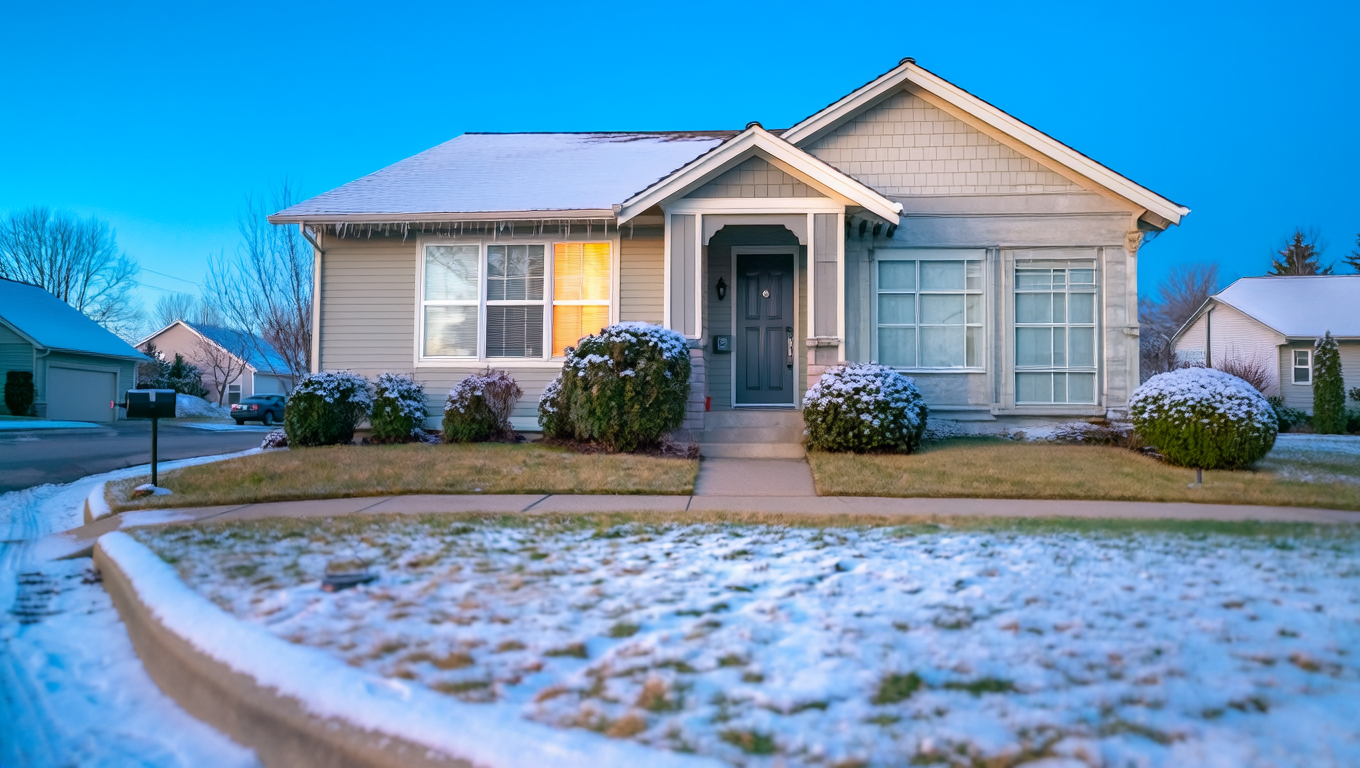
Thinking of selling this winter? Well, get in line.
Sellers now face fewer buyers and more competing listings than at any point in more than a decade, according to Redfin. In September, sellers outnumbered buyers by an estimated 62.6%, the widest gap in records dating to 2013.
Those figures describe the country as a whole, though, and individual sellers face local markets that can look very different, from a Sun Belt surplus of listings to persistent shortages in Rochester, Minnesota, and upstate New York.
Despite those differences, agents in five markets agree on what gets a home sold: knowing the likely buyer, fixing what an inspector will find, pricing to draw competition, and protecting the deal after both parties sign.
Winter Deals Hold Up
Although many sellers are tempted to hold off until spring, the data suggests waiting buys them less than they might think. A long-running analysis by property data company ATTOM found that deals closing in the depths of winter fetch nearly as much, relative to each home’s value, as those closing at the spring peak.
Matthew Sharman, who leads the Sharman Team with Real Brokerage in upstate New York, frames the timing question as one of control. “I want clients to feel like they’re making a controlled decision and not just reacting emotionally to a confusing market,” he says.
Local buying calendars favor sellers who are ready early. In Rochester, Minnesota, newly graduated doctors learn their Mayo Clinic residency matches around mid-March, says Alex Mayer, a broker with eXp Realty, and they start house hunting right away.
On the Jersey Shore, Carly Ringer, an agent with Keller Williams, sees buyers return in late February. “Usually, March, April, May, we can’t breathe,” she says.
In the Greater Rochester area, Sharman says well-priced homes go “flying off the shelves within a week or less.” Sellers there also commonly set offer deadlines, which turn whatever demand exists, even winter’s thinner pool, into competition over price and terms.
A home that lists in winter is ready when those buyers arrive, and reaches them before the spring wave of competing listings.
Identify the Buyer
That preparation starts with a question many listings skip: who is the most likely buyer for this house? Bent Danholm, broker and owner of Danholm Collection in Central Florida, builds each listing around a profile of that buyer, including income, profession, family size, interests and where the buyer lives now, before deciding what marketing to produce and where to place it.
“Everybody does video, everybody has photos, everybody has floor plans,” Danholm says. “But if you don’t know who to present these things to, your listings are going to sit for a very long time.” In one Winter Garden community where homes averaged 120 days to contract, his first three listings went under contract in 22, 28 and 72 days. The slowest of the three was the one he listed above what he believed it was worth, and together they pulled the community’s average down to 78 days.
Sharman puts it the same way. “The better question is: Who is the buyer, what do they value, and then how do we create competition around that?” he says. In practice, the answer shapes the photography, the listing language, the timing of the launch and how the negotiation is structured. “A good listing doesn’t just appear online. It enters the market with momentum.”
Fix Before Inspection
Once the right buyer arrives, the house has to survive scrutiny, and in a buyer’s market an inspection report becomes a negotiating document. Redfin reports that buyers with alternatives walk away more readily when an inspection turns up problems, and it suggests sellers commission their own inspection before listing so that defects surface on the seller’s timeline rather than the buyer’s.
In central Austin, much of it built from the 1950s through the ’70s, Kathy Sokolic, co-founder of the Mueller Residential Group, names cast-iron plumbing as one of the biggest deal killers. The old drain lines rust and fail, and a failed line can leave water pooling under the foundation. Replacing them with PVC is costly, and buyers often walk if the seller won’t replace them or offer a concession to cover the cost.
Sharman tackles the problem before a buyer ever sees the house, sorting possible work into what will return the most money, what is worth doing and what is merely polish. That triage matters more as repair costs climb. “The cost of fixing things is forever increasing,” Ringer says.
Price to Draw Offers
A well-prepared house still needs the right price, and in markets where buyers have options, a price set high to leave room for negotiation backfires. Buyers notice the listing but don’t act. “They’ll put the little heart mark on and they’ll follow it, but they are not doing anything until they drop your price,” Danholm says.
When the cut comes, the same buyers often arrive with aggressive offers, and the seller nets less than a realistic price would have produced. Danholm would rather price slightly below what a seller expects, which creates urgency and draws competing offers. “I can spend as much money as I want on marketing,” Danholm says. “If the thing isn’t priced right, it’s not going to sell.”
A lingering listing costs more than money. Mayer warns sellers with children or pets about “months of showings where you have to be out of the house on a two-hour showing notice.”
Ringer cautions sellers against taking their cue from national headlines, which often count cuts to asking prices rather than closed sales. On the Jersey Shore, she notes, closing prices have kept rising even as sellers who listed well above them had to come down, so the right number comes from recent local sales. “What’s going on in Omaha might not be what’s happening in Spring Lake,” she says.
Make the Right Concessions
Even a well-priced house rarely sells at the asking price alone anymore. Nearly half of U.S. home sales now include a concession, usually money toward closing costs, repairs or a lower mortgage rate, according to Redfin. How much a seller should expect to give depends largely on location: concessions are close to routine in crowded Sun Belt markets and rare in tight ones such as New York. Holding out can cost more: in roughly one in six sales, Redfin found, the seller both cut the price and granted a concession.
In Austin, Sokolic sees buyers asking for repairs and help with closing costs that sellers would have refused a few years back. One first-time buyer of a duplex had a low offer accepted, then still negotiated $5,000 for repairs.
When another seller offered only $3,000 toward a house that needed extensive cosmetic work, her clients didn’t bid. “That’s nothing in this market,” she says. Sellers who hold to a fixed bottom price, she finds, tend to wait or pull the listing rather than sell.
Hold the Deal Together
Even a signed contract isn’t a sale. Nationally, 14% of home-purchase agreements fell through in July, the highest share in nearly three years, Redfin reports, usually over inspection problems, low appraisals or refused concessions. The Orlando region ranks among the metros with the highest cancellation rates, yet Danholm’s deals haven’t fallen apart in roughly a year, which he credits to buyers who mostly pay cash.
Sellers can undo deals, too. Ringer has watched sellers walk away during inspection negotiations, confident another buyer is waiting. In New Jersey, “if a deal falls through because of inspections, you have to disclose whatever was wrong,” she says, and a house with a known defect draws fewer buyers and a lower price. A seller, she argues, may net more by working through the original buyer’s requests.
Buyers have an exit of their own. New Jersey’s attorney review period, typically three days, lets either side cancel, and Ringer sees second thoughts surface there as rising inventory gives buyers more alternatives. Sellers who answer questions quickly and keep the transaction moving give those doubts less room to grow.
Across all five markets, a home sells when the seller knows the buyer, removes surprises before an inspector finds them, prices to start competition and treats a signed contract as a deal still in progress.
About the Experts: Bent Danholm is the broker and owner of Danholm Collection in Central Florida. Kathy Sokolic is co-founder of the Mueller Residential Group, a Realty Austin | Compass team in Austin, Texas. Alex Mayer is a broker with eXp Realty in Rochester, Minnesota. Carly Ringer is an agent with Keller Williams in Spring Lake, New Jersey. Matthew Sharman leads the Sharman Team with Real Brokerage in Greater Rochester and the Finger Lakes region of New York.
This article is intended for informational purposes only and does not constitute legal, financial, or investment advice. The views and opinions expressed herein reflect those of the individuals quoted and do not represent an endorsement of any company, product, or service mentioned. Readers should conduct their own due diligence and consult qualified professionals before making any investment decisions.