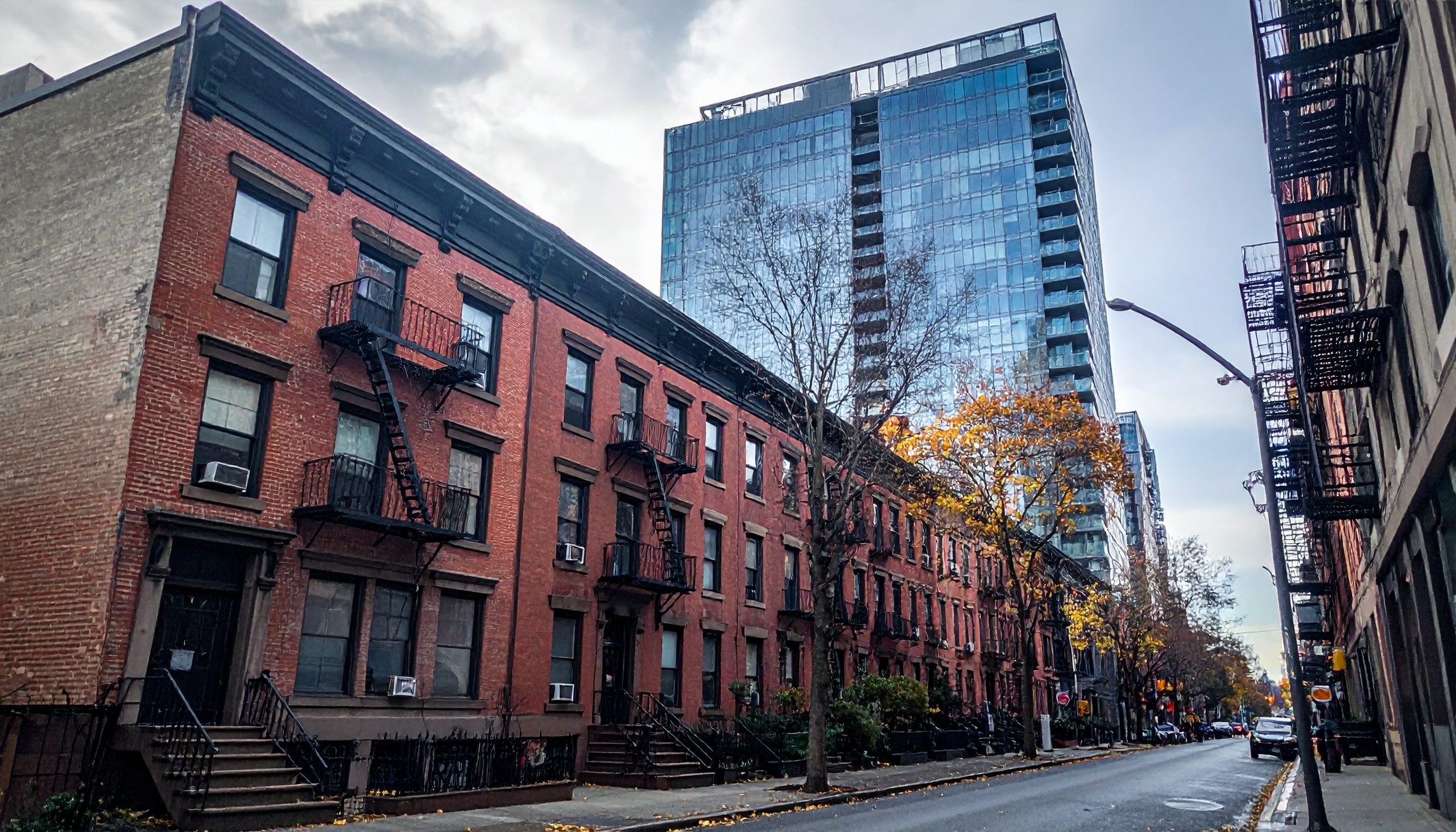
Manhattan’s housing data tells a story of strength. The median sale price hit a record earlier this year on the strength of new-development closings, rents keep setting new highs, and the luxury segment is posting some of its busiest contract weeks in years. Yet those numbers are driven by a narrow slice of the market, and they say little about what most buyers and sellers are actually experiencing.
“They’re telling a story, but they’re not using the entire story,” says Scott Fava, who has worked in Manhattan real estate since 2005 and leads the Fava Team at Compass, focusing on downtown Manhattan and Brooklyn.
Beneath the record-setting tier, Fava sees a market sorting itself by condition, location, and access to cash. Turnkey homes in prime buildings still sell. Everything else waits. Buyers who can pay without a mortgage keep moving, while those who depend on financing absorb the full weight of higher borrowing costs. Layered on top is a new tax on high-value second homes that has already changed how some out-of-town buyers approach the city.
Beyond the Headlines
The record figures are real, but Fava says they come mostly from new developments at the ultra-high end. Those projects sell at staggering price-per-square-foot levels, and their weight pulls market-wide statistics upward. A headline about a building trading at $5,000 per square foot becomes shorthand for the whole city.
The broader picture is less uniform. Listings that lack pristine condition, a prime location, strong views, or high-end amenities are taking considerably longer to sell than turnkey homes in desirable buildings, and certain price points are drifting lower. “It’s like a tale between two different homes,” Fava says. “The disparity is real.”
For buyers, that gap is visible on the ground long before it appears in quarterly reports. Fava notes that prices have softened somewhat on the sales side and the distance between what buyers offer and what sellers expect is narrowing. Investor clients who spent one to two years studying the market are now ready to move quickly when the right property surfaces.
Cash Versus Credit
The sharpest divide Fava describes is between buyers who need a mortgage and those who do not. The luxury segment, defined in New York as $4 million and above, has seen what he believes is its strongest week-over-week contract production in five years. “People with money are making moves,” he says.
Below that level, financing changes the math. Buyers at the more modest end of the market usually depend on a mortgage, so every increase in borrowing costs shrinks how much home they can afford. Wealthier buyers who can pay largely in cash barely feel the same shift. “If interest rates were half of what they were a few years ago and they’re double now, then your purchasing power goes down,” Fava says. “It’s affecting real New Yorkers and people who live here dramatically.”
That leaves the market with a split that aggregate data tends to blur. Activity at the top can lift contract counts and average prices even as financed buyers in the middle of the market scale back what they can afford. Fava says more than half of his clients are local, which means much of the pressure falls on residents rather than on investors from elsewhere.
A Tax Already Felt
For out-of-town buyers at the top of the market, the new pied-à-terre tax has added another layer of hesitation. The annual surcharge on high-value second homes owned by people who live outside the city is now law, but its rollout has been anything but smooth. Court challenges and unresolved questions about how it will be applied leave many buyers unsure what they will ultimately owe.
Fava says the tax has had a mostly negative effect on his deals. Some new buyers and repeat clients have paused their searches. One client who had been shopping for a luxury second home well above the tax threshold has put his search on hold until the picture becomes clearer, rather than commit to a purchase that could carry a significant new yearly cost.
Others are adjusting. Some buyers are lowering their target price to stay under the $5 million threshold, while others are looking elsewhere entirely. “Miami has been a target for a lot of people,” Fava says, along with parts of the South and other states with what he describes as more investor-friendly policies. “No one’s rushing into anything.”
The Rent-or-Sell Trap
High rents have tempted some would-be sellers to lease their homes instead, but Fava calls it a catch-22. An owner who rents out an apartment still needs somewhere to live, and the replacement will likely come at the same elevated rents. “No one’s going to rent unless they have a place to go,” he says.
Several of his clients considered leasing rather than selling into a softer market, then decided against becoming landlords. The owners who benefit most are investors who already hold multiple properties. Fava says some of them can now charge far more in rent than they could just a year or so ago, gains that outpace even the record rent growth across the wider Manhattan market.
For single-property owners, the choice is narrower: wait for conditions to improve, or accept that sale prices may be softer than in recent years.
Supply Keeps Tightening
On the supply side, Fava points to a thinner pipeline of new development. Construction and development costs have risen, and the projects coming to market tend either to ask very high prices per square foot or to sit outside prime locations. Neither outcome helps buyers looking for move-in-ready homes in the neighborhoods they want.
Seasonality adds to the slowdown. As winter approaches, fewer buyers are active, and owners who do not need to sell often hold off, keeping new listings scarce. Fava also says the city’s current political climate is less favorable to the real estate industry than in the past, and that the full effects of recent elections will take months to become clear. “Something big happens, and then we have to wait the next month or two to see where the chips fall,” he says.
Some pockets have held up better than others. Fava sees downtown neighborhoods such as Tribeca, the West Village, Greenwich Village, and SoHo as among the most resilient in Manhattan, supported by walkability, restaurants, parks, and neighborhood character. “Even in a down market, you see a lot of deals happening,” he says.
Life events also keep transactions moving regardless of conditions. New jobs, promotions, marriages, children, and divorces continue to drive buyers and sellers into the market. What will matter heading into 2027 is whether borrowing costs ease for financed buyers, how the pied-à-terre tax’s open questions are resolved, and whether new supply recovers. Until then, the Manhattan reflected in record-setting headlines will look quite different from the one most buyers encounter.
About the Expert: Scott Fava leads the Fava Team at Compass, specializing in downtown Manhattan and Brooklyn. He has worked in Manhattan real estate since 2005, advising buyers, sellers, and investors.
This article is based on information provided by the expert source cited above. It is intended for general informational purposes only and does not constitute legal, financial, or real estate advice. Readers should conduct their own research and consult qualified professionals before making any real estate or financial decisions.