Buying a home in New York City has long meant one thing financially: go to a bank, get a mortgage, close the deal. But in Queens, a different kind of listing is appearing more often – one where the seller, not a bank, holds the debt. For buyers struggling to qualify for traditional loans while rates remain elevated, this structure offers an alternative worth understanding.
Jonathan Ettricks, a Realtor with Berkshire Hathaway HomeServices Laffey International Realty covering Queens, Brooklyn, and the Bronx, says the change is visible in real time. “I am seeing more brokers advertise seller financing in their advertising than I probably have ever seen,” he says.
What Seller Financing Looks Like in Practice
Instead of borrowing from a bank, the buyer borrows from the seller. The seller carries the mortgage. Monthly payments go to the seller rather than a lender. The buyer gets the property; the seller gets a steady income stream secured by the home itself.
The arrangement does not work for every seller. The seller needs to own the property free and clear, or close to it, and must be willing to accept payments over time rather than cashing out at closing. That is a narrow set of circumstances. But when the fit is right, it opens a door that traditional financing keeps shut for some buyers.
Ettricks is currently working with a buyer open to purchasing on seller-financing terms. He emphasized that the arrangement requires careful structuring and professional guidance – a poorly drafted agreement can create legal and financial exposure for both sides.
Why This Is Happening Now
Qualifying for a conventional mortgage in Queens has gotten harder. Ettricks describes a market where buyers face tighter lending criteria while prices have stayed firm. What he calls “fractured closings” – deals that collapse during the financing stage – remain a persistent problem.
For buyers caught in that gap – employed and motivated but unable to clear a bank’s underwriting bar – seller financing represents one alternative path. Ettricks also pointed to lease-to-own arrangements as part of a broader set of non-traditional options he is seeing more frequently. “There are other ways to structure the transaction,” he says. “Be open to all of it, because there’s no one game plan that works for everyone.”
The critical caveat is that these structures do not rescue a fundamentally bad purchase. “Alternative financing, it doesn’t make a bad deal, good,” Ettricks says. If the property is overpriced or the buyer cannot realistically handle the payments, creative financing delays the reckoning rather than preventing it. The deal still has to make sense on its own terms.
Terms Can Matter as Much as Price
In a conventional deal, price dominates the negotiation. But when alternative financing enters the picture, the terms – the interest rate the seller charges, the repayment period, the down payment structure – can carry equal weight.
Ettricks put it directly: “The terms can become as important as the price and you can still execute on that.” For a buyer who cannot secure a bank loan at current rates, a seller willing to finance on different terms might make a previously unworkable purchase viable – even if the listed price does not change.
That flexibility cuts both ways. A seller who offers financing might attract buyers who would otherwise be shut out of the market, potentially moving a property that would otherwise sit. But the seller also takes on risk: the buyer could default, collecting payments over years is not the same as walking away from closing with a lump sum, and the seller ties up capital that would otherwise be liquid.
Queens Is Not One Market
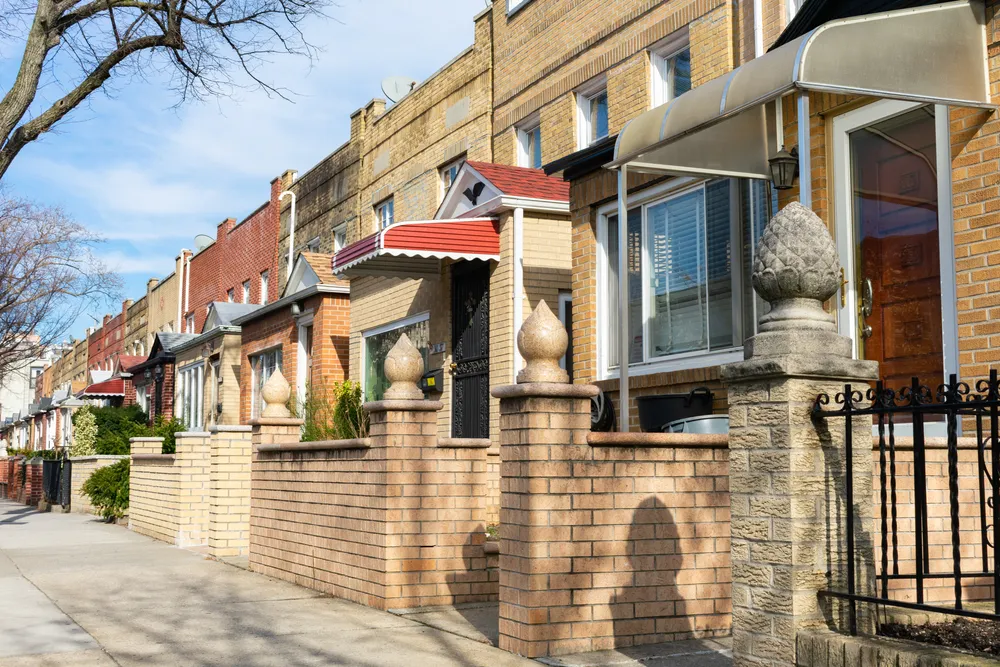
Ettricks says the borough’s diversity is part of what makes financing strategy so variable. “Queens is not one real estate market,” he says. “You have different neighborhoods and different property types and even sometimes different blocks. Neighboring blocks behave so differently.”
That hyperlocal variation means a financing approach that works in one neighborhood may not apply in another. Northwest Queens – Astoria, Long Island City – draws relocating professionals willing to pay more for walkability and proximity to Manhattan. Central Queens – Forest Hills, Kew Gardens – attracts buyers looking for lower prices with strong transit access. And in Queens Village, according to Ettricks, single-family homes priced at $600,000 to $800,000 still find buyers when the value is genuine.
Across all of these areas, Ettricks says the fundamental questions have not changed. Sellers still ask what their property is really worth. Buyers still ask whether they can afford what they want. What has changed is the range of tools available to answer those questions – and his expectation is that agents will spend more time helping clients think through transaction structure, not just price and traditional financing. “The question isn’t simply whether it’s a good time to buy or sell,” he says. “The question I ask is whether it’s a good time for you.”
About the Expert: Jonathan Ettricks is a Realtor with Berkshire Hathaway HomeServices Laffey International Realty, working across Queens, Brooklyn, the Bronx, and Manhattan.
This article is intended for informational purposes only and does not constitute legal, financial, or investment advice. The views and opinions expressed herein reflect those of the individuals quoted and do not represent an endorsement of any company, product, or service mentioned. Readers should conduct their own due diligence and consult qualified professionals before making any investment decisions.