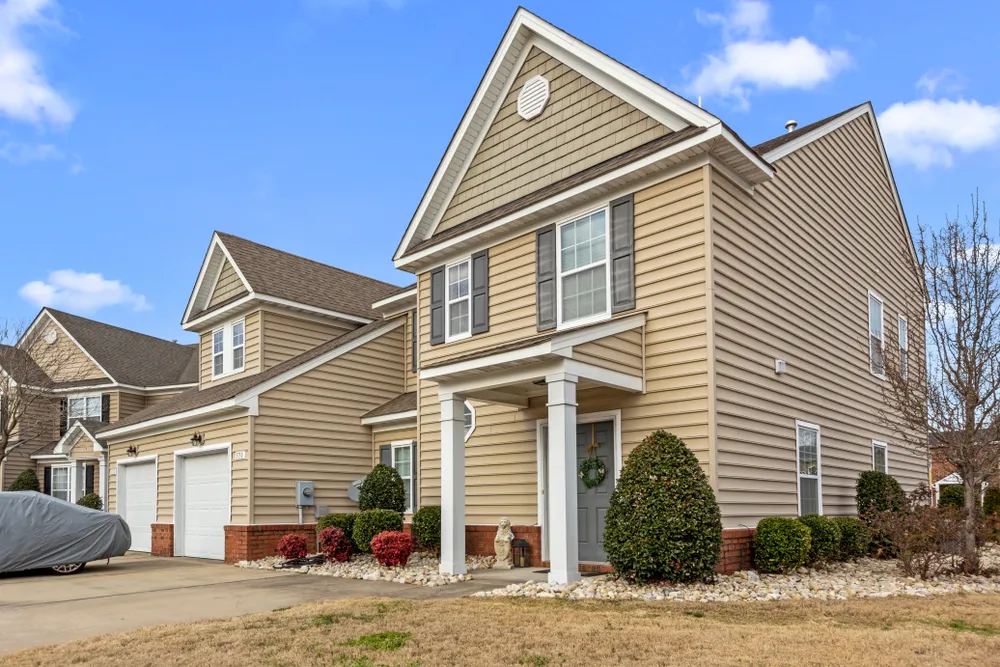
Homeowners trying to sell in Northern Virginia’s master-planned communities are discovering an uncomfortable competitive reality: the builder who sold them their home is still next door, offering incentives they cannot match. Federal job losses are accelerating the problem, pushing recent buyers onto the market before they have built any equity – and before the builder has left the neighborhood.
Allen Johnson, Team Leader / Associate Broker at AJ Team Realty (powered by eXp Realty), leads a team that sells more than 100 homes a year across Prince William County and surrounding areas. He says the pattern is straightforward: a buyer commits to a new build, waits eight to ten months for construction, then discovers their employment situation has changed before they move in.
One recent case illustrates the bind. A client purchased a home in a master-planned community when confidence was high. But “between that eight to 10 months, their employment changed,” Johnson says. Faced with a larger mortgage they could no longer comfortably carry, they chose to sell – even at a loss – rather than hold through an uncertain job market.
Competing Against the Builder’s Own Sales Office
When a resale home hits the market in a community where the builder is still actively selling new units, it is not just another listing on the MLS. It is an alternative to a brand-new home that comes with builder warranties, fresh finishes, and financial incentives designed to move inventory.
Johnson watched this play out in the Quartz District, a mixed-use development in Prince William County anchored by a forthcoming Whole Foods. Sales there have moved slower than the builder projected, he says. The response was predictable: “They not only kept that incentive, but they increased that incentive for the next batch of homes that were being sold.” Builders can absorb short-term margin compression to maintain sales velocity. Individual resale sellers cannot.
That asymmetry means a homeowner who paid full price months ago is now listing next door to a builder offering rate buydowns or closing-cost credits that lower the buyer’s monthly payment. Matching those incentives out of pocket can erase whatever equity the seller had built – if they built any at all.
Why Selling at a Loss Can Still Be the Rational Choice
For the client Johnson described, the decision came down to carrying costs versus a clean exit. Holding a property through months of uncertainty – paying a mortgage on a home you may not want while your job status remains unclear – can cost more than taking a loss on the sale price today. Johnson says the client “decided that it was going to be better for them to lose money on that property than hold it over the long period of time” given the uncertainty.
That calculation depends on realistic expectations about what the current market will bear. In Prince William County, active listings are up 18 percent and new listings are up 10 percent as of mid-2025, according to Johnson’s review of MLS data. More supply means fewer multiple-offer situations and less pricing power for anyone trying to recoup their purchase price quickly.
The Commercial Anchor Question
Johnson believes the Quartz District will ultimately benefit from its commercial components – “the commercial is going to drive the residential,” he says. But for anyone holding a resale unit there now, that future payoff does not solve today’s cash-flow problem. The Whole Foods and surrounding retail have not yet opened, which means the neighborhood’s strongest selling point remains a promise rather than a reality.
Where the Pressure is Worst – and Where It Isn’t
Condos across the DMV are facing the steepest headwinds, Johnson says. Higher condo fees driven by special assessments, rising delinquencies, and multiple units on the same floor competing against each other are all compressing prices. Large master-planned communities where original buyers purchased five to ten years ago and are now “all recycling at the same time” face similar oversupply pressure.
The areas still performing well share a common trait: limited inventory with no active builders. Johnson points to Lake Ridge in Woodbridge, where no new construction exists, and specific zip codes in Manassas where school districts still drive demand. Established areas like Alexandria, Arlington, and Springfield – where buildable land is scarce – remain stronger than communities with active builder competition.
For sellers in builder-active communities, Johnson’s advice is direct: “Price to attract attention and think about the price that gets most buyers in the door instead of the number you think you need to price at.” Median sold prices in Prince William County have dipped only 1 percent so far, suggesting that sellers who adjust expectations early are still finding buyers – just not at the numbers they originally expected.
About the Expert: Allen Johnson is Team Leader and Associate Broker at AJ Team Realty (powered by eXp Realty), and has sold real estate in the Washington, D.C. metropolitan area for 25 years.
This article is intended for informational purposes only and does not constitute legal, financial, or investment advice. The views and opinions expressed herein reflect those of the individuals quoted and do not represent an endorsement of any company, product, or service mentioned. Readers should conduct their own due diligence and consult qualified professionals before making any investment decisions.