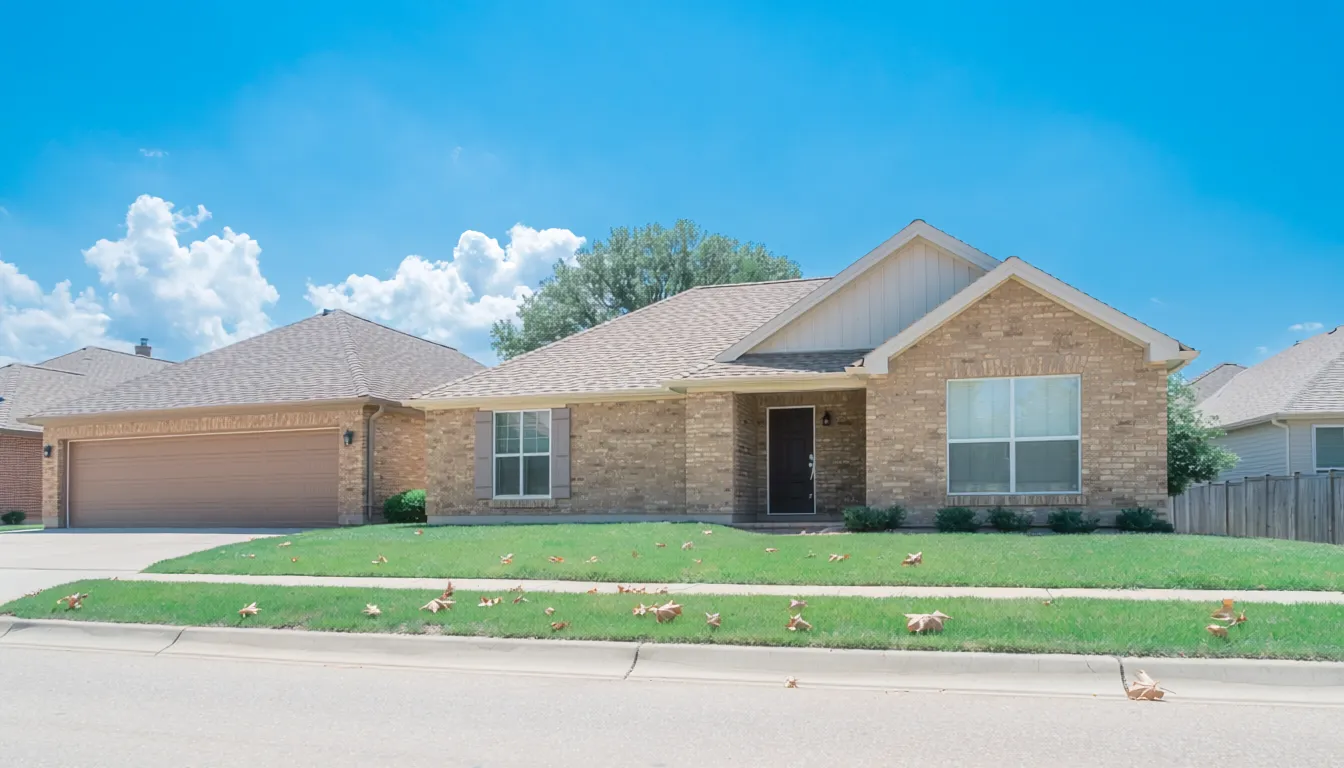
Builders in North Texas are offering interest rates near 4.9% and design-center credits worth $60,000 to $80,000, according to Heather Gill, a residential agent with eXp Realty who has worked the North Texas market for nearly a decade. For resale homeowners trying to sell in the same corridors, that competition is creating a pricing problem that seller nostalgia only makes worse.
The dynamic is direct: when a buyer can get a brand-new home down the street with a subsidized mortgage rate, a resale property that has not been updated has to compete on price in ways many sellers are not prepared for. In some subdivisions, homeowners who bought during the pandemic-era run-up cannot sell for what they paid. Gill describes a colleague’s client facing a short sale because a builder is constructing new homes at a 4.9% rate right down the road. “They can’t even sell their house for what they paid for it,” she says.
The result is a market where condition, location, and pricing precision determine whether a home sells in weeks or sits for months.
Two Deals, Two Outcomes
Gill points to a recent Carrollton listing as an example of what works. The home was in a non-HOA area, zoned for Lewisville ISD – a desirable district in that part of the metro – well-maintained, and priced just below market. It went under contract within two to three weeks. “People recognize the condition, the value, the location,” she says.
A contrasting listing near Texas Motor Speedway in Fort Worth tells the other side. The home was a former rental in decent shape but largely original, not updated. Despite competitive pricing, it was drawing almost no showings. The difference was not just geography. It was the full package: neighborhood desirability, school district, condition, and where the price sat relative to what buyers could get elsewhere, including from builders.
Homes that combine a desirable location, good condition, no HOA, and pricing just below market are the ones moving quickly. Properties missing one or more of those factors are sitting 90, 100, even 120 days.
Seller Psychology Is the Bottleneck
The biggest obstacle Gill sees is not market conditions; it is sellers anchored to prices from two or three years ago. “They get caught in the story of the past,” she says. “The moment that you’re in is a very different moment than it was two or three years ago.”
When sellers price based on what neighbors sold for during the pandemic peak, homes sit. Gill says she pulls reports for clients to show them current conditions, but some remain fixed on what they believe their home should fetch. “If somebody is not in the present moment and in the reality of the moment that we’re in, it’s going to be very frustrating for them.”
Sellers who refuse to negotiate or offer concessions face the same stagnation. Gill says buyers at current rate levels expect to negotiate, ask for concessions, and work toward a number that makes sense for both sides. Sellers who treat those requests as personal affronts rather than market realities end up watching their listings age.
For resale sellers competing against builder incentives, Gill says interest rate buydowns, where the seller helps subsidize a lower initial rate that graduates upward, are one of the more practical tools available. With mortgage rates near 7%, buyers are stretched, and anything that eases monthly costs can shift the calculus in a resale home’s favor.
Where the Opportunity Sits for Buyers
Gill’s advice to buyers is counterintuitive but grounded in basic supply-and-demand math. With rates near 7%, competition is low. Buyers can negotiate, be selective, and secure concessions. “A couple of years ago, you were having to compete with every crazy person on the planet because interest rates were 3%,” she says.
Her argument is practical: buy now while demand is soft, then refinance when rates drop. Many lenders are currently offering refinance terms with minimal out-of-pocket costs, she notes. And if rates were to fall meaningfully, the rush of sidelined buyers would push prices back up and increase what homes cost. “When rates go to 5%, every buyer client I’ve ever talked to would be on the phone calling me,” she says.
For buyers willing to dig, Gill suggests looking past the newest listings. Properties that have sat on the market for 90 or more days represent where the most motivated sellers and the deepest discounts are likely found. Those sellers are asking where their buyer is, she says, and that urgency creates negotiating leverage.
New construction also offers options. Builders across the North Texas suburbs are competing aggressively for buyers. But Gill notes a tradeoff: the most affordable new builds tend to be farther from central Dallas-Fort Worth, which means longer commutes. Buyers weighing builder incentives against resale homes need to factor in quality of life alongside monthly payments.
McKinney’s Next Chapter
McKinney, where the median home price is $510,000, is drawing attention for reasons beyond housing. A $919 million manufacturing facility from a company called LITEON is expected to bring 600 jobs to the area. A new national airport in McKinney, with gates operated by an airline called Avelo Airlines, is set to open in November.
Gill says even if only half those new jobs result in relocations, the added demand for housing could shift conditions on that side of the metro. Near downtown McKinney, flippers are already active, some renovating older homes near the historic square, others demolishing and rebuilding. But the median price makes the math tight for residential investors. “If you’ve never invested before and you’re like, I’m gonna go buy a house in McKinney and renovate it, seriously, work with somebody who knows what they’re doing,” she says. “Know your numbers so you don’t find yourself screwed at the end of the day.”
For investors more broadly, Gill says the current environment rewards those who treat agent relationships as partnerships rather than one-off transactions. She describes fielding constant requests for off-market deals from investors who then list the properties themselves, cutting the agent out entirely. “What’s the incentive for me to work with you if there’s no reciprocity?” she says. Investors who build lasting relationships with agents who know local pricing and deal flow are the ones most likely to find workable opportunities in a market where the easy margins have disappeared.
About the Expert: Heather Gill is a residential agent with eXp Realty who has worked the North Texas market for nearly a decade.
This article is based on information provided by the expert source cited above. It is intended for general informational purposes only and does not constitute legal, financial, or real estate advice. Readers should conduct their own research and consult qualified professionals before making any real estate or financial decisions.