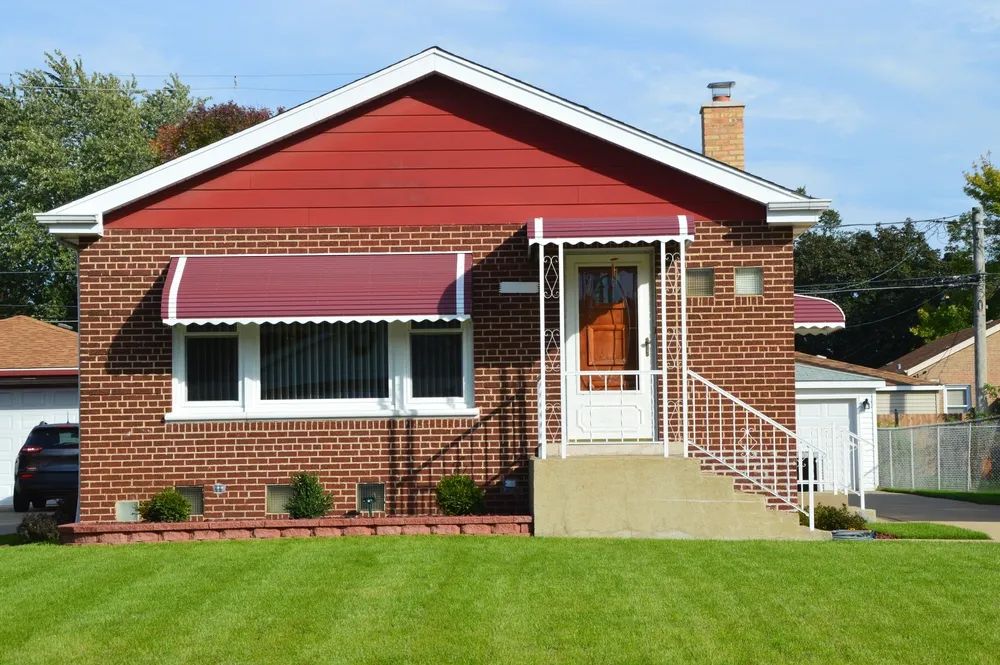
A home on Chicago’s West Side that went under contract in 30 to 40 days three years ago now takes two to three months, according to Esther Gonzalez, a listing agent with Solaris Enterprises Inc. (doing business as Solaris Real Estate). The properties haven’t changed. Neither have the asking prices. What changed is the cost of borrowing, and the distance between what sellers believe their home is worth and what buyers can actually qualify to purchase at current interest rates.
Gonzalez has worked the Humboldt Park, Logan Square, and surrounding suburbs for a decade. The dynamic she describes is straightforward: property values held steady or rose during the low-rate era, and they haven’t come back down. But with mortgage rates now in the six-to-seven percent range, the same household income qualifies for significantly less house.
“The properties were higher, but if you have an interest rate of three, three and a half percent, well then you can afford that property,” Gonzalez says. “But now if you have an interest rate of six to seven percent, it’s harder to afford that same property because interest rates went up, but property values did not go down.”
Online Estimates Are Setting the Wrong Anchor
The affordability squeeze is compounded by a pricing problem on the seller side. Gonzalez says online valuation tools consistently set expectations that don’t survive contact with the actual condition of a property. Those tools rely on square footage, bedroom count, and bathroom count, but don’t account for whether a property has appliances, whether it’s properly staged, or what shape the interior is in.
The result is a recurring pattern: sellers arrive with a number pulled from an online estimate, and the agent’s comparable-market analysis comes back lower. “These sellers think they could sell their property for 500, and I come back, I’m like, no, this is like 425,” Gonzalez says. “They get upset at me because they’re like, well, online it says that it’s worth this much.”
That puts listing agents in a bind. Price the home where the data supports and risk losing the client to an agent willing to list higher. List at the seller’s preferred price and watch it sit, requiring repeated reductions that damage both the listing’s market perception and the agent’s credibility. “I don’t want to lose the client because then he’s gonna go with somebody else,” Gonzalez says. “But then I’m gonna do what he says, and then I’m gonna also look bad.”
How Agents Are Working
On the buyer side, the Solaris team’s approach to the affordability gap is hands-on. When a buyer’s credit score pushes their rate higher than it needs to be, Gonzalez says they work with credit repair agencies to bring it down; even a modest rate reduction, from 7.25 percent to 6.75 percent, can expand what a buyer qualifies for. Co-signers are another tool they use to close the gap.
The preparation goes beyond credit scores. Gonzalez describes walking buyers through a lifestyle analysis before they commit to a price range: how much they spend, whether they travel, what they’re willing to give up. “You want this house? Well, that means you have to sacrifice one vacation a year,” she says. The goal is to ensure the buyer can sustain the purchase without financial strain, not just qualify on paper. “You have to buy within your means,” Gonzalez says. “That’s how your client will give you lots of referrals.”
Fixer-Uppers Are Moving Fast
The affordability pressure is also reshaping what sells. In lower-income neighborhoods on the west side, fixer-uppers are attracting more activity. Buyers in those areas are willing to accept a property that needs work if it means a lower purchase price and a smaller mortgage payment. Further north, the expectation flips; buyers want turnkey properties and aren’t interested in renovation.
That neighborhood-by-neighborhood variation is extreme in Chicago. Gonzalez cites the boundary between Austin and Oak Park as an example: property values jump 50 to 80 percent from one block to the next. For investors, that fragmentation creates distinct entry points depending on strategy and budget. According to Gonzalez, multifamily properties on the South Side, in areas like Englewood, can be acquired for $50,000 to $60,000 and resold after renovation for $250,000 to $350,000. In areas like Oak Park, Jefferson Park, or Dunning, the entry price for a fixer-upper runs $250,000 to $300,000, with resale values reaching $500,000 to $600,000.
Sellers Are Negotiating
Despite the tension around initial pricing, most sellers on the west side are willing to negotiate concessions once a deal is on the table. The caveat, Gonzalez says, is that they won’t move if the offer comes in too far below their floor. “Everything’s a negotiation,” she says. “Most sellers are willing to negotiate with regard to concessions if they’re coming to what they want. Because at the end of the day, they have their bottom line.”
The broader market, in Gonzalez’s assessment, is steady, not volatile, not crashing, and not showing signs of a downturn. She sees no basis for the crash that some buyers are waiting for. Her advice to buyers on the sidelines: purchasing now still makes sense, because if rates eventually fall, a refinance captures the benefit without the risk of missing the current price level. “If you buy now, it’s still okay if the market goes down,” she says. “You just recently bought, so you can refinance and get a lower rate.”
For sellers, the implication is more direct. The gap between an online estimate and an agent’s market analysis is not a disagreement about opinion; it reflects whether the tool accounts for the property’s actual condition. Sellers who insist on listing above what comparable sales support face repeated price reductions, longer time on market, and a weaker negotiating position when offers do arrive.
About the Expert: Esther Gonzalez is a listing agent with Solaris Enterprises Inc. (Solaris Real Estate) who has worked in Humboldt Park, Logan Square, and surrounding Chicago suburbs for a decade.
This article is based on information provided by the expert source cited above. It is intended for general informational purposes only and does not constitute legal, financial, or real estate advice. Readers should conduct their own research and consult qualified professionals before making any real estate or financial decisions.