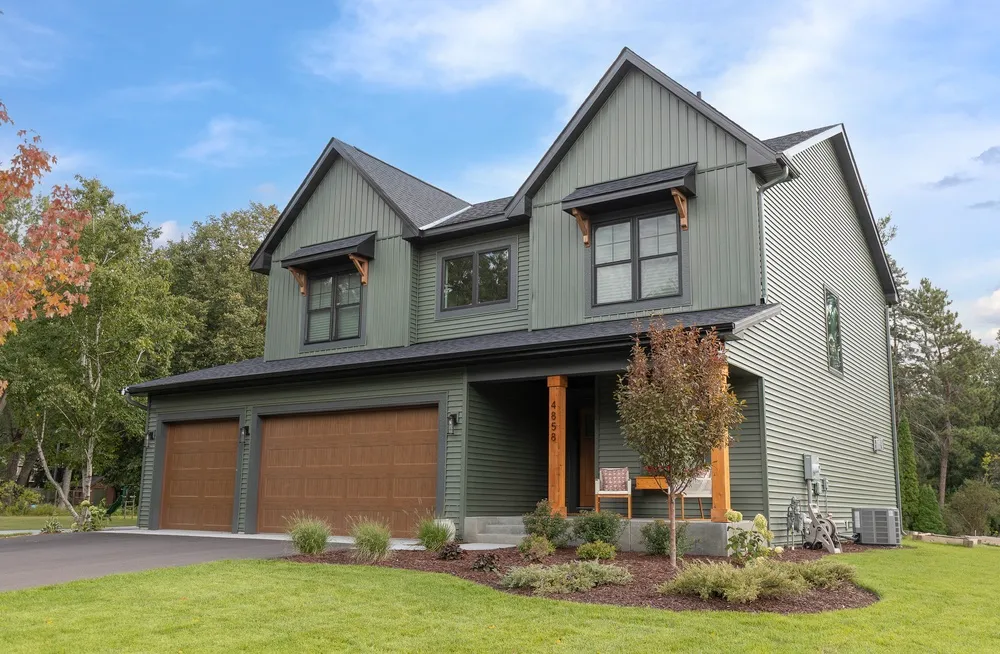
Homes under $400,000 in north Idaho’s Kootenai County vanish in days. Properties above $1 million sell to cash-heavy buyers who barely flinch at interest rates. But in the wide middle – roughly $450,000 to $900,000 – the market has stalled, according to Cody Fenske, who leads the Apex Realty team at EXP Realty in Kootenai County. The gap pinches both the buyers trying to move up and the sellers trying to move out, hitting the largest group of homeowners the hardest: people who already own a home and need to make their next move.
The Bottom Moves Fast, the Top Shrugs It Off
Fenske describes the entry-level market across Coeur d’Alene, Hayden, Rathdrum, and Post Falls as fiercely competitive. “Anything under 400 is gone for the most part,” he said. These are the properties first-time buyers and locals fight over, often selling over a single weekend.
At the other end, homes above roughly $1.2 million continue to trade because buyers in that range have enough cash that mortgage rates do not reshape their math. Those buyers are “not affected by the market conditions as much and they’re still buying fine,” Fenske said – provided the property is genuinely worth the ask and the seller has not slapped a fantasy number on a $600,000 house.
The trouble sits between those two poles.
Why the Middle is Stuck
In the $450,000 to $900,000 band, two groups are locked in a standoff. Existing homeowners who might have upsized from a $400,000 home to a $600,000 or $700,000 one a few years ago now face mortgage rates that make the jump far more expensive. Many are deciding they can wait. On the other side, older homeowners in larger properties on larger lots would like to downsize or sell outright but feel no pressure to accept a price they do not love.
Neither side is motivated enough to transact. Buyers looking at $700,000 or $800,000 homes face monthly payments that feel punishing at current rates. Sellers at those prices can afford to sit. Fenske says those homeowners reason that they can get by in a slightly smaller house for a while longer rather than take on a far more expensive mortgage. For sellers in no rush, the calculus is simple: list it, see what happens, and pull back if the offers disappoint.
New construction adds friction at the lower end of this range. Around $450,000, buyers begin comparing resale homes against new builds entering the market. That competition slows resale properties at that price, even though homes just $50,000 cheaper fly off the shelf.
Cold Feet Are Making It Worse
The stall in the middle is not only about affordability. Fenske says buyers are terminating contracts at a rising rate – sometimes after clearing every contingency – because they second-guess whether something better might appear tomorrow. He described two recent deals on the Washington side of his market where buyers walked away and forfeited their earnest money with no inspection or financing issue to point to. They simply got cold feet.
That behavior is harder to absorb in the mid-range. A terminated deal sends the property back on market with a price-history blemish that invites lowball offers the next time around. Sellers in the sub-$400,000 tier barely notice a cancellation because another buyer is already waiting. Sellers above $1 million tend to have the financial cushion to ride it out. The mid-range seller has neither advantage.
Fenske notes that sellers across the market are becoming more realistic about pricing and concessions compared with the post-pandemic years, when many listed at arbitrary prices and refused to negotiate. But realism only helps if a buyer shows up – and in this middle tier, fewer are showing up with the confidence to close.
What This Means for Mid-range Homeowners
Owners of homes worth $500,000 to $800,000 in Kootenai County face an environment that rewards precise pricing from day one. Overpricing even slightly pushes a listing into a bracket where competition with new construction and rate-deterred buyers can leave it sitting. Fenske says homes with distinctive features – shops, outbuildings, large acreage – still sell briskly at any price, but a standard single-family home in this range without a standout feature faces a longer timeline.
For buyers trying to move up into this tier, rates near six and a half percent make a $700,000 mortgage significantly more painful than it would have been a few years ago. Fenske points out that properties in this range have only gotten more expensive over time, not less. Buyers who walked away from earlier deals over minor inspection findings now face higher prices for comparable homes.
About the Expert: Cody Fenske leads Apex Realty Partners with EXP Realty in Kootenai County, Idaho, working primarily with out-of-state buyers and investors.
This article is intended for informational purposes only and does not constitute legal, financial, or investment advice. The views and opinions expressed herein reflect those of the individuals quoted and do not represent an endorsement of any company, product, or service mentioned. Readers should conduct their own due diligence and consult qualified professionals before making any investment decisions.