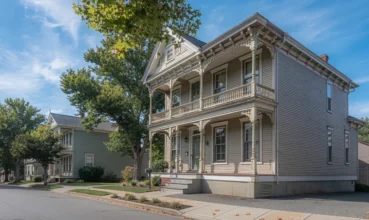
New York City’s real estate market has long operated by its own rules, and 2026 is no exception. With inventory constrained, demand holding firm in key neighborhoods, and a wave of policy changes adding uncertainty to the investment landscape, the market is presenting a mixed picture for buyers, sellers, and investors. Mike Falchiere, founder of The Falchiere Group, a brokerage and construction management firm operating across New York City’s five boroughs, New Jersey, and Westchester County, offers a ground-level perspective on what’s actually moving and what’s sitting still.
A Vertically Integrated Approach in a Complex Market
The Falchiere Group’s model is unusual in that it combines traditional real estate brokerage with in-house construction management. The integration was born out of a practical need: many buyers in New York avoid properties that require renovation, citing concerns about contractor reliability, cost overruns, and project delays.
By bringing design professionals, carpenters, electricians, and plumbers under one roof, the firm expands what buyers are willing to consider. “A lot of buyers wouldn’t consider a renovation project because you hear a lot of horror stories, contractors overcharging, walking off the site, stop work orders,” Falchiere explains.
On the sales side, the construction capability also serves as a listing tool. For properties in need of work, the firm presents prospective buyers with a fully mapped-out renovation cost breakdown upfront, removing one of the more common friction points in the transaction process. Over time, this reputation has generated standalone construction work independent of any real estate deal.
What’s Moving and What’s Not
The broad narrative about New York City real estate, demand up, inventory tight, prices firm, largely holds, but the details matter. The market is splitting clearly along product quality lines.
Well-renovated, move-in-ready properties are seeing strong activity and, in some cases, multiple offers. The segments performing best include townhomes and brownstones in Brooklyn neighborhoods like Park Slope, Prospect Heights, Carroll Gardens, and Cobble Hill, as well as Manhattan’s West Village and Tribeca. “There’s definitely a flight to quality,” Falchiere notes. “If you have a nicely renovated product, somebody’s always going to pay a premium for that.”
On the rental side, multifamily properties in Manhattan and North Brooklyn are moving quickly, often receiving offers immediately upon listing.
Conversely, older product, particularly apartments converted to condos and co-ops during the 1980s and 1990s that haven’t been updated, is sitting longer. The message for sellers of dated product is straightforward: renovation or realistic pricing is increasingly non-negotiable.
Buyer Behavior: Cash is King
The buyer pool in 2026 reflects the broader interest rate environment. Financed buyers are proceeding more cautiously, with rate volatility making it difficult to lock in numbers with confidence. “A lot of people with financing right now are hitting the brakes because you really have to make sure the numbers cancel out,” Falchiere observes.
Cash buyers, by contrast, are active and motivated. Many are pulling capital from investment vehicles or reallocating appreciated assets into New York real estate as a hedge against ongoing rent inflation. These transactions tend to move faster and close more cleanly, making them the preferred deal type for many sellers.
Where Deals Fall Apart
In a market where co-ops and condos make up a significant share of the housing stock, building financials are often the deciding factor in whether a deal closes. The most common reason transactions unravel is not the property itself but the building’s financial health – low reserves, pending special assessments, or active litigation. “You would think it would be the real estate itself,” Falchiere says, “but typically the most major thing is the building financials.”
This is a practical reminder for buyers to conduct thorough due diligence on the underlying association or cooperative, not just the unit.
Seller Expectations and Pricing Reality
Pricing discipline remains one of the clearest predictors of outcome in the current market. Sellers across the board tend to enter with optimistic price expectations, and the current environment is no different. Falchiere is candid about the pattern: when market feedback doesn’t support the initial ask, price reductions follow, but those reductions often result in lower final sale prices than a well-priced listing from day one would have achieved.
The more effective strategy is pricing to attract competitive interest early. “Pricing more appropriately, hopefully to attract potential multiple offers – that’s really what you want. You want to create a situation,” he explains. The caveat is that seller motivation varies considerably. Institutional owners with large portfolios may have little urgency to transact at a given price, while individual sellers with a specific next move in mind tend to be more flexible.
Policy Headwinds Worth Watching
Beyond pricing and product quality, several legislative developments are adding uncertainty to the market’s near-term outlook. Proposed rent stabilization changes could reduce supply incentives and ripple into free-market rents. Tax incentives tied to converting office buildings to residential use are in play, though Falchiere notes that current incentive structures tend to favor smaller unit counts with larger layouts rather than smaller apartments with higher unit counts in a city with limited housing supply.
A proposed pied-à-terre tax targeting secondary homes valued at or above a certain threshold is also drawing attention. If enacted broadly, such a measure could dampen demand from out-of-town buyers who represent a meaningful segment of the higher-end market. Falchiere warns that recurring ownership taxes are more damaging than transaction taxes because the costs are ultimately passed to tenants through higher rents. “Reoccurring taxes on owning real estate every which way is something that will have negative effects,” he says, “because the only thing to do is raise rents.”
The Longer View
Despite the policy noise, the structural case for New York City real estate as a long-term hold remains intact. The city’s dense employment base, world-class universities, cultural infrastructure, and persistent demand from domestic and international buyers continue to underpin values even during periods of economic stress.
For investors with the patience to hold through near-term volatility, neighborhoods like Park Slope and surrounding brownstone Brooklyn represent some of the stronger opportunities in the current market. The key variable going forward is whether policy changes, particularly around taxation and rent regulation, erode the incentives that keep new supply coming to market, or whether the city’s structural advantages continue to outweigh those headwinds. For buyers and sellers operating today, the lesson is more immediate: product quality and pricing discipline from day one remain the clearest paths to a successful outcome.
About the Expert: Mike Falchiere is the founder of The Falchiere Group, a brokerage and construction management firm operating across New York City’s five boroughs, New Jersey, and Westchester County.
This article is based on information provided by the expert source cited above. It is intended for general informational purposes only and does not constitute legal, financial, or real estate advice. Readers should conduct their own research and consult qualified professionals before making any real estate or financial decisions.