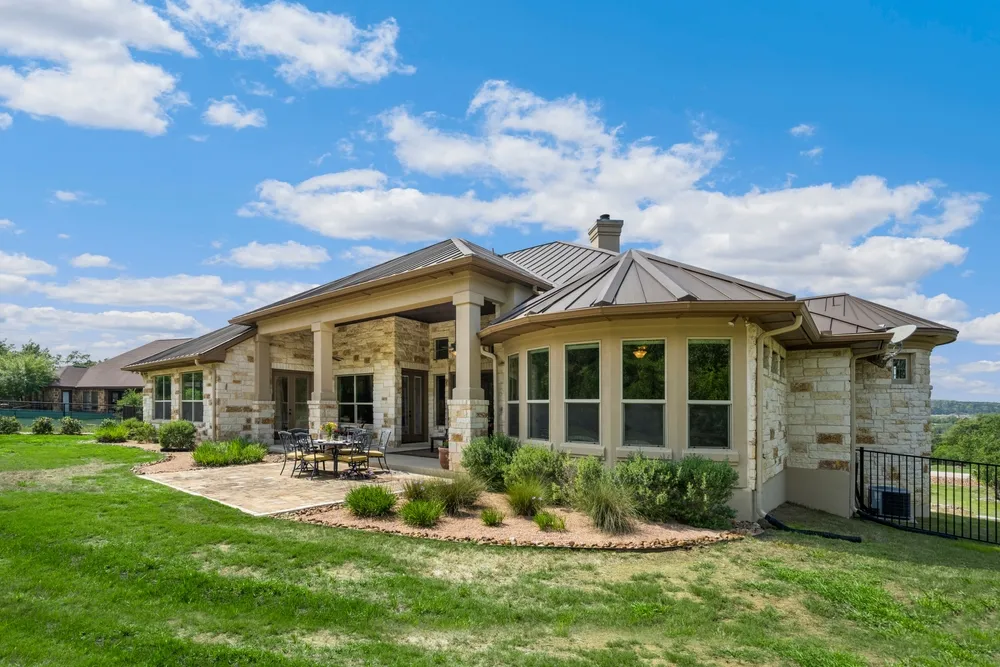
The assumption that higher interest rates have frozen buyers out of the market doesn’t hold up everywhere. In the San Antonio and Texas Hill Country corridor, transactions are happening, but on terms that favor patience and precision over urgency. Prices are declining month over month, inventory is stacking up, and sellers who haven’t adjusted their expectations are watching listings sit. Yet buyers are active, particularly those who’ve stopped waiting for rate relief and started treating the current environment as an opportunity to negotiate.
The dynamics playing out across this region aren’t uniform. According to Audrey Ethridge, Founder / Team Lead of North Star Property Group at eXp Realty, the $400,000 to $600,000 range in the Hill Country has become crowded with competition, slowing movement at that tier. Meanwhile, homes priced at $250,000 and below are generating strong showing activity. At the upper end, a $1.5 million listing may attract more interest than a $600,000 home, depending on condition and location.
When calling listing agents for feedback on mid-range properties, Ethridge finds they’ve toured so many homes they struggle to recall individual listings without prompting. “In the $400 to 600 price range, you’re going to see a lot of listings,” she said.
New construction compounds the challenge for resale sellers in that middle band. Builders are covering closing costs and buying down interest rates, which means a pre-owned home priced $25,000 less than a new build can still carry a higher monthly payment, roughly $200 more per month, according to Ethridge. For payment-sensitive buyers, that math pushes them toward new construction. Buyers focused on total purchase price rather than monthly cost, those paying cash or planning to pay off early, still favor pre-owned homes.
The Interest Rate Reframe
One of the more consequential shifts in this market concerns how buyers think about rates. Rather than waiting for a return to pandemic-era lows, more buyers are treating today’s rates as refinanceable, a temporary cost attached to a lower purchase price.
Ethridge points to Covid-era buyers who locked in low rates but paid elevated prices. Those owners now face difficulty selling without taking a loss because the purchase price is fixed, while rates can be changed later. “People who bought them are having trouble selling now, because they can’t change that, but people can change interest rates,” she said.
She cited her own experience purchasing a home at 6.5% in 2004, then refinancing six years later to 4% on a 15-year term, cutting nine years off her payments. The logic she applies to current clients: buy at a lower price in a softer market, accept the rate, and refinance when conditions shift.
Structured buydowns are also gaining traction. Ethridge described 3-2-1 buydown arrangements where the rate starts lower in year one, steps up in year two, and reaches the fixed rate by year three. Unlike adjustable-rate products that can climb indefinitely, these cap at the prevailing fixed rate, offering short-term payment relief without open-ended risk. For buyers weighing whether to act now, this structure reduces early carrying costs while locking in today’s lower purchase prices.
Hill Country Land Deals
For buyers eyeing acreage, the Hill Country presents opportunities alongside complications that don’t surface in standard residential transactions. Ethridge described a current client seeking 10 acres with no deed restrictions for hunting access, a common profile among baby boomers already living in Texas who want space for family compounds.
But land purchases demand diligence on factors suburban buyers rarely encounter. Utility access can be expensive or unavailable: wells vary significantly in cost by location, and if the property isn’t on city sewer, septic installation adds to the budget. Building on a hillside – attractive for views – can add $50,000 or more in concrete costs that never show up in the visible structure. Distance from the road where utilities run also matters, since buyers pay per foot to extend lines, and builders may only include a limited distance in their contracts.
Deed restrictions can disqualify a seemingly good deal. Ethridge noted cases where inexpensive land requires a $2 million home build, or prohibits barndominiums and farm animals, uses many rural buyers assume are permitted. Time-to-build requirements can create additional pressure.
When land deals fall apart, the causes tend to be specific: appraisal shortfalls, plat approval failures through programs like the Veterans Land Board, or disputes over funding contingencies. Ethridge described a recent case where a property didn’t appraise at contract value, the seller refused to reduce the price, and the seller attempted to keep her client’s earnest money. She took the dispute to court and settled in her client’s favor.
Sellers vs. the Market
The supply-demand imbalance tilts clearly toward buyers in most segments. Ethridge described monthly price reductions across her listings and the broader market whenever rate cuts fail to materialize. Sellers who price based on emotional attachment rather than comparable data accumulate days on market.
“You can’t sell a house based on how you feel about it. The market’s going to tell you what you can sell it for,” she said.
The Hill Country segment has been somewhat more insulated from steep drops, fewer comparable listings mean less direct competition, and the lifestyle appeal limits how far prices fall. But even there, values have declined, just less sharply than in the city’s denser neighborhoods. For sellers in either market, pricing accurately from the start remains the single most important decision, homes that enter the market above where comparables support tend to chase the market downward through successive reductions.
What Comes Next
For investors considering this corridor, the current environment favors buy-and-hold strategies over flips. Material costs remain elevated, purchase prices haven’t fallen enough to create reliable margins on quick turnarounds, and selling prices are lower than they were. Ethridge was direct: investors buying to hold and lease will “do much better than if they’re going to buy it and turn around and try and sell it immediately.”
The broader pattern Ethridge describes is already reshaping negotiations: buyers are no longer waiting for rate cuts and instead securing seller concessions, closing cost contributions, and rate buydowns as standard practice. If that behavior holds, it suggests the market has already absorbed current rates, and the next catalyst for movement may not be monetary policy, it may be sellers finally accepting where prices actually stand.
About the Expert: Audrey Ethridge is Founder and Team Lead of North Star Property Group at eXp Realty, serving the San Antonio and Texas Hill Country corridor.
This article is based on information provided by the expert source cited above. It is intended for general informational purposes only and does not constitute legal, financial, or real estate advice. Readers should conduct their own research and consult qualified professionals before making any real estate or financial decisions.