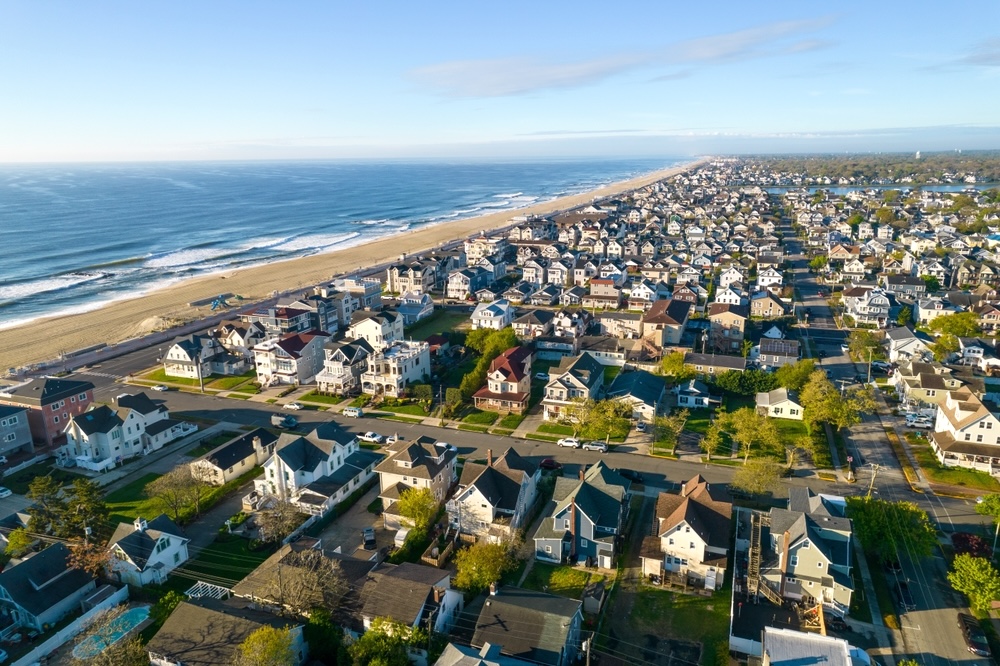
A house on the water in New Jersey used to be out of reach for most buyers. That is changing. Waterfront properties that were selling for $600,000 a year ago are now moving closer to $375,000 in some areas, according to agents working the market. The price drop is real – but it comes with a cost that does not show up in the listing price.
Rising insurance premiums are doing what years of buyer demand could not: pushing wealthier owners out of waterfront properties and opening the door to a different type of buyer. Agents in the region are flagging this as one of the most significant pricing corrections in the New Jersey coastal market heading into the second half of 2026.
Bobby Moody, a Realtor with NJ Elite Group, LLC, in Asbury, New Jersey, covers coastal areas including Monmouth and Ocean counties, where waterfront and near-water properties have long been among the most sought-after in the state. He describes the current moment as a recalibration driven almost entirely by insurance costs.
The pattern Moody describes is straightforward: as flood and coastal insurance premiums have climbed, some owners at the higher end of the market have decided the ongoing cost is not worth it and have listed their properties. That has brought prices down on homes that were previously out of reach. A buyer who could not compete at $600,000 may now be looking at the same property at $375,000.
But the insurance expense that pushed the previous owner out does not disappear. It transfers to the new buyer. “It’s going to cost you in insurance,” Moody says, “but at the same point in time, now you’re getting that waterfront property.” The question for any buyer considering these homes is whether the insurance burden is manageable at their income level, and whether it is likely to keep rising.
That is not a trivial question. Coastal insurance markets across the country have tightened significantly over the past several years, with some carriers pulling out of high-risk areas entirely and others raising premiums sharply at renewal. New Jersey’s coastline is not immune to those pressures. A buyer who stretches to afford the purchase price of a newly affordable waterfront home may find themselves squeezed by insurance costs that were not fully visible at closing.
Moody frames this as a shift that has moved waterfront ownership from a segment largely inaccessible to middle-income buyers into one where it is now a realistic consideration, but only for buyers who have done the full cost analysis. The purchase price is one line item. The annual insurance premium, the property taxes on a waterfront parcel, and the cost of any flood mitigation or elevation work are the others.
For buyers who have run those numbers and can absorb the carrying costs, the current window represents something that has not existed in this market for years: waterfront inventory at prices that do not require a bidding war. Moody notes that these properties are drawing renewed interest precisely because buyers who were previously priced out are now finding that the math works at lower purchase prices, even with elevated insurance costs.
The risk is that insurance costs continue to climb faster than property values in these areas, eroding the equity position of anyone who buys now. That scenario is not hypothetical; it has played out in parts of Florida and Louisiana, where insurance market withdrawals have left some homeowners with properties they cannot afford to insure and cannot easily sell.
New Jersey buyers considering waterfront properties in mid-2026 should request the seller’s current insurance declarations page before making an offer. That document shows the actual premium being paid, the coverage limits, and whether the policy is through a standard carrier or a higher-cost surplus lines insurer. This detail signals how difficult the property may be to insure going forward. Buyers should also check whether the property falls in a FEMA-designated flood zone that requires mandatory flood insurance, as that adds a separate and often substantial annual cost on top of standard homeowners coverage.
The broader picture for New Jersey’s coast is one of affordability reshuffled rather than affordability gained. The sticker price has dropped, but the total cost of ownership has not fallen proportionally. Buyers entering this market now need to treat insurance as a variable expense that could rise 10% to 20% annually, not a fixed cost they can budget once and forget. Those who plan for that reality may find genuine value in properties that sat beyond their reach just 12 months ago. Those who do not may repeat the same exit that brought these homes to market in the first place.
About the Expert: Bobby Moody is a Realtor with NJ Elite Group, LLC, based in Asbury, New Jersey. He works with residential buyers, sellers, and investors across South, Central, and North Jersey, including coastal areas of Monmouth and Ocean counties.
This article is intended for informational purposes only and does not constitute legal, financial, or investment advice. The views and opinions expressed herein reflect those of the individuals quoted and do not represent an endorsement of any company, product, or service mentioned. Readers should conduct their own due diligence and consult qualified professionals before making any investment decisions.