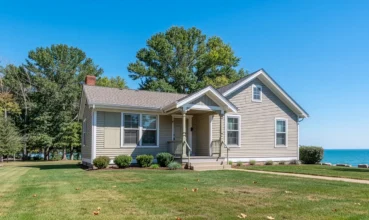
Six months ago, homes in and around Jamestown, New York were moving fast regardless of price. That’s no longer the case. A clear divide has emerged: properties listed under $150,000 are still attracting quick offers, while homes above that threshold, including rural listings with acreage that would have sold rapidly earlier this year, are sitting with little activity. The split is reshaping how agents counsel sellers and how investors evaluate the area’s opportunities.
Heather Shea-Canaley, a licensed agent with ERA Team VP Real Estate who has closed over 100 transactions annually for each of the past four or five years, puts the shift in plain terms. “I listed a two-family in Jamestown that sold within 24 hours and had multiple offers,” she says. “But then I listed something the other day that I thought would fly off the shelf. It’s still sitting there.”
Average days on market have stretched to roughly 70, she estimates, a sharp contrast to the week-or-less turnaround sellers grew accustomed to.
Why Sellers Are Struggling to Adjust
The inventory buildup over the past two weeks has caught sellers off guard. Many still expect the pace of the previous year, and that mismatch is creating friction. Some are pushing for price reductions within the first week of listing.
Shea-Canaley pushes back on that instinct. “Part of me wants them to just wait a little bit longer,” she says. “I wouldn’t do a price reduction too crazy within the first month, maybe a little bit. But if you’re not getting any action, it’s probably because it’s not the right house for somebody.”
Interest rates ticked up slightly, and the back-to-school season typically slows activity. But the softer conditions appear to be concentrated above that $150,000 line. Shea-Canaley notes that budgets are a factor; homes under $150,000 are easier for buyers to afford, which suggests the constraint is purchasing power rather than a lack of buyer interest. The affordable end of the market still moves.
What’s Drawing Buyers to the Area
Despite the slowdown at higher price points, Jamestown and the surrounding Chautauqua County communities continue to attract relocating buyers, particularly remote workers leaving higher-cost metros. The math is simple: a house that lists for $140,000 in Jamestown might cost $400,000 to $500,000 in Florida or California, according to Shea-Canaley.
Shorter commute times and smaller-town livability are part of the draw. “I notice a lot of people can work from home now, so they pick a smaller community that’s just easier or better for their kids growing up,” she says. Proximity to Chautauqua Lake also brings seasonal second-home buyers from Ohio and Pittsburgh, and Chautauqua Institution attracts summer residents who return annually.
The trade-off is limited retail and dining infrastructure. For major shopping or restaurants, residents drive roughly 40 minutes to Erie, Pennsylvania, or an hour and 20 minutes to Buffalo.
The Investment Case for Small Multifamily
For investors, the area’s multifamily stock presents a narrow but concrete opportunity. Two- and three-family properties can be acquired for under $100,000, with per-unit rents running between $650 and $1,000. Tenant-paid utilities are common, with landlords typically responsible only for the water bill – around $38 per month for a two-family property – plus taxes and insurance.
The key due diligence, in Shea-Canaley’s view, centers on tenant quality rather than neighborhood selection. “Look at the rent rolls. We want to see how long the tenants have been staying there, what they’re paying for rent, and whether they have their security deposit held,” she says. High turnover should prompt questions about whether the landlord has maintained the property or screened tenants effectively. Properties with long-term tenants paying consistent rent are the ones she considers strong investments.
Commercial properties present a less favorable picture. Shea-Canaley says commercial leasing has been harder since COVID, as online retail has reduced demand for storefront space. She has several commercial spaces she is trying to lease and describes the process as difficult.
Appraisals Are the New Bottleneck
Deals that do come together can still stall at appraisal. Appraisers have lately been stricter about property conditions than home inspectors, even when buyers have already inspected a home and accepted issues like a damp basement, which is common in Jamestown’s older housing stock.
“I had homes with new decks built from pressure-treated wood,” Shea-Canaley says. “Three contractors advised waiting six months to a year before staining so the wood could dry, but the appraisers still required the decks to be stained.”
Requirements like that can slow a deal even when the buyer is comfortable with the property’s condition. She hasn’t seen many transactions fall apart entirely, but these added requests bring time and frustration to closings, a particular problem in a market where sellers are already anxious about longer listing periods.
A Grant and What Comes Next
One development Shea-Canaley is watching is a $10 million grant awarded to the city of Jamestown. The funds are expected to support both commercial and residential improvements, with grant applications available through city hall. She points to potential commercial activity in downtown Jamestown and discussions about community projects such as an indoor farmers’ market and new housing, though no specific projects are underway yet.
Shea-Canaley does not expect housing prices to return to pre-COVID levels. “I don’t think the market’s going to crash,” she says. Rates may fluctuate, but her advice to buyers remains consistent. “If it’s the perfect house, just buy it. You can always refinance it in a year if the rates drop,” she says. “When the rates drop, there are more buyers at the table because they can afford more. So it’s going to be more competitive.”
For Jamestown sellers listing above $150,000, the adjustment is straightforward but uncomfortable: the market that rewarded any listing with a fast sale has narrowed. Patience and realistic pricing matter more now than they have in years, and the sellers who resist premature price cuts may fare better than those who panic in the first week.
About the Expert: Heather Shea-Canaley is a licensed agent with ERA Team VP Real Estate, covering Jamestown, New York, and the surrounding Chautauqua County area.
This article is based on information provided by the expert source cited above. It is intended for general informational purposes only and does not constitute legal, financial, or real estate advice. Readers should conduct their own research and consult qualified professionals before making any real estate or financial decisions.