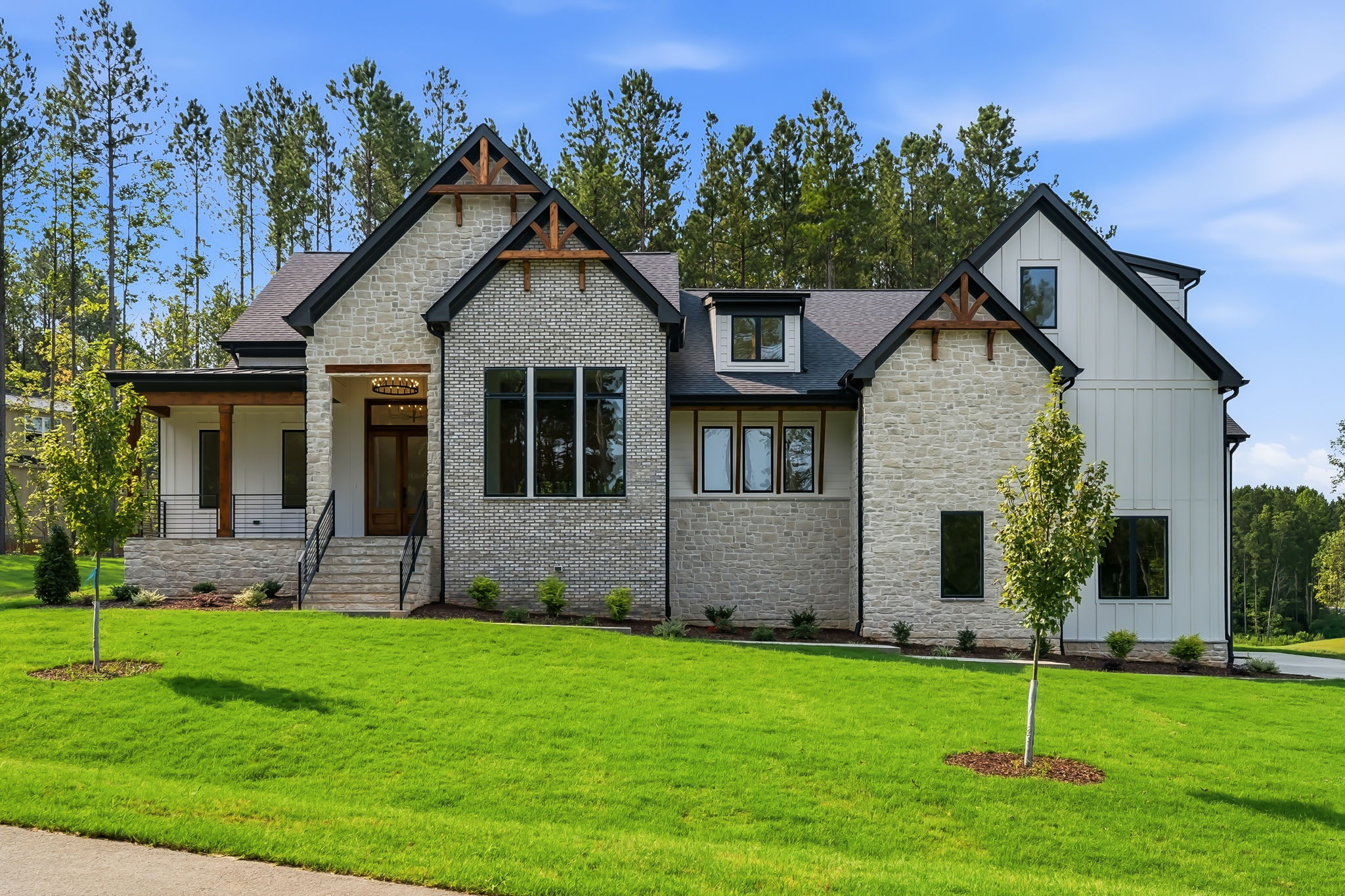
North Carolina’s Research Triangle has ranked among the country’s top relocation destinations for decades, but growth pushing northward into Franklin County, now the second-fastest-growing of the state’s 100 counties, is reshaping the luxury housing market in this part of the state. The buyers arriving are not shopping for production homes in master-planned communities. They are commissioning custom builds on large, wooded lots, and the pipeline of demand shows little sign of slowing.
Dave Harney, who has spent nearly 20 years in the Triangle market and leads the Compass Team at Coldwell Banker Advantage, works primarily with local custom builders serving this executive buyer segment. Coldwell Banker Advantage and its sister company, Seacoast Advantage, together form the largest Coldwell Banker franchise group in the country by volume and number of transactions. Harney’s team focuses on the Wake Forest and Franklinton corridor – what he calls “Triangle North” – a submarket where the national narrative of frozen inventory and stalled transactions does not apply in the same way.
What Draws Executive Buyers North
The Triangle’s appeal starts with employment. Research Triangle Park anchors a concentration of tech, software, and pharmaceutical employers, creating a steady flow of executive-level relocations. Harney’s team works with the firm’s corporate relocation department, placing employees from Fortune 500 companies into the area.
The draw extends beyond jobs. The region sits roughly equidistant from the North Carolina mountains and the coast, and its climate allows year-round outdoor activity with enough seasonality to mark the change of seasons. Falls Lake, a large recreational area near Wake Forest, adds boating, hiking, and camping to the list.
“It’s a great spot for the executive community to live and raise their families,” Harney says. “Our topography, our climate, our infrastructure are very supportive of that lifestyle.”
The buyers seeking custom homes on larger private lots are often executives whose relocation follows a deliberate process. One spouse may arrive first, living in corporate or temporary housing while initiating a home search. The family visits periodically, and the actual move happens only after they have committed to a location and – in many cases – begun a ground-up build with selections down to the most granular finishes.
A Generational Migration Pattern
One dynamic sustaining Triangle North’s growth is generational. Young professionals arrive for education at institutions like NC State and Duke, enter the workforce locally, and start families. Then their parents follow.
“The parents, who are soon to be the grandparents, follow,” Harney says. For retirees, the combination of climate, cost of living, and proximity to family makes the area a practical landing spot.
This pattern creates layered demand. Entry into the area often begins with a university connection, but the household formation and family reunification that follow generate housing needs across age groups, including at the upper end, where retiring parents may seek the same kind of custom, private-lot home that drew their adult children in the first place.
Harney contrasts North Carolina’s trajectory with Florida’s. “Florida’s had significant ups and downs in the real estate world over the last few decades, whereas North Carolina has remained very consistent,” he says. That consistency, paired with strong employment and lifestyle factors, helps explain why the Triangle continues to appear in top-10 relocation destination lists.
Custom Construction Operates Differently Than Production Building
In the luxury custom segment Harney’s team serves, the dynamics differ from what buyers encounter with regional or national builders. There are no incentives of the kind production builders offer, no lending packages, no closing-cost credits. Instead, builders work with buyers on custom touches folded into the overall pricing.
“When you get into the upper-level custom homes, there’s not a lot of incentives,” Harney says. “These homes are really custom masterpieces that lack little or nothing.”
Inventory does not sit in the conventional sense either. Homes are built to buyer specifications, and even standing spec homes can be modified at a cost to suit a particular buyer’s needs or tastes. Harney says he does not see much of this inventory lingering.
His team is currently marketing the Reserve at Windsor, a new community where Oak and Stone Custom Homes is the exclusive builder. The community is in its early stages; four homes are already under contract, with an entry price of $1 million and a pre-sale custom build at $1.8 million. Oak and Stone has built a large following on social media platforms including Instagram, Facebook, and YouTube, which Harney says has helped drive early interest.
What Relocating Buyers Want to Know
The top questions from relocating buyers center on three areas, according to Harney: education quality, access to medical care, and lifestyle and entertainment options. These are practical concerns for families evaluating a long-distance move, and the Triangle’s infrastructure addresses them directly: university-affiliated medical systems, strong public and private school options, and a range of outdoor and cultural amenities.
Harney’s standard advice to incoming buyers is to visit before committing. “I always encourage buyers to take time and spend some time in the area, even if it’s just a few days, and get a feel for everyday life,” he says. “We like to call it windshield time.”
That counsel reflects the nature of the product his team sells. A custom home on a private lot in a specific community is a commitment that benefits from firsthand familiarity with the surroundings – something online research alone cannot fully replicate.
Steady, Not Bulletproof
Harney is direct about the limits of even a strong market. “No market is bulletproof,” he says. “That would be very naive to make that assumption.”
Still, he says the Triangle North market’s combination of employment depth, lifestyle appeal, university-driven population growth, and a temperate climate provides what he calls “a great level of protection.” For buyers weighing a relocation, that stability, built on multiple demand drivers rather than a single industry or trend, offers more confidence that the area’s growth will hold across market cycles.
About the Expert: Dave Harney has spent nearly 20 years in the Research Triangle market and leads the Compass Team at Coldwell Banker Advantage, focusing on the Wake Forest and Franklinton corridor of North Carolina.
This article is based on information provided by the expert source cited above. It is intended for general informational purposes only and does not constitute legal, financial, or real estate advice. Readers should conduct their own research and consult qualified professionals before making any real estate or financial decisions.