In a county where land for new construction is increasingly scarce, and supply sits below three months, it might seem like any well-maintained home would sell quickly. But in Orange County, California, a subtler sorting mechanism is separating homes that move in 30 days from those that sit for three months. The difference often comes down not to whether a home has been renovated, but to when the renovation reflects.
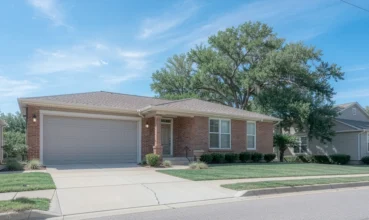
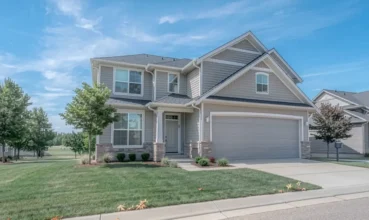
Kathy Thomson, a residential agent with eXp Realty who has worked across Orange County and the Inland Empire for 18 years, describes a pattern playing out in one neighborhood where two comparable homes hit the market around the same time. One had been upgraded, but to 2018 or 2020 standards. The other was renovated within the past month to current design trends. The fully renovated home has already sold, Thomson says, while the other is “still languishing on the market currently.”
That distinction matters more in a market where the dominant sales range, $1.5 million to $2 million, which Thomson describes as Orange County’s starter to mid range, puts buyers in a position to be selective even with limited inventory.
Where Homes Are Moving and Where They’re Not
Across Orange County, homes are generally selling close to asking price, with list-to-sale ratios hovering around 99 percent, according to Thomson. But the timeline varies considerably depending on submarket and condition. In Huntington Beach, Thomson’s primary market, well-priced homes in good condition are selling in roughly 30 days. In Yucaipa, farther east in the Inland Empire, her most recent listing took about 90 days, within a range she describes as running “anywhere as low as 44 and up to into 90” days for properly priced homes.
The broader Orange County market is slightly softer than Huntington Beach specifically, which Thomson describes as tighter. She tracks this weekly and sees it as relevant for buyers willing to look beyond the most competitive pockets. “You can find some deals if you go outside of those busier markets,” she says.
Price Corrections Are Happening
Sellers in Orange County still hold structural advantages: inventory remains under three months of supply, and the region’s proximity to beaches, mountains, and strong school districts sustains baseline demand. But some sellers are pricing as though the more aggressive conditions of prior years still apply.
Thomson says the price reductions she has observed mostly stem from misaligned expectations. “Most of that is happening when a seller comes on the market thinking that they’re still getting last year or the year before’s pricing when the market is a little bit less aggressive,” she says. The corrections are not a sign of broader softening so much as a lag in what individual sellers believe their homes are worth.
Buyer sentiment, meanwhile, leans cautious. Thomson characterizes the general mood as “cautious and hesitant” when it comes to making large purchases. Sellers with realistic pricing and proper guidance, she adds, remain confident, and the supply dynamics support that confidence.
For buyers, the practical implication is that overpriced listings are more likely to see reductions than in prior years, creating potential opportunities for those willing to watch and wait rather than compete immediately on new listings.
What’s Pulling Buyers
Beyond price and condition, two factors consistently drive buyer preference across Orange County, according to Thomson: school quality and access to green space. “Proximity to green space, proximity to schools – I would say are probably two of the key factors,” she says. Parks function as a draw for buyers evaluating how much of their lifestyle will extend beyond the home itself.
For investors considering Orange County, Thomson steers the conversation toward small multi-unit properties – specifically two-to-four or five-to-eight unit buildings – rather than single-family homes. A single-family rental in this price environment rarely generates enough income to justify the cost. “It’s hard to find a single-family home that’s going to cover your mortgage or your investment output in that monthly payment,” she says. Multi-unit properties, by contrast, can sometimes cover all carrying costs while building equity and generating tax advantages.
Financial Preparation Failures
When transactions collapse, Thomson says the most common cause she has observed is inadequate buyer preparation. To address this on the listing side, she cross-qualifies buyers through her own lending contacts, not by running credit, but by reviewing what the buyer’s lender has stated to confirm the financials hold up. “They can look into what the buyer’s lender is stating and make sure all of that matches so that we know financially they are able to get through the deal and close,” she says.
The process adds a layer of verification before a deal gets too far along. For sellers, the benefit is fewer failed contracts and fewer days back on the market after a buyer falls through.
The Design Gap as a Leading Indicator
Orange County’s tight supply and steady demand have not eliminated the need for sellers to read the market accurately. Homes priced to 2024 conditions and renovated to current design standards are still moving within a month in competitive submarkets like Huntington Beach. Homes that miss on either count, pricing that reflects last year’s expectations, or finishes that reflect a renovation cycle ago, face timelines two to three times longer.
Thomson’s two-listing example illustrates the narrowness of the gap. Both homes were in the same neighborhood. Both had been renovated. The difference was whether the renovation matched what buyers expect to see today. In a market where supply remains limited and list-to-sale ratios stay near 99 percent, that distinction is the clearest line between a home that sells and one that waits.
About the Expert: Kathy Thomson is a residential agent with eXp Realty who has worked across Orange County, California, and the Inland Empire for 18 years.
This article is based on information provided by the expert source cited above. It is intended for general informational purposes only and does not constitute legal, financial, or real estate advice. Readers should conduct their own research and consult qualified professionals before making any real estate or financial decisions.