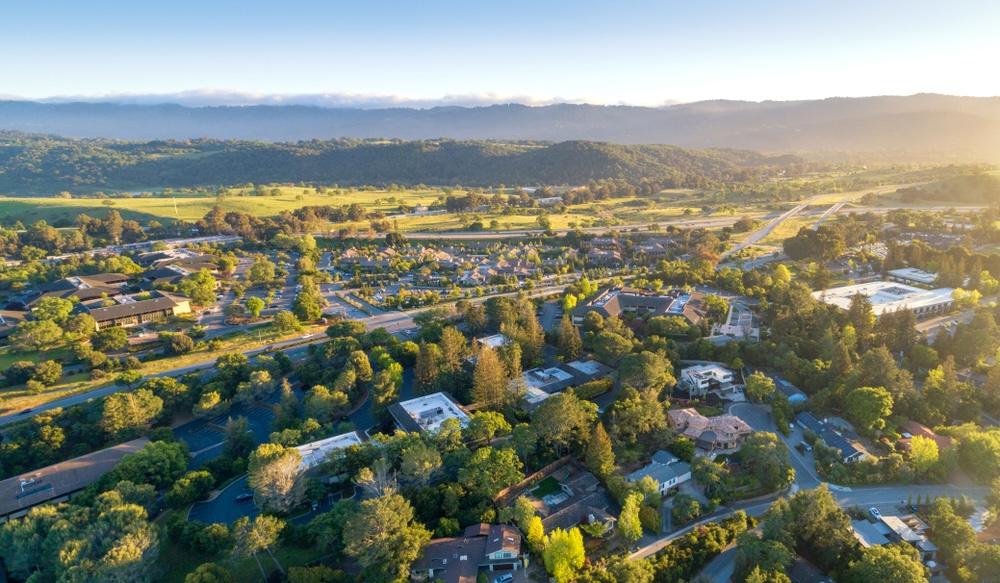
In most housing markets, buyers pay for square footage, finishes, and floor plans. In Silicon Valley’s highest-demand towns, the land itself, the lot, the location, the neighborhood, is what actually holds and builds value. The house on top is almost secondary.
Dana Carmel, founder of Dana Carmel Group at Represent Realty, a boutique brokerage serving Atherton, Menlo Park, and surrounding Silicon Valley communities, has watched this dynamic sharpen over the past two years. Her observation runs counter to the instinct most buyers bring to a home search: optimizing for the property they can see rather than the ground it sits on.
Rising land scarcity, persistent inventory shortages driven by rate-locked homeowners, and California’s evolving zoning laws have made the distinction between land value and structure value more consequential than at any point in recent years. For buyers and investors evaluating properties in this market, the lot is increasingly the asset that determines long-term returns.
The split shows up most clearly in what sells quickly versus what lingers. Carmel describes two categories: turnkey or newly constructed homes, which draw intense competition and premium prices, and what she calls “in between” homes, properties that are neither freshly renovated nor priced as teardowns. Those tend to move more slowly. Buyers at the top of the market are paying for certainty. They want to move in without having to manage a renovation and will pay a significant premium for that convenience.
But beneath that preference for the finished product lies a harder calculation. “You’re buying the dirt,” Carmel says. “The dirt is most valuable in Silicon Valley.” For investors and developers, the land, the location, and the neighborhood are the primary variables. What gets built on top is a downstream decision.
This matters in practical terms for anyone evaluating a property here. A home that looks like a bargain because it needs work may actually be priced correctly, or even generously, if the lot itself is in a prime location. Conversely, a well-renovated home on a smaller or less desirable lot may not appreciate at the same rate as a rougher property sitting on a full acre in a sought-after neighborhood.
Atherton illustrates the extreme version of this logic. The town is zoned for a minimum of 1 acre on most parcels, and Carmel estimates that roughly 80 percent of transactions there are cash deals. Buyers are typically tech executives, venture capitalists, and founders who are not making decisions based on mortgage rates. What they are paying for is space, privacy, and the underlying land value that comes with those zoning protections. A starter single-family home in a prime area of Silicon Valley now runs close to $2 million, according to Carmel, a price point that reflects the land premium as much as the structure.
For buyers who cannot compete at that level, the land-first framework still applies, just scaled differently. California’s SB 9 legislation has loosened restrictions on lot splits and multi-unit development on parcels that previously could only hold a single-family home. That policy change has created a new opportunity for buyers and investors willing to consider what a lot could become, not just what sits on it today. A property that looks modest as a single-family purchase may carry additional value if the zoning allows a split or an accessory dwelling unit.
The risk in this framework is overpaying for land in a location that does not hold the same premium. Carmel is direct: not all Silicon Valley neighborhoods carry equal land value, and the “in between” homes, which lack both turnkey appeal and raw lot potential, are the ones most likely to disappoint buyers who paid a premium expecting appreciation.
Inventory constraints are reinforcing the land premium. Carmel attributes the shortage largely to homeowners who locked in low interest rates several years ago and now have little financial incentive to sell. Many also hold significant equity, which means they are not under pressure to move. That combination, low carrying costs, high equity, and a strong rental market, keeps a meaningful share of potential supply entirely off the market.
The properties that do come to market tend to go quickly. Carmel says homes in Atherton sometimes sell within a week, and roughly 30 percent of transactions in the town trade off-market entirely, before a listing ever appears publicly. Menlo Park’s off-market share is somewhat lower but still substantial.
For buyers navigating that environment, the land-first framework offers a useful filter. Before evaluating finishes, floor plans, or renovation costs, the more durable question is whether the lot itself, its size, its location, its zoning, justifies the price being asked. In a market where the structure can be changed but the ground cannot, that question determines whether a purchase will hold its value over time or underperform relative to neighboring properties on better dirt.
About the Expert: Dana Carmel is founder of Dana Carmel Group at Represent Realty, a boutique brokerage serving Atherton, Menlo Park, and surrounding Silicon Valley communities.
This article is intended for informational purposes only and does not constitute legal, financial, or investment advice. The views and opinions expressed herein reflect those of the individuals quoted and do not represent an endorsement of any company, product, or service mentioned. Readers should conduct their own due diligence and consult qualified professionals before making any investment decisions.