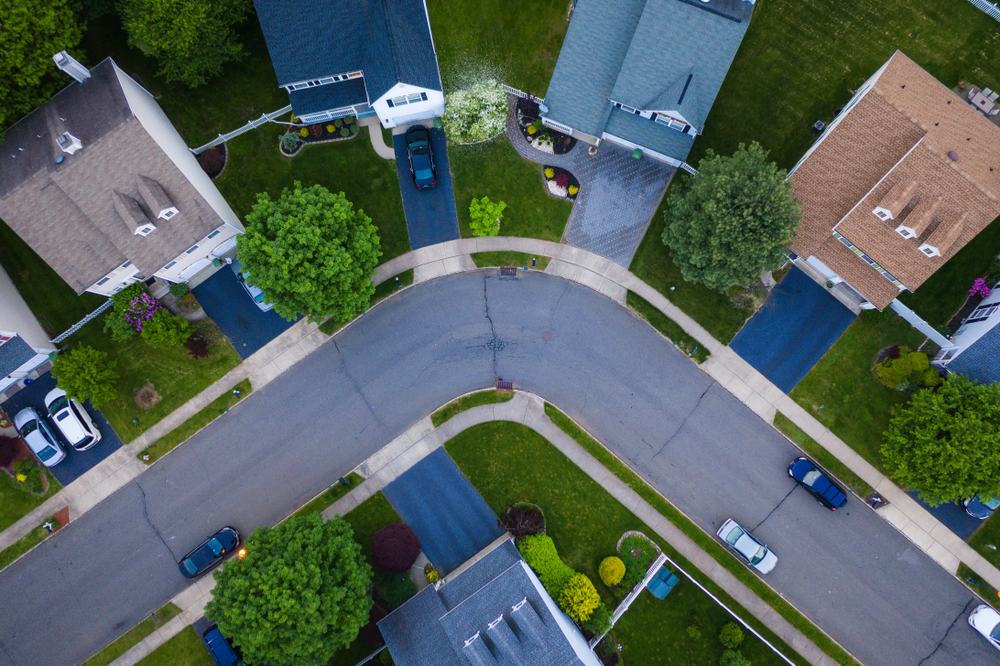
In parts of Northern New Jersey, high-end listings are moving faster and attracting more competitive offers than entry-level homes. For buyers who assumed affordable properties were the hot ticket, the numbers say otherwise.
Mark Slade, founder and team lead of The Mark Slade Homes Team at Keller Williams in Northern New Jersey, tracks weekly sales data across multiple towns in the region. His numbers reveal a market that doesn’t behave the way most people expect, and understanding the split could save buyers and sellers time, money, and frustration.
The Surprising Split
Livingston, a town known for larger, higher-priced homes, is the only market in Slade’s tracking area that is not currently a seller’s market. It has more active listings than homes under contract, giving buyers more breathing room than in almost any other nearby market.
Meanwhile, South Orange, where prices are lower and first-time buyers are more common, has a buyer-to-listing ratio of 5.4, meaning more than five buyers are competing for every available home. “South Orange is beyond bonkers,” Slade said.
Montclair, another higher-profile market, is running at an average of 22% over asking. Maplewood is at 16%. These are not entry-level towns, yet they’re the ones generating the most frenzied competition.
Why Expensive Towns Are Hotter
Northern New Jersey has long attracted Manhattan commuters; Slade calls these towns “bedroom communities of New York City.” The train ride from Maplewood to Penn Station takes about the same time as a subway ride from Brooklyn, and the lifestyle trade-off, space, schools, a backyard, is increasingly appealing to city families with growing incomes.
These buyers tend to move up from city apartments rather than from starter homes, which means they shop in the mid-to-upper price ranges where competition is fiercest. “After they’ve tripped over the stroller for the eighth time, they’re done with that – they want the space of a house, not a two-bedroom apartment,” Slade said.
New York City’s recent tax changes on non-primary properties are adding fuel, pushing more city-based owners to sell there and buy in New Jersey. These buyers arrive with equity and motivation, and they’re not shopping at the bottom of the market.
Livingston draws a different buyer profile, one that tends to be more methodical, more likely to use off-market listings, and less driven by the open-house frenzy that defines towns like South Orange. Slade tracks what he calls “exclusives,” homes listed for one day or less, essentially private sales, and Livingston accounts for a third of them in his dataset. That removes a chunk of inventory from the public market entirely, dampening the visible competitive dynamic.
The Spillover Effect
Rising prices in the most competitive towns are pushing buyers into adjacent communities, and those towns are feeling the pressure. Union’s average sale price has jumped from roughly $525,000 at the end of last year to nearly $600,000 this year. West Orange is seeing similar movement, with what Slade describes as a healthy hyper-market ratio of 1.5.
“We’re seeing some spillover, which is making other area towns rise in value,” Slade said. “The good news is it’s great for people who own homes there. The bad news is the average price is getting higher.”
What Buyers and Sellers Should Do Now
If You’re Buying Under $700,000 in a Hot Town
South Orange’s 5.4 ratio indicates severe competition. Go to open houses early and late to gauge how many buyers are circling. Ask your agent what the home is likely to sell for – not what it’s listed at. Get pre-approved before you start making emotional decisions.
If You’re Shopping in Livingston or a Slower Submarket
You have more leverage here than almost anywhere else in the region. Ask for a home inspection. Negotiate repairs. Take your time comparing options; there are more of them. This is genuinely rare in Northern New Jersey right now.
If You’re Selling in a High-Demand Town
Please don’t overprice, assuming you’ll negotiate down. Slade’s data shows that homes priced strategically, accounting for specific drawbacks and current competition, consistently outperform homes that start high and drop. Price to attract multiple offers, not to leave room for haggling.
If You Own in a Spillover Town Like Union or West Orange
Your equity position is likely stronger than you think. Rising average prices in these towns mean the math around selling or refinancing may have moved in your favor.
Looking Ahead
In this corner of New Jersey, the usual assumptions are upside down. The most affordable towns have the most cutthroat competition, while some higher-priced markets offer buyers room to breathe. As long as Manhattan commuter demand stays strong and inventory remains tight in mid-tier towns, this pattern is likely to hold, and spillover effects will continue pushing prices higher in surrounding communities. The smart move is to look at actual data for the specific town you’re targeting before deciding how to play it.
About the Expert: Mark Slade is the founder and team lead of The Mark Slade Homes Team at Keller Williams, specializing in the Northern New Jersey real estate market.
This article is intended for informational purposes only and does not constitute legal, financial, or investment advice. The views and opinions expressed herein reflect those of the individuals quoted and do not represent an endorsement of any company, product, or service mentioned. Readers should conduct their own due diligence and consult qualified professionals before making any investment decisions.