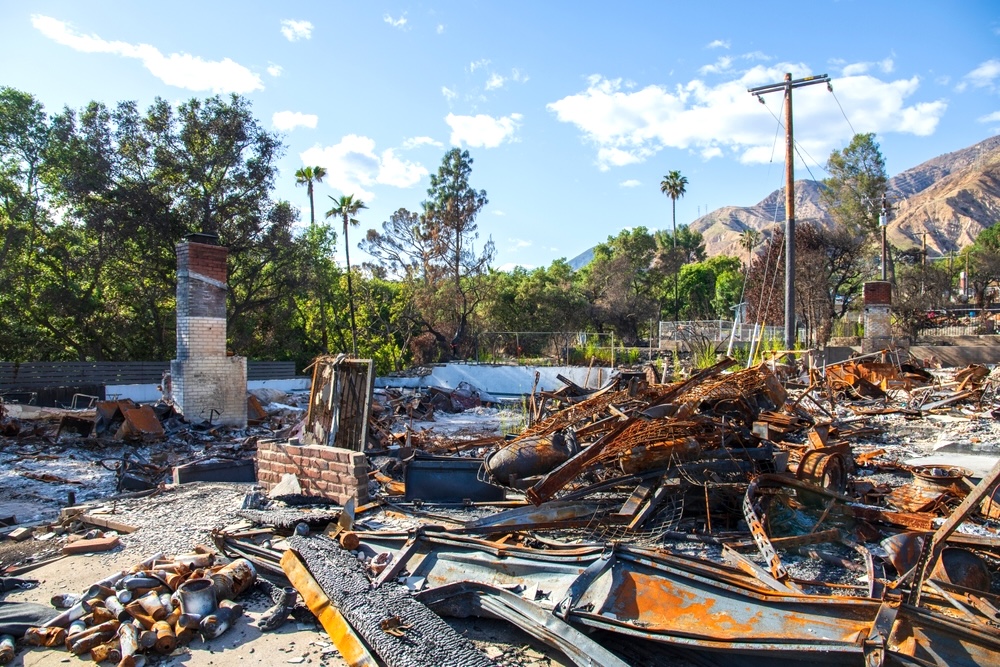
State housing laws written to ease California’s homelessness crisis were never designed for a town that lost two-thirds of its buildings in a single fire. But that is exactly where they are being applied now, and the results will reshape what Altadena looks like for decades, in ways most displaced residents never agreed to and cannot stop.
Nic Arnzen, chair of the Altadena Town Council, has been tracking developer activity across the community’s roughly 6,700 destroyed parcels since the January 2025 Eaton Fire. What he is seeing is a collision between well-intentioned state legislation and a disaster landscape that those laws were never built to handle.
The legislation at the center of the problem is SB 9, passed before the fire, which increases housing density in California communities. Under SB 9, a property owner can split a lot and build on both halves, or build a second primary dwelling on an existing lot alongside multiple accessory dwelling units. In a neighborhood where most parcels are intact and surrounded by existing homes, that kind of density increase is manageable. In Altadena, where block after block sits empty, it creates something different: a legal pathway for developers to buy a burned residential lot and construct what amounts to a small apartment complex where a single home once stood.
A developer purchases a fire-damaged parcel, structures the build as an SB 9 project with separate ADU units, and ends up with a multi-unit complex on a lot that previously held one house. The surrounding neighborhood has no effective recourse. Arnzen describes the shock facing displaced residents who return to find dense new construction next door. “You knew what you were moving to,” he said, “and now it’s going to stop.”
A second law, SB 1123, posed a similar risk but has proven less of a problem in practice. Its key requirement, that 75 percent of the surrounding area must already be developed, means most burned Altadena parcels do not qualify. Arnzen said that as of late May 2026, every developer who attempted to invoke SB 1123 in Altadena had their application voided for failing to meet that threshold. He expects some will eventually find qualifying lots and is already working to alert property owners before those sales happen.
The third piece of legislation, AB 1116, is the one Arnzen is most focused on now. He describes it as a measure that would make it easier for developers to use SB 9 and SB 1123 more aggressively. As of early June 2026, it was still moving through the state legislature, and the Altadena Town Council was actively pushing back.
The underlying problem is not just legal; it is financial. Displaced residents who cannot afford to rebuild and cannot afford to wait are the most vulnerable to developer offers. A buyer with cash in hand and a quick close is often the only realistic option for someone who needs to sell now. Arnzen does not blame those sellers. He describes the situation as genuinely impossible: a displaced resident who loved their neighborhood, cannot afford to stay, and has no good choices. “I got to save my family,” he said, capturing the position many sellers face.
The community’s resistance is visible, “Altadena Is Not for Sale” signs have gone up across the area, but Arnzen is clear-eyed about what sentiment alone can accomplish. Signs do not change the financial math for a family that has run out of insurance money. What might change the outcome is new state legislation specifically written to exclude disaster-decimated communities from density laws designed for intact neighborhoods.
State Senator Sasha Perez is currently reworking legislation to address the gap, with language targeted specifically at Altadena. Arnzen is pushing for broader language that would apply to any community that loses a comparable share of its housing stock in a future disaster, arguing that the next fire could hit any California town. State officials have told him Altadena-specific language may be easier to pass. Still, his strategy is to build support in other districts by making the case directly to residents that what happened in Altadena could happen to them.
For anyone considering buying property in Altadena now, the legislative fight has direct consequences. If AB 1116 passes and SB 9 remains applicable to fire-decimated parcels, the character of the neighborhood may look substantially different in five years. Arnzen estimates roughly ten developments are currently underway that the community cannot stop under the existing law. Whether the state acts before more parcels change hands will determine how much of Altadena’s original residential character survives, and whether future disaster-struck communities face the same vulnerability.
About the Expert: Nic Arnzen is the chair of the Altadena Town Council, where he focuses on community recovery and land-use policy following the January 2025 Eaton Fire. He also serves as the facilities director of a community hub for fire survivors in Altadena.
This article is intended for informational purposes only and does not constitute legal, financial, or investment advice. The views and opinions expressed herein reflect those of the individuals quoted and do not represent an endorsement of any company, product, or service mentioned. Readers should conduct their own due diligence and consult qualified professionals before making any investment decisions.