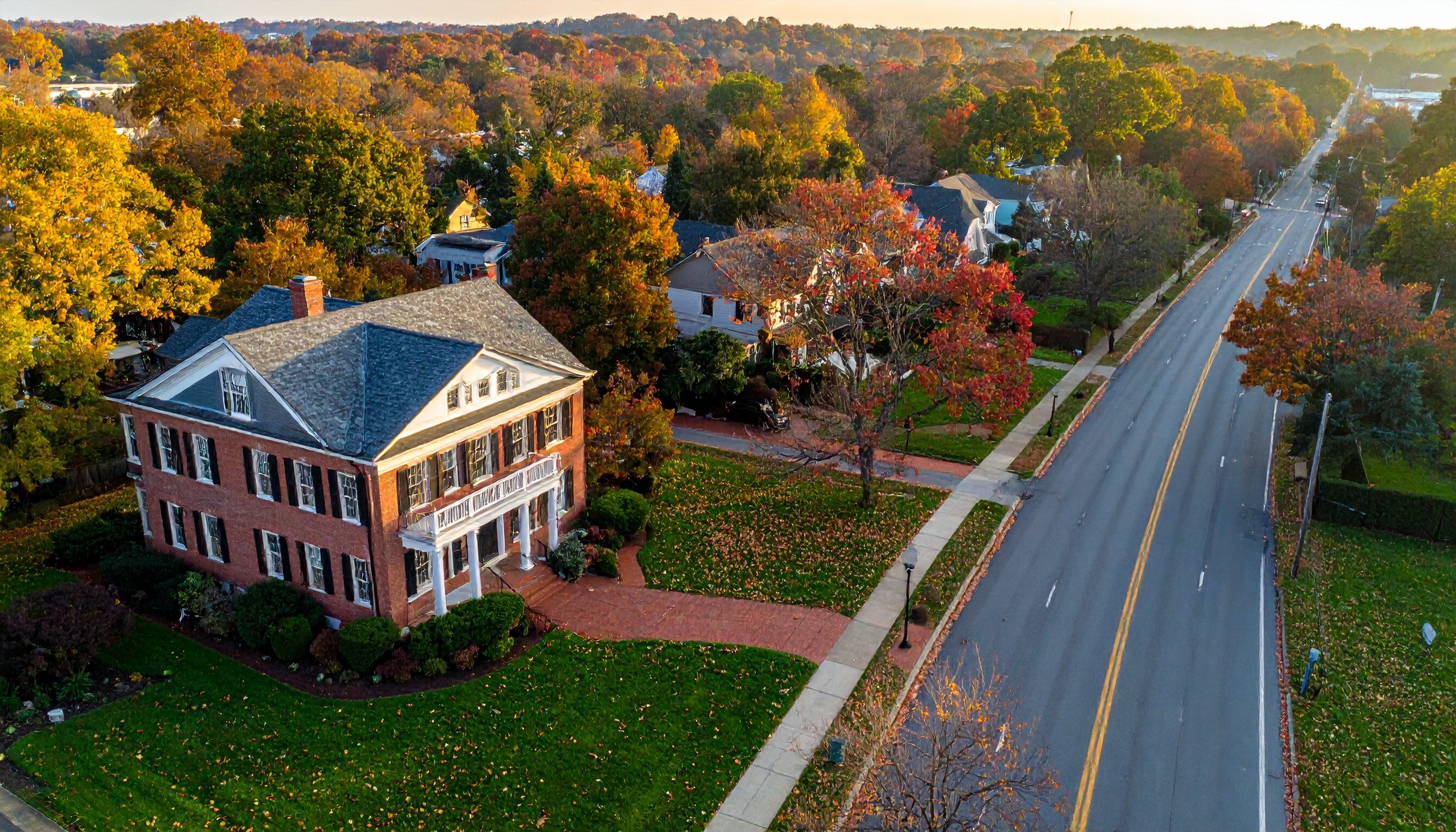
Montgomery County has opened the door to more housing types in some of its most expensive single-family neighborhoods, but in Chevy Chase, Maryland, the price of land may matter more than the zoning code. A recent county rule allows duplexes, townhouses, and small apartment buildings on lots facing major roads such as Connecticut Avenue, while the quieter interior streets remain zoned for single-family homes. Even on those major roads, says Daniel Schuler, co-founder of The Synergy Group of Compass, the numbers rarely work unless a site sits close to a commercial area.
The reason is the cost of the land itself. A lot in Chevy Chase is so expensive, Schuler says, that a builder needs to fit many units on it to recover what was paid for the ground. That is only realistic near commercial areas, where higher density is permitted.
What the Rules Allow
An earlier county proposal to allow duplexes and other small multi-unit buildings throughout single-family neighborhoods did not advance. The rule the county council eventually passed is much narrower. It covers only lots that face a list of busy roads the county designated as housing corridors, leaving side streets untouched. Builders must also set aside a share of units in larger projects for middle-income households, and every project needs sign-off from the county Planning Board, which reviews each one individually.
Schuler says those busier roads and commercial edges are the only places where density is likely to pencil out. Inside Chevy Chase, he adds, the area’s incorporated municipalities bring their own approval processes, and many residents have pushed back on adding units. Several of those municipalities pressed the county council for changes to the rule before it passed.
Rates Haven’t Cooled Demand
Mortgage rates have climbed over the past year. That includes jumbo loans, the larger mortgages most Chevy Chase buyers rely on because local home prices exceed the limits for standard financing. Schuler says the best rates his clients were offered rose sharply between the start of the year and the fall.
Even so, he says, higher rates have not significantly pulled buyers back. Chevy Chase is almost entirely built out, with virtually no land left to add homes, so steady demand from a largely dual-income professional buyer pool keeps meeting a limited supply. “You always have a good demand and a modest supply,” Schuler says.
He also points to the area’s track record. Because of the federal government’s presence in the region, he says, Chevy Chase held up far better than much of the country after the 2008 financial crisis. By his account, local values dipped only modestly while some markets lost more than half their worth, and Chevy Chase earned back its losses within several years. Federal jobs and the businesses built around them, he says, keep demand steady even when the broader economy falters.
Buyers Favor Move-In Ready
Previously owned homes that are already renovated and priced mid-market sell fastest, Schuler says, because busy dual-income buyers will pay more to move right in. Homes needing a full renovation draw fewer buyers, and new construction sits longer, since builders market it before completion and it carries the neighborhood’s highest prices.
That gap has narrowed this year as higher rates push up monthly payments, he says, making buyers more willing to live with a dated basement if the price fits. “Someone can buy that home, move in, live with it as it is, and then they can push that basement renovation down the road a year or two,” Schuler says, until rates fall or the owners rebuild their savings.
When Rebuilding Makes Sense
Buyers usually know at purchase whether they are taking on a full renovation or a rebuild, Schuler says, because both are expensive. He recently priced a custom build for a client who had bought a lot: a large family home with high-end finishes, plus a detached garage topped by an accessory dwelling unit, a small separate apartment. The construction cost alone exceeded what many finished homes in the area sell for.
The decision comes down to a comparison, he says: the purchase price plus the cost to build, measured against what comparable new homes are selling for. If the total lands in line with those sales, a rebuild can make sense. If it runs well above them, the buyer would likely be better off with a home that is already finished. Schuler, who studied architecture before entering real estate, walks clients through the process, from working with architects, designers, and engineers on a plan to meeting builders to compare pricing and quality.
A Patchwork of Municipalities
The name Chevy Chase covers several distinct areas, including incorporated municipalities such as Chevy Chase Village, the Town of Chevy Chase, Section 3 and Section 5 of the Village of Chevy Chase, and Martin’s Additions. Schuler says each has its own rules and value structure, which shape what a home is worth and what an owner can do with it.
That patchwork helps explain both the area’s stability and its complexity. Limited land, high entry costs, and local rules help protect values, Schuler says, but they also mean buyers and sellers need to know which section a property sits in before they can judge its price.
About the Expert: Daniel Schuler co-founded The Synergy Group of Compass with a business partner in 2020. Licensed since 2011, he works with buyers, sellers, and investors in Chevy Chase and the surrounding area, and the team also handles development and property management.
This article is based on information provided by the expert source cited above. It is intended for general informational purposes only and does not constitute legal, financial, or real estate advice. Readers should conduct their own research and consult qualified professionals before making any real estate or financial decisions.