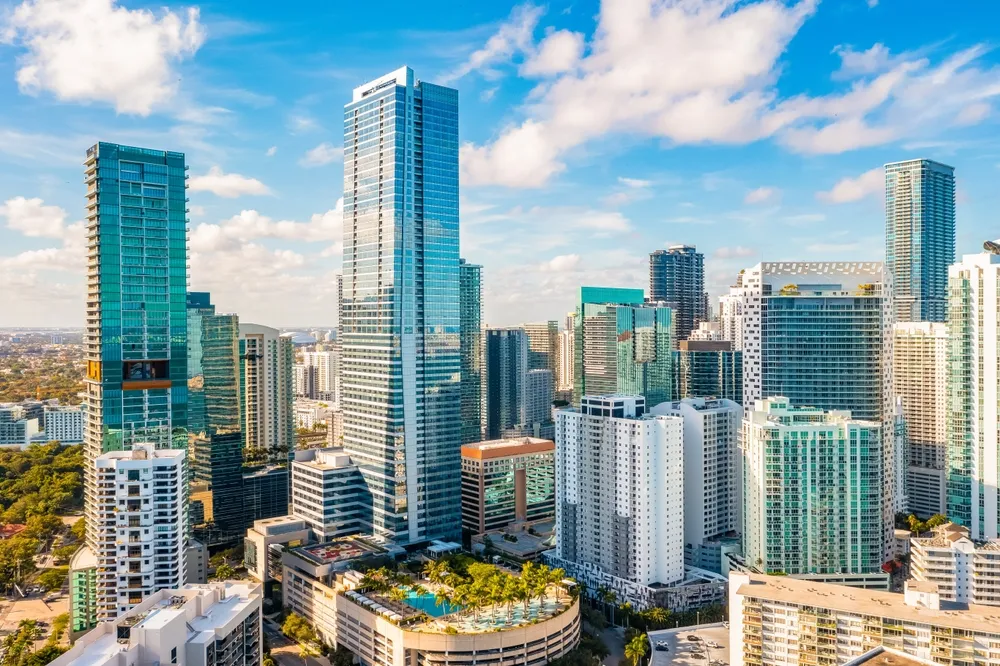
Most buyers shopping for a condo in South Florida zero in on location first – the zip code, the view, the proximity to the water. But brokers active in the Miami market argue that buyers are focusing on the wrong variable. In a market where conditions vary sharply from one building to the next, the financial health of the condo association may matter more than the address on the listing.
The reason this distinction carries more weight now than it did a few years ago is Florida’s building safety law, passed in response to the 2021 Surfside collapse. The law required condo associations to fully fund structural reserves by the end of 2024. Many associations that had deferred maintenance for years were forced to raise fees sharply or issue large assessments to comply. That created a visible divide between buildings that had been managing their finances responsibly and those that had not, and buyers are now navigating both types within the same neighborhoods.
A Zebra Market
Andrey Rossin, owner and licensed real estate broker at Cash Flow in Miami Realty, describes the current South Florida condo market as a zebra, not a single trend moving in one direction, but a pattern of sharp contrasts sitting right next to each other. Some buildings are seeing strong demand and rising prices. Others in the same neighborhood are sitting on dozens of unsold units, prices drifting down, and buyers staying away.
The split is not random. Rossin argues that a building’s financial condition is now the primary driver of whether a unit holds its value, sells quickly, or stagnates. The clearest early indicator is something any buyer can observe without requesting a single document: how many units in the building are currently listed for sale.
The Listing Count
Rossin uses a straightforward rule of thumb. In a building with roughly 250 units, having 40 or more condos on the market simultaneously is a red flag. Six to eight listings suggest a healthy, high-demand property. “If you have 250 condos and 40-plus for sale, something’s bad with that building,” he said. When that many owners are trying to exit at once, it usually signals a looming assessment, financial mismanagement, or maintenance fees that have climbed high enough to scare off buyers.
That inventory signal matters because it appears before the financial problems become public. By the time an association issues a large special assessment or a reserve study reveals a funding shortfall, the units are already harder to sell. Buyers who paid attention to the listing count had an earlier warning.
Rossin recently worked with a buyer from Philadelphia who had specific requirements: an in-unit washer and dryer, a particular view, and a price point that fit her budget. He identified three buildings that matched her criteria. Two had a high number of units for sale. He steered her toward the third, which had only six active listings in a building of more than 200 units, with two more already under contract. The low inventory count was the first signal. The financial review that followed confirmed what the listing count suggested.
Supply Is the Problem
Not every part of the South Florida market is under pressure. Rossin points to Coral Gables and Coconut Grove as areas where inventory is so limited that demand consistently outpaces supply. In those markets, the challenge is not finding a financially sound building; it is finding anything available at all. He recently visited two properties in Coconut Grove for a buyer. He found both overpriced for their condition, with sellers asking more than a million dollars for homes on small lots that needed complete renovation. Even in tight markets, pricing discipline matters.
The risk for buyers lies in the middle markets that look stable on the surface but contain buildings with very different financial profiles sitting side by side. In those conditions, choosing based on price per square foot or neighborhood reputation alone can lead a buyer into a building that is quietly accumulating costs the next owner will absorb.
What Florida Law Requires
Florida law gives condo buyers meaningful protection here. Sellers are required to provide the association’s financial statements, reserve study, and board meeting minutes before closing. A current reserve study that shows the association’s funding at or near the recommended level indicates financial stability. Meeting minutes from the past two years can reveal whether assessments have been discussed, whether major repairs are pending, or whether the board has been deferring decisions.
One number that does not appear on any listing sheet but is worth requesting directly: the percentage of units in the building that are owner-occupied versus rented out. Buildings with high rental concentrations can face financing restrictions, which limit the pool of eligible buyers and put downward pressure on resale values over time.
For buyers entering the South Florida condo market now, the practical takeaway is clear. The neighborhood sets the floor, but the building’s financial condition determines whether a purchase will hold its value or become a liability. Checking the listing count, reviewing reserve funding levels, and reading recent board minutes are steps that take relatively little time but can prevent buyers from inheriting problems that were visible, if they knew where to look.
About the Expert: Andrey Rossin is the owner and licensed real estate broker at Cash Flow in Miami Realty, serving buyers and investors across the South Florida condo market.
This article is intended for informational purposes only and does not constitute legal, financial, or investment advice. The views and opinions expressed herein reflect those of the individuals quoted and do not represent an endorsement of any company, product, or service mentioned. Readers should conduct their own due diligence and consult qualified professionals before making any investment decisions.