While many secondary markets across the United States face tighter financing conditions and slower deal flow, McAllen, Texas, is on a different trajectory. The border city of roughly 150,000 residents, whose daytime population swells to between 300,000 and 350,000, is in the middle of a notable development cycle driven by regulatory reform, infrastructure investment, and a geographic position that gives it economic access few American cities can match.
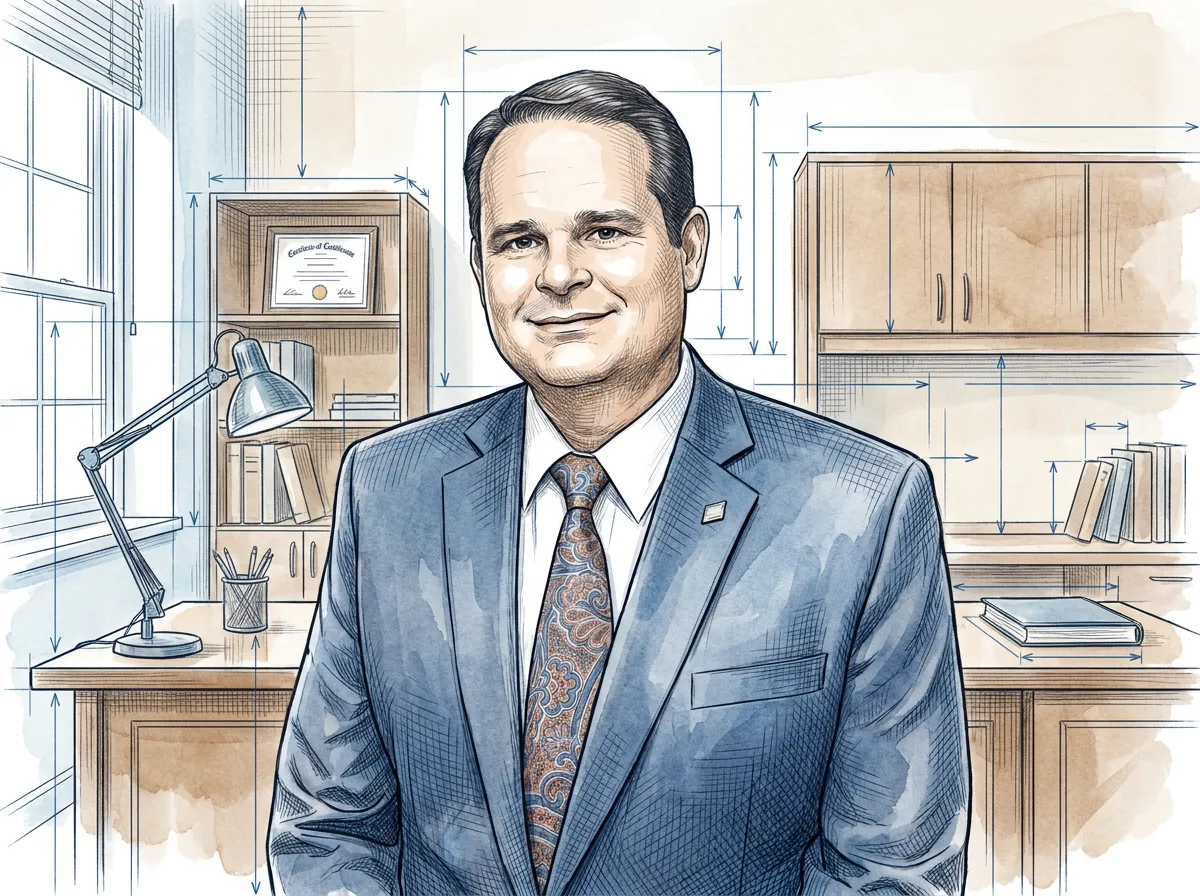
At the center of that story is Isaac Tawil, McAllen’s City Manager, whose background as a commercial attorney shapes how the city approaches growth. Before taking on the city manager role, Tawil was already deeply involved in decisions about McAllen’s development trajectory, a transition he describes as “a natural progression from the attorney’s office to the manager’s office.”
Modernizing the Rules of Development
The most concrete policy change in recent years has been the adoption of McAllen’s Unified Development Code, a regulatory overhaul roughly five to seven years in the making that replaced a framework originally designed in the 1970s. The old code reflected a car-dependent era: heavy parking requirements, strict separation of land uses, and little flexibility for mixed-use development. Retail occupied one quadrant, residential another, and multifamily was kept apart from single-family.
The new code reduces parking requirements, encourages mixed-use development, and promotes walkable neighborhood districts where housing, retail, and entertainment coexist. It also creates a practical pathway for existing property owners. Retail developments currently operating under conditional use permits can elect to rezone into mixed-use designations, removing those permit requirements and opening the door for additional housing and neighborhood amenities. “We can enhance those areas with additional housing and additional offerings to create these really exciting neighborhood districts,” Tawil notes.
For larger sites, the opportunity is more pronounced. Parcels of 90 acres or more now have the flexibility to be developed in ways that simply weren’t possible under the old rules, allowing master-planned communities and large-scale mixed-use projects to move forward without piecemeal approvals.
Infrastructure as a Competitive Advantage
Beyond zoning reform, McAllen’s infrastructure position sets it apart from many secondary markets that struggle to keep pace with growth demands. The city is currently investing $300 million in expanding its water plant, and Tawil says its drainage system ranks among the best in the country. The city also consistently ranks among the top three safest cities in the United States, a point Tawil returns to repeatedly as evidence of effective municipal management.
When asked whether developers encounter friction points, the answer is direct: “In all the conversations we’ve had with major industrial developers coming to McAllen, we have been able to meet all of their needs.”
Recent activity supports that claim. Vallejo, a smart manufacturing company, is roughly a quarter to a third of the way through construction on a new plant that will produce computing components for the global automotive industry, bringing an estimated 400 to 500 jobs to the area. Sales tax revenues continue to grow at five to eight percent annually, and industrial, retail, hospitality, and professional services sectors are all expanding.
The Border Economy as a Buffer
McAllen’s position on the U.S.-Mexico border, adjacent to Reynosa, Tamaulipas, is a defining feature of its economic character and one that Tawil believes is frequently misread by outside observers. He acknowledges that border challenges exist but argues they are often sensationalized, encouraging investors and developers to visit the city directly rather than rely on national media narratives.
From a market dynamics perspective, the border creates a dual economy that provides meaningful insulation from national downturns. McAllen has access to NAD Bank financing, a binational development institution that supports environmentally friendly projects along the U.S.-Mexico border, giving developers an additional capital source unavailable in most American cities. The city also operates its own standalone EB-5 corporation, adding another financing option for qualifying projects.
The cross-border consumer base drives significant retail and hospitality activity, with a population that maintains strong ties to the U.S. economy and a consistent presence in McAllen’s commercial ecosystem. “If you think about us in terms of portfolio theory, we insulate ourselves well from the downs and over-perform during the bull markets,” Tawil explains.
Capital Structures Are Getting More Creative
As the national financing environment has grown more complex, McAllen is attracting more sophisticated deal structures. Tawil points to emerging collaborations between university systems, school districts, and the city itself on joint development projects, as well as creative capital stacking arrangements for industrial developments in the $100 million to $200 million range.
These arrangements reflect a broader pattern: by the time most projects reach the city for permitting, the capital structure has already been resolved. That signals developers are arriving with conviction rather than still testing feasibility, a distinction that matters in a national environment where many deals stall at the financing stage.
Watching the Horizon
Despite the positive near-term picture, city leadership is monitoring several macro variables that could affect development activity. Fuel prices are a particular concern given McAllen’s operation of two international bridges and its regional airport. Healthcare costs, AI infrastructure, and data security are also on the radar.
Tawil’s approach to risk monitoring is deliberate: pay attention to outlier signals rather than consensus narratives. “Pay attention to that one article that shocks your senses, because that’s the one that’s going to set the next trend,” he says. The underlying strategy, however, stays consistent, prioritizes infrastructure and public safety in every budget cycle, and lets that foundation absorb whatever external pressures emerge.
For developers and investors evaluating where to place capital in a selective market, McAllen presents a case built on specifics rather than speculation: a modernized regulatory framework, infrastructure capacity that exceeds current demand, border-driven economic resilience, and active deal flow across multiple sectors. Whether that combination holds through the next national downturn remains to be seen, but the groundwork suggests a city positioned to absorb pressure rather than buckle under it.
About the Expert: Isaac Tawil is the City Manager of McAllen, Texas, a border city of approximately 150,000 residents adjacent to Reynosa, Tamaulipas, Mexico. He previously served as a commercial attorney before transitioning to the city manager role, and has been centrally involved in McAllen’s Unified Development Code overhaul and broader infrastructure investment strategy.
This article is based on information provided by the expert source cited above. It is intended for general informational purposes only and does not constitute legal, financial, or real estate advice. Readers should conduct their own research and consult qualified professionals before making any real estate or financial decisions.