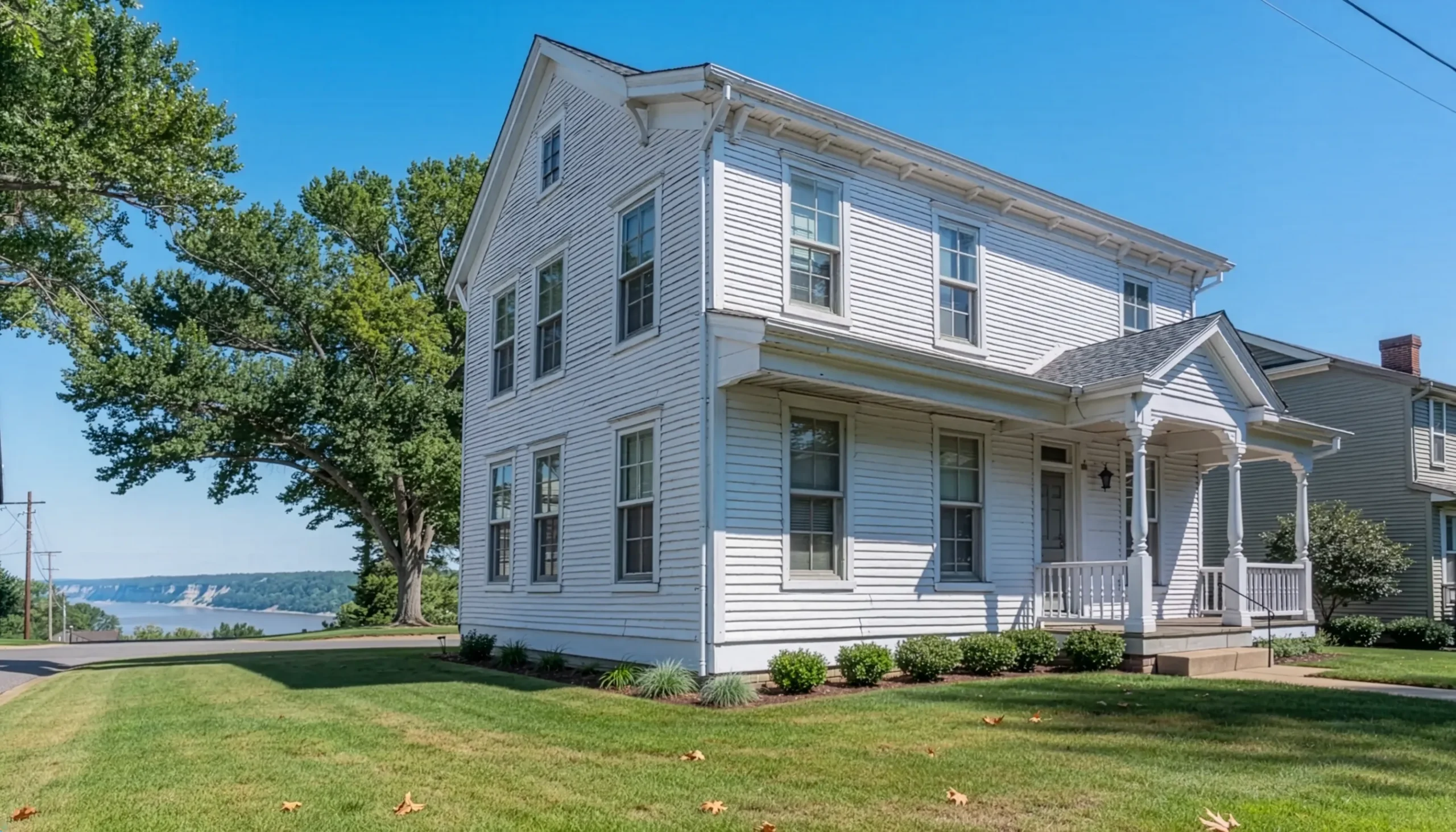
Most real estate coverage focuses on markets where prices are the main barrier to homeownership. In Chester, a small town in southern Illinois’s Randolph County, the average home price sits around $138,000, according to Robin Bert, a broker with Worth Clark Realty who has sold in the area for ten years. The barrier is not the purchase price – it is the condition of what’s for sale. With limited new construction and a housing stock dominated by older homes, some dating to the early twentieth century, the path from listing to closing runs through a series of practical obstacles that national housing data does not capture: outdated electrical panels, aging roofs, and inspection findings that can unravel financing for first-time buyers before the deal reaches the closing table.
Bert describes a market where negotiation centers on condition rather than price. “You just have to be very flexible in these things,” she says.
Where Financing and Condition Collide
FHA and VA loans – the programs most accessible to first-time buyers – carry property condition requirements that many Chester listings cannot meet without repairs. Outdated fuse boxes, peeling paint, and old roofs are common findings, and each can stall or kill a deal if the seller cannot or will not address them.
Bert describes a recent transaction where an insurance company required an electrical upgrade on a home with a 60-amp fuse box. The sellers offered a $2,000 credit, and the buyer contributed an additional $1,000 to install 200-amp service. The deal closed with a brand-new circuit box.
That kind of collaborative problem-solving is the norm, not the exception. Sellers in Chester are generally willing to negotiate – adjusting price, offering credits, or agreeing to small repairs to keep transactions moving. But when a seller has no funds for improvements, the transaction often dies for government-loan buyers. “If the seller isn’t willing to do a lot, then the deal is just going to die for those people,” Bert says. “But we move on to the next one who’s cash or conventional or can do the work themselves.”
Cash and conventional financing dominate the lower end of the market as a result, while FHA and VA loans require more effort from both sides to reach closing.
A Buyer Pool Shaped by Life Events
Chester’s buyer profile reflects its demographics. The town does not grow much – its population stays roughly stable, with residents moving from place to place within town rather than arriving in large numbers from outside. Most transactions Bert handles are listings driven by life events: an inherited home after a death in the family, a divorce settlement, a downsizing, or a job relocation.
First-time buyers tend to be younger residents whose families Bert already knows from her previous career as a tax accountant – a 35-year practice she and her husband ran before she shifted to real estate full time. At the lower price points – homes under $100,000 – buyers are either investors who can do renovation work themselves or first-time purchasers willing to take on cosmetic projects. One recent closing took six months because the buyer was waiting on a divorce settlement before she could fund the purchase. The seller granted early possession, converting the arrangement into a rental-like situation while both sides waited.
Bert says she is on pace for roughly 65 transactions this year, the large majority of which are her own listings. “Every deal’s got drama,” she says. “You’ve got to be the calm one in the transaction.”
Land Moves Fast, but Homes Need Patience
Raw land in the area tells a different story. Parcels are selling quickly, driven by demand from farmers, hunters, and solar companies acquiring acreage for panel installations across Randolph and Jackson counties. Bert puts the going rate at around $10,000 per acre. One Williamson County listing – 42 acres priced at $399,000 – went under contract within a week.
Homes with acreage take longer. Bert estimates 60 to 90 days from listing to close in the current environment, with contingencies – particularly buyers who need to sell an existing home first – adding another 30 days or more. Multiple offers are uncommon. “Not everybody’s flocking to Chester,” she says. “People have to be prepared.”
Properties with acreage also attract a distinct buyer type: people seeking privacy outside of town. Bert says VA loans are common among these buyers and notes that she works with Veterans United through the Alliance Realty Network. Negotiations on acreage properties tend to be harder, she says, because sellers know what rural land is worth and are less willing to come down on price.
A Tax-Driven Exodus Across the River
One trend Bert is watching is migration from Illinois to Missouri. She is licensed in both states and has sold four properties across the river this year. The draw is straightforward: Illinois’s property taxes are substantially higher than Missouri’s, and the Mississippi River bridge from Chester makes the commute practical.
“I hate to see people flee Illinois, because we still have so much to offer in this part of the world,” she says. Still, she acknowledges the pattern is real and growing.
Interest rates compound the pressure. Bert says activity has slowed as rates have climbed toward seven and a half percent, with some buyers turning to adjustable-rate mortgages – a prospect she views cautiously. “You don’t know what interest rates are going to be five years from now,” she says. Combined with high property taxes, elevated construction costs for new homes, and broader economic uncertainty, many potential buyers in Chester are waiting rather than committing.
Bert’s concern is the lack of new, affordable housing inventory. New construction in the area costs $100,000 to $200,000 more than comparable existing homes, she says, pricing out many of the buyers who need housing most. “They need to build some more houses,” she says. “Just build some basic houses as we did back in 1950 when the baby boom was happening.”
For buyers willing to take on an older home that needs work, Chester still offers entry points well below national averages. But reaching the closing table on those properties requires the kind of deal-by-deal negotiation – over electrical panels, roof credits, and repair timelines – that defines this market far more than price alone.
About the Expert: Robin Bert is a broker with Worth Clark Realty, brokered by LPT Network, and a Glover U coach who has sold real estate across Chester and Randolph County, Illinois, for ten years.
This article is based on information provided by the expert source cited above. It is intended for general informational purposes only and does not constitute legal, financial, or real estate advice. Readers should conduct their own research and consult qualified professionals before making any real estate or financial decisions.