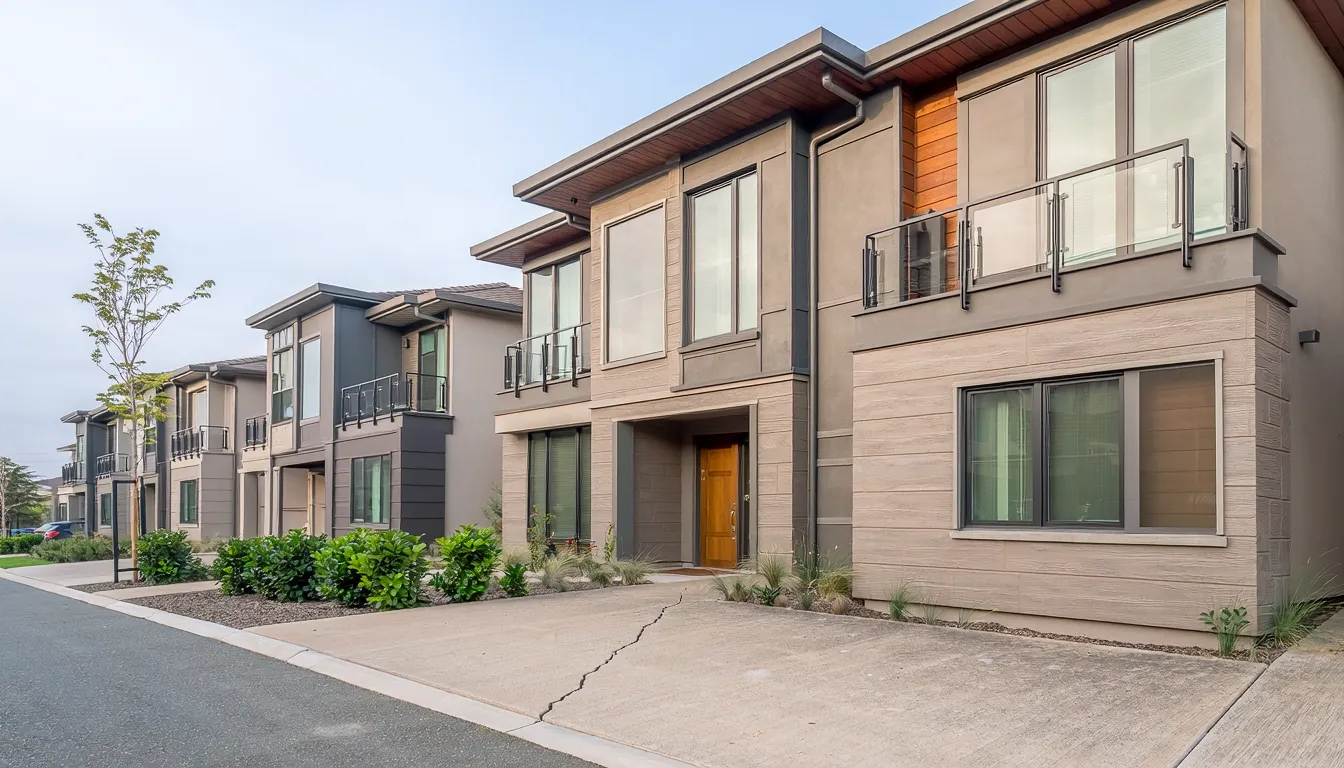
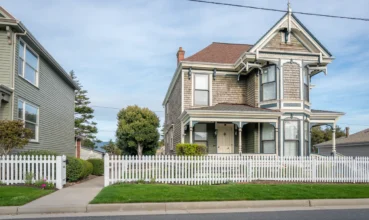
Across much of the San Francisco Bay Area, the homes that once served as the first rung for young professionals are struggling to find buyers. In East Bay cities like Hayward, Fremont, Newark, Pleasanton, Dublin, and Livermore, prices are falling month over month, and the decline hasn’t stopped yet. Townhomes and condos are taking the hardest hit, whether they’re new or decades old.
Interest rates are part of the problem. According to Sean Chen, founder and broker of Gaea Realty in Los Altos, California, rates aren’t the whole story. The Bay Area’s entry-level housing has always depended on a steady stream of young workers arriving for tech jobs, and that stream has thinned.
“Because of the lack of new graduates and fresh starter-level workers in the Bay Area, you kind of find it’s pretty challenging for people to buy townhomes or even condos,” Chen says.
The Buyers Who Came Before
Chen traces the region’s starter-home demand to two large influxes of young tech workers. The first began around 2010, when graduates poured into the Bay Area to work at companies like Facebook and started buying homes in 2012 and 2013. A second wave arrived around 2017 and 2018. Both groups bought what they could afford at the time: townhomes and smaller single-family homes of 1,300 to 1,500 square feet.
Those buyers were in their early to mid-20s then. Many are now in their late 30s or 40s, with children, and they’re looking for what Chen calls a destination home: four bedrooms, two and a half baths, and a strong school district. That move-up demand is keeping the mid-to-upper single-family segment active.
It also means those owners are now selling their starter homes rather than buying them. Without a comparable wave of new graduates behind them, the townhomes and condos they’re leaving have fewer natural buyers.
A Product Caught in the Middle
The pressure is sharpest on townhomes around $1.1 million. At current rates, that price is hard for a first-time buyer to carry. Yet few people see a townhome as a long-term home.
“This is more like a five- or seven-year solution,” Chen says. Buyers who can manage the monthly payment on a $1.1 million townhome often choose to stretch into a single-family home they can stay in for 15 or 20 years. That leaves townhomes competing for a narrow slice of the market.
Lower-priced condos, in the $500,000 to $600,000 range, are holding up better by comparison, since they remain within reach for more entry-level buyers.
Wealth Without Entry-Level Jobs
The current tech cycle has added to the imbalance. Chen describes AI as having narrowed the window for entry-level tech hiring, even as it has concentrated substantial wealth among employees and founders at established companies. That wealth has flowed into higher-priced homes. It hasn’t brought a new generation of young workers into the region to fill the starter tier.
Chen expects the lower tiers to remain under pressure in the near term, as long as interest rates stay elevated and buyers’ borrowing capacity stays limited. He notes that affordability constraints extend well beyond the Bay Area.
Why Chen Expects the Pipeline to Refill
Chen’s longer view is more optimistic. He expects AI to eventually create new categories of work, much as earlier technologies did. His comparison is the arrival of the automobile: it displaced the horse but created demand for drivers. In the same way, he anticipates a generation of workers trained to operate and direct AI systems.
“When that kind of time comes, people are going to come back to the Bay Area, and we’re going to be seeing new graduates with new skill sets,” he says. “I think when that time comes, the entry-level houses of the Bay Area are going to be booming again.”
That outlook shapes his advice to current owners. For someone holding a townhome with a mortgage rate around 3 or 3.25 percent and the ability to wait five years or more, Chen sees good reason to hold rather than sell into today’s conditions. A low rate makes waiting affordable. A returning wave of young workers, if it arrives, would bring back the buyers these homes were built for.
For buyers, the same conditions create an opening. Starter homes that sat through the current slowdown are available with less competition than the Bay Area has seen in years. Buyers who can manage today’s rates face fewer rivals for the same inventory.
About the Expert: Sean Chen is founder and broker of Gaea Realty in Los Altos, California.
This article is based on information provided by the expert source cited above. It is intended for general informational purposes only and does not constitute legal, financial, or real estate advice. Readers should conduct their own research and consult qualified professionals before making any real estate or financial decisions.