The narrative around Florida’s coastal real estate has been dominated by alarm in recent years, rising insurance costs, hurricane damage, condo assessment crises, and departing residents. But on the ground in Pinellas County, the picture is more layered than the headlines suggest. For investors and buyers paying attention, the current moment in Tampa Bay’s beach communities may represent a window that won’t stay open long.
Cyndee Haydon, a Broker Associate with the Sandbars to Sunsets Team at Future Home Realty, has spent more than two decades working the 26-mile stretch of Gulf Coast beaches from Clearwater to St Pete Beach. She combines active sales work, short-term rental expertise, and policy advocacy on flood insurance reform at the state and national level, giving her a read on the market that goes well beyond transaction data.
A Market in Recovery, Not Decline
The most important thing to understand about the Pinellas Beach market right now, according to Haydon, is that Hurricane Helene in late 2024 created a temporary supply distortion, not a structural collapse in demand. The storm left many short-term rental properties uninhabitable for months, and the carrying cost of paying a mortgage with no rental income kept both buyers and sellers on the sidelines.
As repair timelines have stretched, many projects are now reaching completion, and inventory is beginning to normalize. Haydon says the renovation work itself has considerably improved the housing stock; properties that flooded received new roofs, kitchens, flooring, and updated mechanical systems. “Everybody’s now more like new construction,” she notes.
Historical research from Florida Realtors, which Haydon accessed through her role as the organization’s treasurer, supports the recovery thesis. Studies of every Category 3 or above hurricane since the 1990s show that prices typically return to pre-storm levels within six months and often exceed them, a pattern driven in part by the wholesale renovation of aging housing stock.
Three Tiers Are Emerging in Single-Family
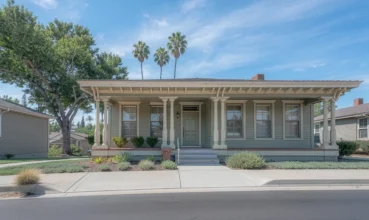
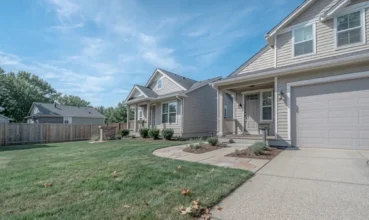
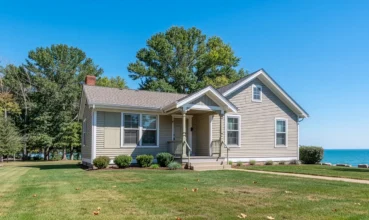
For single-family homes in the two beach towns that permit short-term rentals, Indian Rocks Beach and Redington Beach, the market is sorting into three distinct price tiers based on construction type and elevation. Slab-on-grade homes, the most vulnerable to flood damage, are settling around $1.2 million for a standard three-bedroom, two-bath configuration. Elevated existing homes command closer to $2.5 million. New construction, built to current flood elevation requirements, is trending toward $3.5 million.
From a short-term rental investment standpoint, the math favors the lower tiers. Most municipalities have moved to occupancy caps, meaning a property can host only a fixed number of guests, regardless of price point. “Ten people at $1.5 million versus 10 people at $3.5 million, I’m going to make the numbers work a lot better at $1.5 million,” Haydon says.
The Permit Problem Buyers Need to Know About
One risk factor that has received little attention outside the local market involves unpermitted post-hurricane repairs. With insurance payouts arriving and contractors in short supply, some homeowners rebuilt without pulling permits, a decision that created a compliance problem for future buyers.
In cities like Indian Rocks Beach, obtaining a short-term rental license triggers a permit audit. If a property flooded, was repaired without permits, and is now being sold as a rental, the new owner could find themselves unable to operate until all work is properly documented and inspected. “That’s why it’s very important to work with agents that really are working in this market and understand where some of the potential land mines could be,” Haydon says. For buyers, the due diligence checklist now needs to include a specific inquiry into post-hurricane repair documentation.
Insurance: From Crisis to Stabilization
The insurance picture in Florida has improved meaningfully over the past 18 months. Haydon chaired Florida’s Insurance Committee in 2017, during the period of most severe rate escalation, and was instrumental in closing the one-way attorney fee loophole that had driven litigation costs to unsustainable levels. Florida accounted for 7% of U.S. claims but 82% of U.S. insurance lawsuits at the peak.
Since that reform, 20 new carriers have entered the Florida market, and rate increases have slowed to 1%, the lowest in the country, with many insurers offering reductions. On the ground, this means insurance is no longer derailing deals the way it was a year ago. Haydon recently closed a transaction in Indian Rocks Beach, where homeowners’ insurance for a three-bedroom, two-bath short-term rental came in under $6,000 annually. “A year ago, it was harder because there was no stopping the big escalations of 100-plus percent,” she says. “Now that’s stabilized.”
The Condo Market Requires More Patience
While the single-family picture is improving, the condo segment remains more complicated. Florida’s building safety legislation, passed in response to the Surfside collapse, required structural integrity and reserve studies statewide. For many older buildings, decades of deferred maintenance had to be addressed simultaneously, and existing owners bore the cost through special assessments.
For buyers, this creates a timing question rather than a fundamental problem. Buildings that have completed their reserve funding and structural work are now in better physical condition than they have been in decades. The challenge is that some buildings are still in the middle of repairs, and the carrying costs of owning a unit that cannot generate rental income during repairs are high. Haydon’s current advice for condo owners who don’t need to sell immediately: wait for the January-February season, when buyer activity typically strengthens.
Demand Is Moving Inland
One of the more notable trends Haydon is observing is short-term rental demand broadening beyond the beach. Properties in Seminole, Largo, and parts of Tampa, several miles from the water, are increasingly attracting guests and investors who previously focused exclusively on beachfront locations.
The economics are straightforward: a four-bedroom home with a pool, game room, and outdoor amenities in Seminole can generate high rental income at a fraction of the acquisition cost of a comparable beach property. “Not every day is going to be a beach day anyway,” Haydon points out. “You make a house that’s fun, that makes memories.” This trend matters for investors who have been priced out of the beachfront market or are wary of flood exposure.
The Broader Investment Case
For investors evaluating the Tampa Bay coastal market now, the outlook is cautiously optimistic. Pure cash-flow plays remain difficult with interest rates in the sixes and insurance costs factored in. But appreciation potential, particularly for well-located properties with strong rental fundamentals, remains part of the equation.
Major hospitality development in the area, including two Marriott projects at John’s Pass in Madeira Beach and another large-scale hotel nearby, signals that institutional capital sees long-term demand in the market. That kind of investment follows conviction, not uncertainty.
For buyers and investors watching from outside Florida, the window between post-hurricane disruption and full market recovery may be narrowing faster than the headlines suggest. “Give it another six months,” Haydon says, “and everything starts to look back together.”
About the Expert: Cyndee Haydon is a Broker Associate with the Sandbars to Sunsets Team at Future Home Realty, and creator of the SHORE™ STR Investment Framework, Specializing in Airbnb and STR Investments along the 26 miles of Pinellas Gulf Beaches.
This article is intended for informational purposes only and does not constitute legal, financial, or investment advice. The views and opinions expressed herein reflect those of the individuals quoted and do not represent an endorsement of any company, product, or service mentioned. Readers should conduct their own due diligence and consult qualified professionals before making any investment decisions.