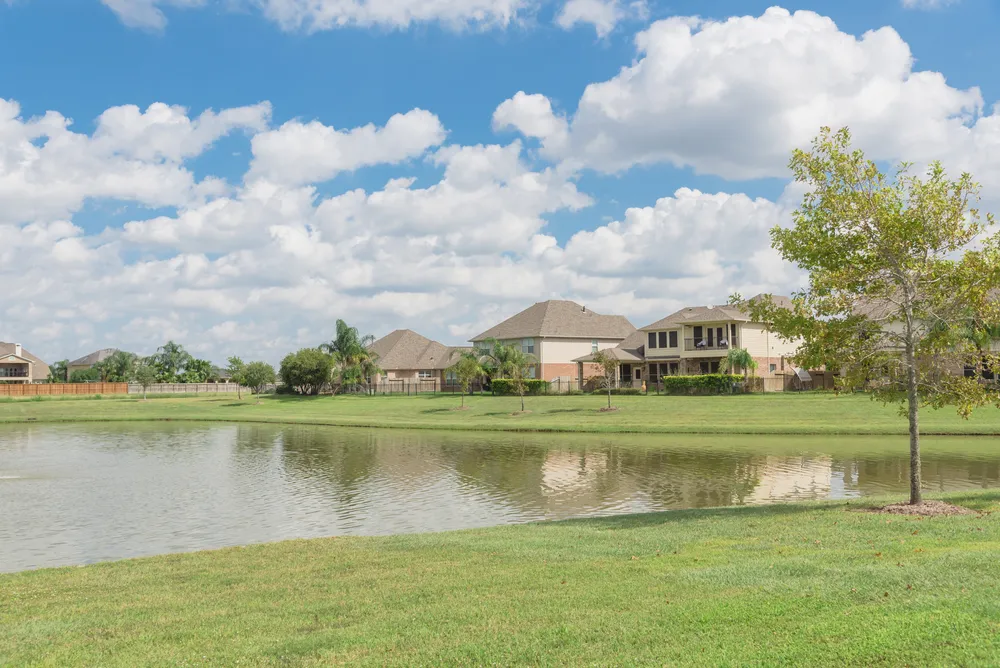
Houston’s median sales price ranges from $324,000 to $342,000. These figures suggest a stable, affordable market compared to Austin, Dallas, or coastal metros. But according to Pedro Iznaga, Senior Agent at Redfin Corporation, those numbers hide a more complicated picture. The market doesn’t behave as one entity. It behaves as dozens of distinct micro-markets, each with its own pace of price growth and risk profile. Sometimes those markets are separated by nothing more than a freeway or a bayou.
“If you go from one side of the freeway to the other, sometimes it’s a whole different market,” Iznaga says. “Or even across the bayou, you have homes that jump up in price another thousand dollars on average.”
For investors who rely on metro-level statistics, this fragmentation creates a real problem. Two properties priced similarly, even miles apart, can carry very different levels of risk. That risk often depends on which side of a school district boundary or flood zone the property falls on.
School Districts Drive Value
The single most consistent driver of Houston’s fragmentation, according to Iznaga, is school district quality. Neighborhoods zoned to high-performing districts, such as Pearland, Katy, Sugar Land, Cypress, and the Woodlands, hold value more reliably. These areas sell faster and attract buyers who are less price-sensitive. Buyers are paying for access to a specific educational outcome, not just square footage.
“Those homes in the best school districts sell quicker, and they tend to keep their value best,” Iznaga says.
By contrast, up-and-coming neighborhoods without strong school district reputations tend to underperform over time, even if they’ve seen steady appreciation. Iznaga describes these as areas where values have climbed, but where underlying demand is weaker. That weaker demand leaves them more exposed when broader market conditions soften.
Metro-level data does not capture that distinction. Neither does a scan of recent comparable sales without understanding why those comps performed the way they did.
Hidden Flood Risk Factors
Beyond school districts, Iznaga flags flood risk as another hyperlocal variable that metro statistics miss. Houston’s geography and history of major storm events mean flood-prone areas carry a risk premium that is not always visible in listing prices but shows up in insurance costs, buyer hesitation, and long-term value retention.
Iznaga’s advice is direct: avoid flood-prone areas, no matter how attractive the price looks. Houston currently has plenty of inventory. Average days on market run 50 to 66 days, and new construction keeps adding steady supply. With that much inventory, comparable properties in safer locations are available without taking on flood risk.
“There are a lot of affordable homes,” Iznaga says. “Just be smart about it – avoid areas that are flood-prone.”
Iznaga says he often sees investors arrive in Houston after completing real estate courses, confident they understand the market well enough to act quickly.
“I see a lot of investors who take a class and then all of a sudden they think they’re experts and they’re jumping into the first deal they see,” Iznaga says. “That could be very risky.”
Local Knowledge Beats Averages
Houston’s fragmentation is partly a function of its size. According to Iznaga, the metro is so sprawling that driving from one end to the other takes roughly two hours. The buyer pool includes international relocators, domestic migrants, young professionals gravitating toward downtown and the Heights, and suburban families prioritizing schools in Pearland or Sugar Land. Demand patterns vary sharply by neighborhood in ways a single market narrative cannot capture.
Iznaga says the practical work involves mapping specific client needs against available inventory at the submarket level, rather than starting from metro-wide assumptions. Those needs include school access, commute patterns, flood zone status, and proximity to employment centers like the Texas Medical Center or the Energy Corridor.
The current market makes that specificity more important, not less. Houston is shifting toward buyer-friendly conditions, with more supply than demand and new construction putting downward pressure on resale home prices. According to Iznaga, sellers in established neighborhoods with strong schools, such as Friendswood, League City, the Heights, and Sugar Land, still sell properties within 30 to 60 days when priced correctly. Sellers elsewhere face longer timelines and repeated price adjustments.
For investors, the takeaway is that Houston’s affordability and stability are real, but they exist at the submarket level, not the metro level. The properties that hold value share specific, identifiable traits: strong school zoning, low flood exposure, and proximity to major employment centers. Properties without those traits may look identical on a spreadsheet, but they carry meaningfully different risk over time.
About the Expert: Pedro Iznaga is a Senior Agent with Redfin Corporation in Houston, Texas, who has worked in real estate for roughly a decade.
This article is intended for informational purposes only and does not constitute legal, financial, or investment advice. The views and opinions expressed herein reflect those of the individuals quoted and do not represent an endorsement of any company, product, or service mentioned. Readers should conduct their own due diligence and consult qualified professionals before making any investment decisions.