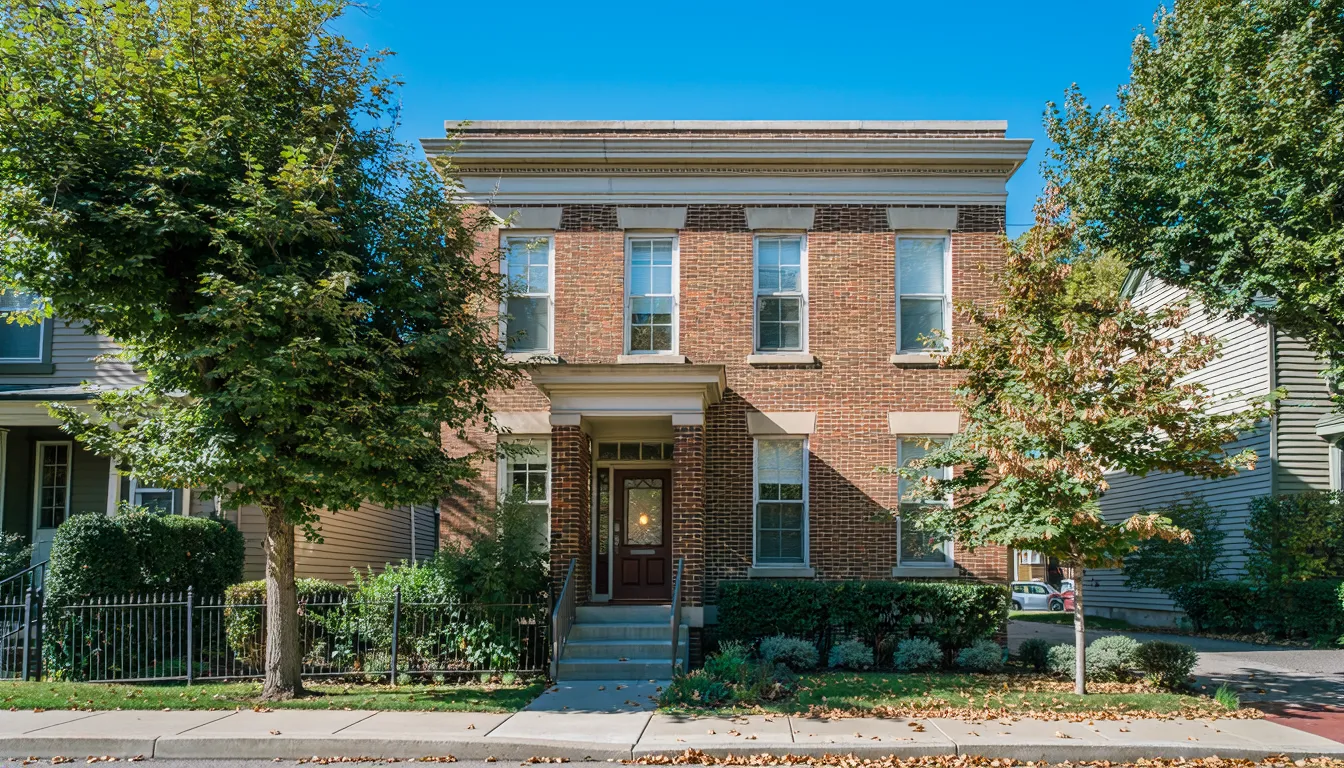
In a market where mortgage rates have squeezed monthly budgets, buyers on Chicago’s West Side are making a trade that would have seemed unlikely a few years ago. They are choosing homes that need work over homes that are move-in ready. A lower purchase price means a lower mortgage payment. For many buyers, picking up a paintbrush beats stretching their finances to the breaking point.
Esther Gonzalez, a listing agent with Solaris Real Estate, covers Chicago’s West Side and surrounding suburbs. She says the pattern is visible across her listings. Properties that need updating, such as those with dated kitchens, postponed repairs, or cosmetic issues, are drawing more buyer interest than polished homes at higher prices. Gonzalez describes the buyer mindset plainly: “As long as it’s less price and my mortgage is going to be less, I don’t mind having to fix it up a little bit.”
The pattern is not the same across Chicago. Gonzalez says buyer expectations change sharply from one neighborhood to the next. In areas farther north, buyers still want move-in-ready homes and resist doing any work. But in the West Side’s lower- and middle-income neighborhoods, the fixer-upper has become the most accessible path to homeownership.
Sharp Neighborhood Price Gaps
Chicago’s neighborhood boundaries can create steep price differences, and the West Side shows this block by block. Gonzalez points to one border that surprises buyers unfamiliar with the area: the line between the Austin neighborhood and the village of Oak Park. “Once you pass Austin, it’s Oak Park right there. The property values jump up by 50 to 80%.” A single block can separate a West Side listing from a much pricier Oak Park listing.
For buyers, that boundary works both ways. Staying on the West Side of the line stretches purchasing power. But homes at the lower price point tend to need more investment. The savings on purchase price come with renovation costs that are hard to predict.
Gonzalez says many of these properties need significant work, not just cosmetic touches. A home that costs far less up front but needs major repairs is a bargain only if the buyer has the cash, the credit, and the patience for a renovation timeline. Buyers who underestimate repair costs can end up in a worse financial position than if they had paid more for a move-in-ready home.
Higher Rates Slow Sales
The fixer-upper trend is partly a result of a broader affordability squeeze that Gonzalez says is slowing sales across her market. Property values have held steady, but interest rates have roughly doubled from a few years ago. Gonzalez says a house she could have put under contract in 30 to 40 days three years ago now takes two to three months. Buyers struggle to qualify for loans.
Gonzalez explains the math. When rates were around 3 to 3.5%, buyers could afford homes at today’s prices. At 6 to 7%, the same buyers cannot qualify for the same homes. Monthly payments have jumped, while incomes have not kept pace. Prices did not fall to offset the rate increase, and that gap is where sales stall.
Gonzalez says buyers can raise their credit scores to qualify for lower rates and more buying power. She recommends a detailed budget before buying, one that includes lifestyle spending, not just housing costs. “You have to buy within your means,” Gonzalez says.
Where Investors Are Buying
Fixer-uppers attract more than first-time buyers. Gonzalez says her brokerage works with investors ranging from newcomers with limited capital to experienced investors aiming for higher resale prices. Where they buy depends on budget and risk tolerance.
On Chicago’s South Side, in neighborhoods like Englewood, Gonzalez says multifamily properties needing major renovation can be bought for $50,000 to $60,000. Investors buying there often rent to tenants in Chicago Housing Authority programs. Farther north and west, in Oak Park, Jefferson Park, and Dunning, a fixer-upper costs $250,000 to $300,000. Resale prices there reach $500,000 to $600,000.
Gonzalez says each neighborhood works almost as its own separate market. A strategy that works in one neighborhood may not work two miles away. Buyer profiles shift block by block, and renovation costs vary with the age and condition of the homes.
Overpriced Listings Sit Longer
Longer selling times have exposed a recurring conflict between listing agents and sellers. Gonzalez says many sellers arrive with inflated expectations based on online home-value estimates. These estimates factor in square footage, bedrooms, and bathrooms but ignore the property’s actual condition. She describes a common scenario: a seller expects $500,000, but the home’s condition supports a price closer to $425,000.
When sellers insist on the higher number, the listing sits and needs repeated price cuts. That pattern hurts the seller’s outcome and the agent’s credibility. Gonzalez says closing the gap between what a seller expects and what the market will pay is one of the hardest parts of her job, and one of the least understood by the public.
About the Expert: Esther Gonzalez is a listing agent with Solaris Enterprises Inc. (Solaris Real Estate), who has worked in Humboldt Park, Logan Square, and surrounding Chicago suburbs for a decade.
This article is intended for informational purposes only and does not constitute legal, financial, or investment advice. The views and opinions expressed herein reflect those of the individuals quoted and do not represent an endorsement of any company, product, or service mentioned. Readers should conduct their own due diligence and consult qualified professionals before making any investment decisions.