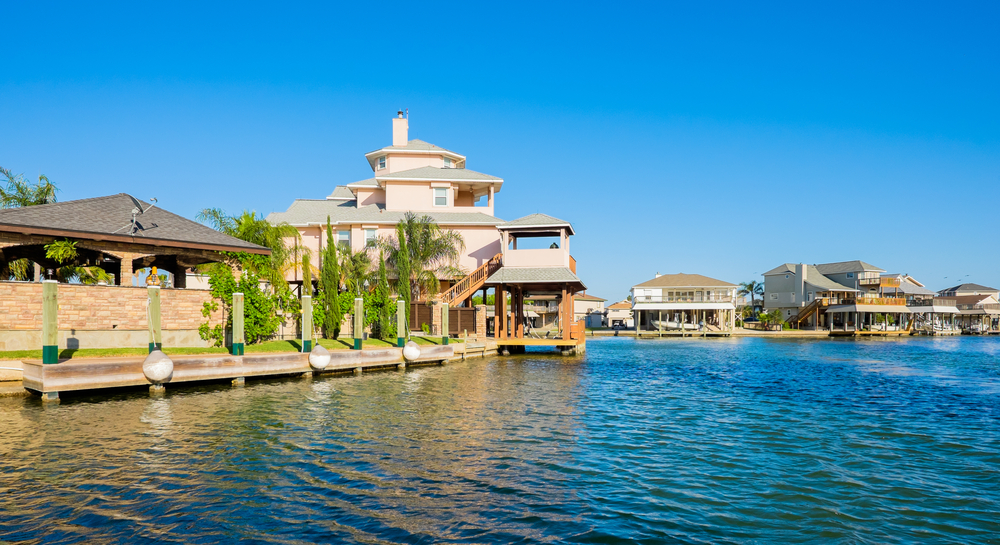
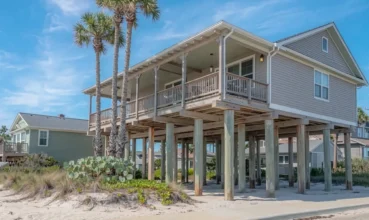
Waterfront and vacation properties along Lake Conroe, Lake Livingston, and the Gulf Coast from Crystal Beach through Jamaica Beach are sitting in saturated inventory – and many owners who purchased during the recent boom cannot recover their investment at current prices. For owners who treated second homes as a store of value, the math has turned uncomfortable.
Andrea Curran, team leader of the The Andrea Curran Team at Compass in northwest Houston, identifies vacation properties as the weakest segment she covers heading into fall 2026. “This is not the economy for second homes,” Curran says.
Saturated inventory with limited buyer demand
The oversupply spans multiple communities simultaneously. Curran describes “saturated inventory” across both lake and Gulf-area markets, with listings stacking up faster than buyers absorb them.
The pain is concentrated among recent purchasers. According to Curran, many of these owners “bought within the last four or five years where there’s just not a lot of wiggle room there to get their money out of their investment.” Owners who purchased at or near peak pricing – when demand for recreational properties surged – now face a market that cannot return their capital without significant patience or loss.
The pattern repeats from inland waterfront communities north of Houston all the way to barrier island properties on the Gulf. The breadth of the oversupply suggests the issue is demand-driven rather than a localized glut from overbuilding.
Why the second-home market is especially fragile
Second homes are the first discretionary purchase to be delayed or abandoned when confidence drops. Unlike a primary residence, which buyers need regardless of market sentiment, a vacation property is a want, not a need. Curran observes that even primary-home buyers in northwest Houston are showing “a lack of confidence” and hesitating to spend money. The second-home segment absorbs that caution at greater intensity because no one needs a lake house.
Curran notes a misconception among buyers that current interest rates are unaffordable. She points out that, looking at the last six years, the only August that was not in the current rate range was during the pandemic – meaning today’s conditions are historically normal. But that perception gap still suppresses demand, and it hits second homes hardest because the purchase motivation is entirely discretionary.
For sellers, there are few levers to pull. Unlike a resale home in Cypress competing with new construction – where builders offer rate buy-downs, design center credits, and other incentives – vacation properties have no equivalent mechanism to stimulate demand. The buyer pool is smaller, the purchase motivation is emotional, and the urgency is essentially zero.
Where investor demand is pointing instead
Curran’s investor recommendation steers in the opposite direction from waterfront leisure properties. She favors “residential under 350,000, especially newer construction” in smaller neighborhoods that have already completed their build-out phase. She also identifies small office condos – around 1,200 square feet – as active on the commercial side.
The contrast between these recommendations and the vacation-home market is straightforward. A $350,000 newer-construction home in a completed neighborhood serves a buyer or renter who needs shelter. A waterfront second home serves a buyer who wants a weekend getaway. In a low-confidence environment, need wins over want.
Curran remains optimistic that some movement will return to the second-home market heading into fall, but the current conditions offer no clear timeline for recovery. Owners sitting on waterfront inventory purchased near peak pricing face a holding period dictated by when discretionary buyer confidence returns – something no rate cut or builder incentive can manufacture on its own.
About the Expert: Andrea Curran is Team Leader of The Andrea Curran Team at Compass, covering residential, commercial, and ranch and land transactions in Cypress and northwest Houston, Texas. She has worked the market for a decade and holds an accredited land consultant designation.
This article is intended for informational purposes only and does not constitute legal, financial, or investment advice. The views and opinions expressed herein reflect those of the individuals quoted and do not represent an endorsement of any company, product, or service mentioned. Readers should conduct their own due diligence and consult qualified professionals before making any investment decisions.