The Florida real estate market has changed significantly over the past forty years, and few have observed its cycles as closely as Stephen Dutcher. Beginning his career at 19 in 1983, the Illustrated Properties broker associate has weathered booms and busts while building a practice focused on Martin County’s waterfront homes.
A Family Start in Real Estate
Dutcher’s path into real estate followed family precedent. “My father was in real estate, as were my brothers,” he says. “They were 14 to 18 years older than I was. My father encouraged me while I was in college to get my real estate license, so I got it between my sophomore and junior years.”
Early hands-on experience shaped his perspective. During college summers, Dutcher worked in construction, landscaping, and in his family’s real estate office. “Doing construction in the Florida heat made real estate sound a lot more interesting,” he recalls.
Early Market Hurdles and First Sale
When Dutcher entered the business in 1983, the market was sluggish. “The market was much slower. There was a gas crisis. It took me six months to sell anything,” he remembers. Working in a condominium sales office for a development his father was involved with, Dutcher received a $500 monthly draw that he repaid after his first commission.
His first sale—a $365,000 condominium—brought in about $19,000 in commission, a significant sum for a young agent in the early 1980s. “I paid my father back all the money I borrowed, and I worked there for a couple of years, then got into the general real estate business.”
Growing and Selling His Brokerage
Dutcher moved from working in his family’s firm to becoming a partner, eventually buying out other partners with his brother after their father retired in 1991. The partnership was short-lived. “After three years of working with my brother, I found it very difficult to work with him and thought I’d be better off if I went on my own and bought my brother out.”
He ran his own company for 14 years before selling to Illustrated Properties in 2008 as the market downturn began. “I realized that I was a much better salesman than a manager,” he says. The sale allowed Dutcher to retain ownership of the office space—now leased to Illustrated Properties—creating a lasting landlord-tenant relationship.
Martin County’s Current Market Conditions
Martin County’s real estate market today mirrors trends seen across Florida but retains distinct local characteristics. Recent figures show that average single-family home prices have exceeded $800,000, with market dynamics shifting notably over the past year.
“Throughout the year, our sales volume has been down, and listings have been up consistently,” Dutcher says. “However, just recently, the last couple of months, that’s reversed. We see more sales than a year ago, and most recently, more listings coming on than a year ago.”
Despite a perception of slower activity, underlying metrics remain strong. “Right now, it would take, on average, a little over two months to get a home under contract, and between three and four months to close. An average market might be six months, so we really are in a good market.”
Segmentation and Inventory Gaps
Martin County’s market is highly segmented, with inventory levels varying sharply between property types and price points. “Some parts of the market have absolutely no inventory, while others have tremendous amounts,” Dutcher says.
The luxury waterfront segment is especially tight. “If you look at waterfront condominiums in Martin County, there are very few. Someone contacted me this morning asking if I had anything in a specific building because there’s nothing for sale, and they know I specialize in Hutchinson Island.”
By contrast, the lower-end condominium market faces a surplus. “There’s a plethora of over-55 condos under $200,000, and even under $100,000 in some cases. I have a listing at Cedar Point for under $200,000 that’s completely remodeled, and there’s only one pending sale with 21 units on the market.”
The Rate Lock Effect
Martin County, like much of the country, is seeing sellers hesitate due to low mortgage rates locked in during previous years. “There are a lot of people who don’t want to sell because they have a mortgage rate on their home that they can’t reproduce today, and their payments would be a lot more, so they’re waiting,” Dutcher explains.
This reluctance has led many owners to rent rather than sell. “There are a lot of people taking their properties off the market and deciding to rent them instead.”
Insurance and Climate Concerns
Buyers of waterfront homes are increasingly wary of hurricane risk and rising insurance costs. “People are certainly concerned about that. Insurance costs are high,” Dutcher says. “It definitely affects people purchasing—not that they can’t afford to buy the property, but it’s the carrying costs that go along with it.”
These concerns are driving tangible changes. One of Dutcher’s neighbors recently received approval to build 1.5 feet higher than previously allowed, and the town is now raising minimum standards for new construction.
Shifting Demographics and Migration
Martin County continues to attract buyers from the Northeast, especially New York, as well as increasing numbers from California and the West Coast. “We’re also still getting people from California and the West Coast that we didn’t usually get,” Dutcher notes.
However, international demand has waned. “What we’re not getting is people from Canada for the most part, and Europeans for the most part. There are fewer of them than we’ve had in the past.”
Migration from South Florida remains steady as buyers seek better value. “People have chosen to buy in Martin County due to Palm Beach County being more expensive in general.” However, rising prices in Martin County are now pushing some buyers further north to St. Lucie County, where average prices are still under $500,000.
Ongoing Development Activity
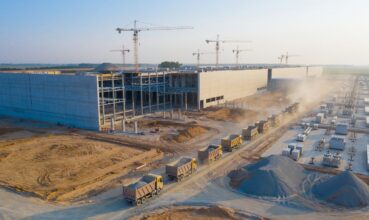
Despite concerns about inventory and affordability, development remains active in Martin County. “There are probably half a dozen to a dozen active developers in Martin County,” Dutcher says, naming Mattamy Homes, Pulte Homes, DR Horton, and Lennar as leading builders. “There’s a lot of new product, starting under $400,000 and going up.”
Adapting for Long-Term Success
Dutcher credits his continued success to a disciplined, business-like approach. Since 2008, he has worked with the Mike Ferry Real Estate Organization to refine his daily routine. “What I’ve learned is that I prospect every day and treat it like a business. In the mornings, I prospect, in the afternoons, I go on appointments.”
He delegates administrative work to assistants, allowing him to focus on client relationships and direct communication—a strategy that earned him platinum producer status in 2024.
Looking Forward: Expectations for 2026
Despite current complexities, Dutcher remains optimistic about Martin County’s outlook. “I think it’s going to be a good year. There’s every reason to believe that sales are going to continue to increase, and that we’re going to see more inventory come on that buyers are looking to buy.”
He sees interest rates as the main factor holding back even more vigorous activity. “The biggest hurdle today is getting interest rates dropped below 6% to incentivize people to buy. If we can get interest rates in the 5% range, you’re going to see a lot more activity.”
For real estate professionals facing today’s challenges, Dutcher’s forty-year perspective highlights the value of consistency, specialization, and adapting to market realities. In a market where luxury waterfront properties and affordable condos coexist, understanding local trends and staying focused on core business practices is essential for success—for both agents and their clients.