Most homeowners replace a roof only when forced to, and the material they choose is usually whatever went on last time. But in regions where hurricanes, wildfires, and hailstorms have damaged the same homes repeatedly, that default is breaking down. Metal roofing has grown from roughly 3% to 17% of U.S. residential installations, according to the Metal Roofing Alliance, a nonprofit trade association covering the U.S. and Canada. The growth concentrates where the cost of replacing a damaged asphalt roof twice in a decade starts to outweigh the higher upfront price of a more durable alternative.
Renee Ramey, Executive Director of the Metal Roofing Alliance, says the pattern is consistent: demand spikes after weather events. Homeowners who have lost a roof, dealt with interior damage, and managed a rebuild tend to research their options more carefully the second time. “Once a homeowner’s gone through a weather event and lost their roof, lost the possessions inside their home, had to deal with the rebuild, typically that gets their attention,” she says.
Where Adoption Is Accelerating
The geography of metal roofing growth maps closely onto recent disaster exposure. The California wildfires have driven a measurable uptick on the West Coast, according to Ramey. The Southeast has grown at a rapid rate tied to hurricane frequency. Tornado Alley has seen gains in market share as well. Metal is not the only material benefiting from this reassessment – impact-rated asphalt, concrete, and tile have all gained ground in disaster-prone regions – but the Metal Roofing Alliance’s data shows metal capturing a disproportionate share of that shift.
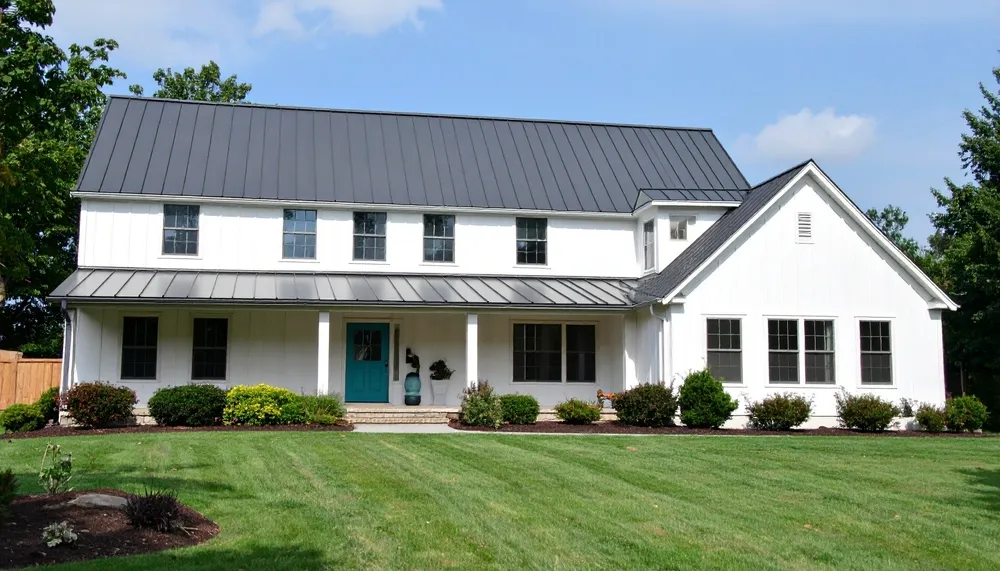
The alliance’s most recent annual research study, released within the last two to three weeks, reconfirmed that consumer awareness remains the single largest barrier to adoption. Many homeowners still associate metal roofing with agricultural buildings – a corrugated panel on a barn – and don’t realize the product now mimics the appearance of shake, tile, and other materials in multiple colors and profiles. “Sometimes I have a hard time deciphering whether a shake roof is actually shake or is it a metal roof when you’re on the ground looking up,” Ramey says.
The Cost Conversation
The most persistent misconception the alliance encounters is around upfront price. According to Ramey, a metal roof can cost two to three times more than an asphalt roof, but its lifespan runs two to three times longer or more. The challenge is helping homeowners shift from evaluating a roof as a one-time lump sum to weighing what they’ll spend over 50 years of ownership, including the replacements they won’t need.
Earlier this year, the alliance reframed its educational messaging around the concept of discretionary spending, comparing a roof to buying a car or a major appliance. Ramey explains the logic: buyers routinely pay more for a newer car because they expect it to last longer and can finance the purchase over time. A roof works the same way. “It’s taking it from being this one lump sum purchase that might come with a bit of sticker shock to understanding that it’s a discretionary spend that you can finance,” she says.
The performance case extends beyond durability. Metal roofing systems can achieve top-tier ratings for wildfire resilience and wind uplift, according to Ramey. Ramey points to several additional factors homeowners weigh: metal’s relative weight compared to clay or concrete, which can reduce structural support requirements; coatings that manufacturers say can reduce heating and cooling costs; and end-of-life recyclability, since much of the material is also made from recycled content. For homeowners installing solar panels, Ramey says a metal roof will typically outlast the panels themselves, avoiding the cycle of removing and reinstalling panels to replace a worn roof underneath, though the higher upfront cost of metal remains a real tradeoff against that long-term savings. Ramey says she has spoken with homeowners who spent tens of thousands of dollars on that removal-and-reinstallation process.
Insurance and HOA Friction
Insurance pricing is beginning to reflect the durability difference, though unevenly. Ramey says the alliance published research earlier this year documenting a growing number of regions offering discounts or rebates for metal roofing installations. A public statement from Florida’s state insurance commissioner – endorsing metal roofing over asphalt for the region – gave the trend additional visibility.
HOA resistance remains one of the more common friction points homeowners bring to the alliance. Ramey recounts her own experience: after hail damage to her townhome’s asphalt roof, the four-unit owners wanted metal. The HOA refused. She ended up joining the board to get the policy changed. The alliance now maintains presentation materials, studies, and even sends representatives to HOA board meetings on behalf of homeowners seeking approval. “I am seeing a trend, a slow trend, but a trend nonetheless towards HOAs being more open to metal roofing,” she says.
What’s Ahead
Contractor shortages have affected the metal roofing industry over the past several years, at times leaving homeowners unable to get callbacks in high-demand areas. Ramey notes the problem has been less acute in recent months, and several training programs are currently in development. Markets like Florida, where demand is high, have attracted a concentration of installers – but the labor constraint hasn’t fully resolved, and Ramey says the shortage extends beyond metal roofing into other trades as well.
Looking ahead, Ramey expects increasing frequency of extreme weather events to sustain demand growth, and anticipates that the insurance industry’s growing preference for durable materials will reinforce adoption. “I think the insurance message is going to be a big one that’ll continue to support going with more sustainable and durable products,” she says.
For homeowners weighing the decision now, the calculus comes down to time horizon. A metal roof’s upfront cost is higher, but the combination of longer lifespan, potential insurance savings, reduced energy costs, and elimination of mid-life replacements changes the total cost picture substantially, particularly in regions where weather damage makes repeated asphalt replacements a near certainty rather than a hypothetical.
About the Expert: Renee Ramey is Executive Director of the Metal Roofing Alliance, a nonprofit trade association covering the U.S. and Canada focused on consumer education and metal roofing awareness.
This article is based on information provided by the expert source cited above. It is intended for general informational purposes only and does not constitute legal, financial, or real estate advice. Readers should conduct their own research and consult qualified professionals before making any real estate or financial decisions.