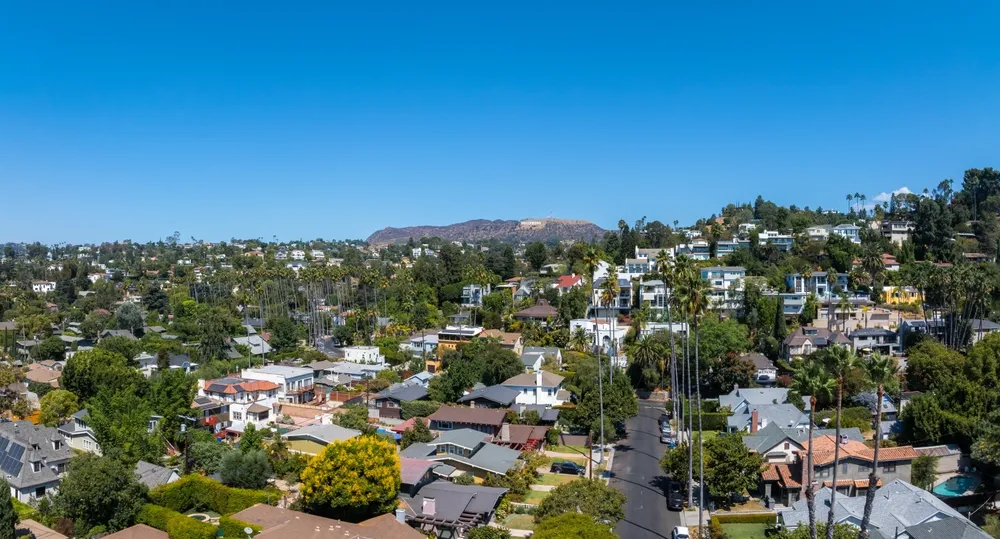
Not long ago, fire insurance was an afterthought in a Los Angeles home sale. Buyers would get to the final days of escrow, the escrow officer would flag that coverage was not yet in place, and everyone would scramble to sort it out before closing. That scramble is over. Insurance has moved to the front of the transaction, and in some cases it is ending deals before they begin.
The shift is happening now because wildfires have intensified across Southern California, private insurers have pulled back from high-risk areas, and premiums for the coverage that remains have surged, sometimes into six figures annually. For buyers considering hillside or canyon properties, insurance is no longer a closing formality. It is a financial variable that can reshape what a home is worth to own.
Insurance Now Screens Buyers
Brian Linder, a licensed architect and real estate broker at The Value of Architecture (Compass), a design-centric practice under Compass in Los Angeles, works almost entirely with older homes – many of them hillside properties in high fire severity zones. He has watched the insurance conversation reshape how buyers approach these purchases.
On a current listing in Pasadena, Linder now requires buyers to demonstrate, as part of the counteroffer process, that they have already spoken with an insurance broker and confirmed they can obtain – and afford – coverage for the property. The requirement is in writing. A buyer who cannot clear that bar does not move forward.
That represents a meaningful change in how offers are evaluated. Price and financing have always been the primary filters in a competitive offer situation. Insurance affordability is now a third screen, at least for properties in high fire severity zones.
When Premiums Hit Six Figures
The numbers illustrate why. Linder points to a Craig Ellwood home currently on the market in the Crestwood Hills area of Brentwood – a mid-century modern property with ocean views – where the annual insurance premium runs $138,000, according to information the listing’s builder shared with him. That figure is not through the California FAIR Plan, the state’s insurer of last resort. It is full private market coverage. For a buyer financing the purchase, that insurance cost adds meaningfully to the monthly carrying expense and needs to factor into what the home is actually worth to own, not just to buy.
Architectural Homes Face More
For architectural homes specifically, the insurance problem cuts deeper than it does for newer construction. Many of the properties Linder works with are older – sometimes over 100 years old – often on hillside lots, and built with materials and methods that modern insurers price as higher risk. They are also harder to replace. A mid-century modern home designed by a recognized architect cannot simply be rebuilt to its original specification after a fire. The architectural value, the design, the siting, the original detailing, may be unrecoverable regardless of what the insurance policy pays out.
That reality creates a gap that buyers are starting to price in. Even if a buyer can obtain coverage, the question of whether the payout would actually make them whole on a landmark property is not straightforward. Linder does not resolve that question in his transactions, it is a matter for buyers and their advisors, but he raises it as part of the conversation he now has early in the process.
Ask Before You Offer
The practical result for anyone considering a home in a high fire severity zone in Los Angeles is that the due diligence timeline has compressed in one direction and expanded in another. Buyers who wait until escrow to investigate insurance are taking on real risk, not just the risk of a deal falling apart, but the risk of discovering costs they had not modeled into their decision. Linder’s approach of surfacing the insurance question before an offer is accepted reflects what is becoming standard practice in this segment of the market.
One number worth having before touring a property in a high fire severity zone: the current annual premium. It is not always available, but it is increasingly something sellers and their agents can provide, and something buyers should ask for directly, before the offer is written.
About the Expert: Brian Linder, AIA, is a licensed architect and real estate broker at Compass in Los Angeles, specializing in architect-designed and design-centric residential properties under the banner of The Value of Architecture.
This article is intended for informational purposes only and does not constitute legal, financial, or investment advice. The views and opinions expressed herein reflect those of the individuals quoted and do not represent an endorsement of any company, product, or service mentioned. Readers should conduct their own due diligence and consult qualified professionals before making any investment decisions.