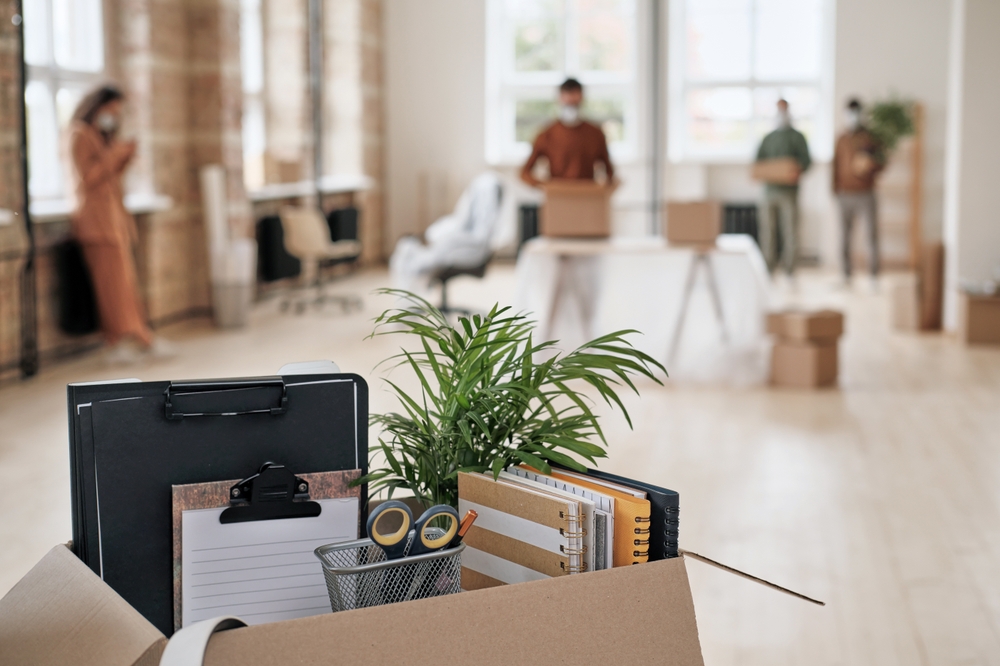
Major technology companies are requiring employees to relocate back to expensive urban centers, reversing the pandemic-era migration to more affordable states. Scott Ferree, Senior Vice President of Sales and Marketing at MiniMoves, reports that workers are leaving states like Florida and returning to high-cost tech hubs such as San Francisco, Seattle, and Los Angeles as in-person work becomes mandatory. This policy shift is creating a counter-migration that contradicts the earlier narrative of permanent remote-work flexibility.
“We’re seeing people reluctantly leaving Florida, kicking and screaming because the boss says, I’ve got to move back,” Ferree says.
Return-to-office mandates are especially prevalent in the tech sector. MiniMoves, which handles many tech relocations due to the smaller shipment sizes typical of industry workers, is seeing a surge in these moves. Employees are receiving short timelines to comply, with the alternative being termination.
“People are being told you’ve got three months to report back to San Francisco. That’s one of those expensive markets that people are going to have to move back into if they want to keep their job with those tech giants,” Ferree explains.
Why Companies Are Calling Workers Back
Ferree attributes this reversal to company leaders deciding that in-person collaboration is more valuable than remote-work flexibility. He points to the energy of face-to-face interaction, the ease of spontaneous conversations, and the cultural cohesion that remote work could not replicate.
“The benefit of being together in a room and feeling the energy and being part of the conversation — that’s hard to get when you’re doing sterile Zoom and Teams meetings,” Ferree says.
This trend reflects a broader reassessment of remote work across the corporate sector. While the pandemic proved that many jobs could be performed remotely, it also exposed limits in how teams function when separated. For tech companies that depend on rapid iteration, cross-functional collaboration, and a strong company culture, the trade-offs of remote work have become less acceptable.
The result is a wave of return-to-office mandates forcing employees to make difficult choices. Some are complying and relocating back to expensive cities. Others are choosing to leave the tech industry rather than give up the lifestyle and cost-of-living advantages they gained by moving to more affordable states.
“There are a lot of those workers who have figured out there’s probably something else I can do for a living so that I can stay where I want to stay,” Ferree notes.
How Migration Patterns Are Shifting
During the height of remote work, there was a significant exodus from expensive tech hubs. Ferree lists Seattle, San Francisco, Los Angeles, and Austin, Texas as major sources of outbound moves. Workers left these cities to maintain their salaries while relocating to places with a lower cost of living.
The top three outbound states are currently Illinois, New Jersey, and California. These states have long seen net outbound migration due to high costs and taxes, but tech-driven reverse migration is adding to these trends. Employer mandates are now pulling back workers who left California for Florida or Texas during the pandemic.
The leading inbound states are North Carolina, Texas, and Florida. North Carolina’s rise surprised Ferree, who attributes it to lifestyle-driven choices rather than work-location decisions. Texas and Florida remain popular for their lower costs and lack of state income tax.
Return-to-office mandates are disrupting these patterns. Workers who moved to Florida expecting to work remotely are now confronted with the choice of moving back to costly tech hubs or finding new jobs. This has created a group of involuntary moves driven by corporate policy rather than personal preference.
How Housing Markets Are Affected
The reverse migration is already affecting real estate demand in both departure and arrival markets. In affordable states like Florida and Texas, the loss of high-earning tech workers could reduce demand for rental housing and single-family homes, especially in areas that attracted remote workers during the pandemic.
In expensive tech hubs, the return of workers is adding demand to already tight housing markets. San Francisco, Seattle, and Los Angeles have limited housing supply, and the influx of returning workers is likely to put upward pressure on rents and home prices. For those who sold homes in these cities during the pandemic, returning means reentering markets where prices have remained high.
Ferree observes that moves back to tech hubs often involve smaller shipments, indicating that many workers are returning to apartments or smaller homes rather than the larger properties they may have occupied before the pandemic. Workers are coming back, but they are not fully reverting to their pre-pandemic lifestyles.
How Relocation Budgets Have Tightened
Return-to-office mandates are occurring as corporate relocation budgets have tightened. Ferree notes that companies have largely stopped relocating senior managers with large suburban homes due to high costs. The focus is now on mid-level managers and new hires, who generally have smaller households and lower relocation expenses.
This shift creates a challenge for workers being called back. Many are required to relocate without the full relocation benefits that were common in previous decades. Workers who moved to affordable states during the pandemic now face paying out of pocket to move back to expensive cities, or accepting limited relocation assistance that does not cover the full cost.
The result is a divided labor market. Employees with in-demand skills and strong negotiating power may secure relocation support or negotiate to remain remote. Those with less leverage must choose between relocating at their own expense or leaving their jobs.
Workers Return Reluctantly
For many workers, the return to expensive tech hubs is not a choice but a requirement. Ferree describes employees who built new lives in affordable states during the pandemic, only to face a difficult decision when their employers issued return-to-office mandates: uproot again or find a new career.
The personal cost of these moves is significant. Workers are returning to cities with higher rents, higher taxes, and a higher overall cost of living than the states they are leaving. Many are doing so without full relocation support, absorbing moving costs that were once covered by employers. For workers who sold homes in cities like San Francisco or Seattle during the pandemic, returning means competing in markets where prices have not meaningfully declined.
What This Means for Investors
For real estate investors, the key takeaway is that remote-work flexibility is not guaranteed. Corporate policies can change quickly, directly affecting where people live and the types of housing they demand. The reverse migration driven by return-to-office mandates shows that real estate demand is shaped as much by corporate decisions as by individual preferences.
The tech industry’s move to bring workers back to urban centers will continue to influence both labor and housing markets. Employees have less control over their work location than many assumed during the height of remote work, and the costs of returning to expensive cities are forcing many to reconsider their career paths or living arrangements. As companies continue to adjust their return-to-office requirements, both workers and real estate markets will need to adapt.