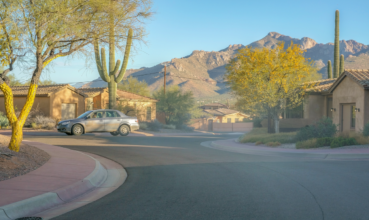
Cape Coral, Florida, spent much of 2024 and early 2025 working through one of the more significant price corrections in the country following the COVID-era boom. Insurance headlines, hurricane recovery costs, and national builders scaling back incentives all contributed to a difficult environment for the region. Yet for some mid-sized builders willing to stay disciplined and adapt quickly, the correction has created an opening rather than a setback.
SunLife Homes, a regional homebuilder operating primarily in Cape Coral and Port Charlotte, appears to have navigated the downturn with relative stability. The company’s internal data points to a market bottom in July 2025, followed by a gradual recovery that is now translating into measurable sales momentum.
A Market Quietly Turned
The numbers coming out of SunLife’s pipeline tell a different story than the broader Florida affordability narrative that has dominated industry coverage. According to Jeffrey Kershner, the company’s President and CEO, Cape Coral experienced roughly an 18.5% price decline from its COVID peak, a meaningful correction by any measure. But the direction has since reversed.
Since then, the company has not made meaningful price reductions or increased incentives. As of early June 2026, SunLife had closed 46 homes year-to-date with 23 more under contract, putting it on pace to surpass its entire 2025 closing volume within the first half of the year, roughly five sales per week. “Buyer traffic has been phenomenal,” Kershner says.
That velocity is notable in a market where larger national builders are still running incentive packages in the double digits. Lennar, for example, has been reported as offering around 14% incentives in the same market. SunLife, by contrast, is running closer to 3%, almost entirely in the form of closing cost assistance.
The gap reflects a structural difference in how the two types of builders operate. Larger public builders can purchase discounted mortgage rate commitments in bulk and fold that cost into their reported incentive figures. A privately held regional builder cannot replicate that mechanism. Instead, SunLife competes on direct sales price and product quality, including standard features like quartz countertops, soft-close cabinetry, 5 1/4″baseboards, and impact windows and doors, items that many builders treat as paid upgrades.
Rethinking the Insurance Story
One of the more persistent narratives around Florida real estate is the cost of homeowners’ insurance, which has driven buyers away from certain parts of the state and contributed to affordability concerns. Kershner pushes back on how that story applies to new construction, particularly homes built outside of flood zones.
SunLife’s average insurance rate on its homes is less than $1,000 per year, according to company data, far below the $4,000 to $6,000 figures that dominate Florida insurance headlines. The difference comes down to construction standards. All SunLife homes are built to meet Florida’s 160-mph wind zone requirements and include impact windows and doors as standard. Insurers price risk based on the likelihood of a loss, and a newer home built to current code in a non-flood zone presents a materially different risk profile than an older property in a vulnerable location. That distinction tends to get lost in broader coverage of the Florida insurance market.
What Buyers Want
Buyer preferences in Southwest Florida reveal how demographics and geography shape demand in this market. SunLife’s best-selling floor plan – the R43, a four-bedroom, three-bath home at 1,818 square feet with two primary suites – starts in the $340,000 range. The dual-suite configuration appeals to two distinct buyer types: families pursuing multi-generational living arrangements and out-of-state owners who want dedicated guest space for visitors during the winter months.
“We get a lot of out-of-town guests here in March and April when it’s still cold up north,” Kershner notes.
For buyers at higher price points, the company builds waterfront and gulf-access homes in South Cape Coral, with prices reaching the $800,000 range. But the volume driver remains the entry-level, first-time-buyer segment, which accounts for roughly two-thirds of sales.
That concentration creates its own challenges. Entry-level buyers are far more sensitive to interest rate movements than move-up buyers, who typically arrive with equity from a home sale. When rates climbed approximately 75 basis points during a period of geopolitical uncertainty in early 2026, the effect on qualification was immediate for some buyers. Kershner describes working through combinations of closing cost assistance and rate incentives to keep transactions viable, using lender relationships built on volume to find solutions for buyers with limited cash reserves.
Discipline in Tight Margins
SunLife’s land strategy reflects the same just-in-time philosophy that governs much of the company’s operations. Cape Coral was originally platted in the 1950s and 1960s as a large planned community, and a significant number of developed lots remain available for purchase. The company takes down land as needed to fulfill its pipeline rather than carrying large land positions on the balance sheet, a structure that keeps capital lean and reduces exposure to market shifts.
Construction cycle times run around 95 days, which Kershner attributes in part to the relative stability of labor and material availability in the current environment. The post-Hurricane Ian period was a different story, with shortages affecting both. Today, he reports no meaningful price pressure from labor or fuel costs, allowing the company to hold its sales prices steady.
The biggest operational wildcard in Southwest Florida is environmental. Cape Coral is home to a significant population of burrowing owls, a protected species. If owls establish a nest on an active job site, construction must halt between February 15th and July 10th, a constraint that can meaningfully extend cycle times and disrupt scheduling.
Looking Ahead
SunLife was ranked the 11th fastest-growing homebuilder in the country by HousingWire in 2025. Kershner expects the company to move up that ranking in 2026, projecting close to 100% growth this year. Expansion to Florida’s East Coast is under active consideration, along with operational leadership hires to support scaling.
The primary concern heading into the back half of 2026 is energy prices. Margins are already compressed by the price correction, leaving limited room to absorb increases in input costs if fuel and energy costs remain elevated. A resolution to the geopolitical tensions driving those costs would, in Kershner’s view, do as much for the construction market as any policy intervention.
For a region that spent the better part of two years absorbing a correction, the trajectory in Southwest Florida’s new construction market appears to be stabilizing. The builders that stayed disciplined on pricing, product quality, and land exposure during the downturn are now positioned to capture demand in a market that, by most internal indicators, has found its floor. Whether that floor holds through the second half of 2026 will depend largely on rate movements and energy costs, forces well beyond any single builder’s control.
About the Expert: Jeffrey Kershner is the President and CEO of SunLife Homes, a regional homebuilder operating primarily in Cape Coral and Port Charlotte in Southwest Florida. The company was ranked the 11th fastest-growing homebuilder in the country by HousingWire in 2025.
This article is based on information provided by the expert source cited above. It is intended for general informational purposes only and does not constitute legal, financial, or real estate advice. Readers should conduct their own research and consult qualified professionals before making any real estate or financial decisions.