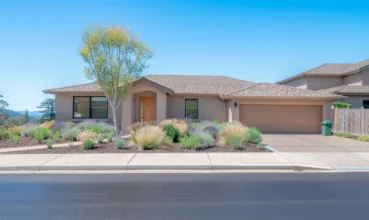
Denver’s residential market has changed dramatically in the past two years, shifting from a frenzied seller’s environment to one where buyers have more negotiating power. Many industry professionals call it the most significant shift in local housing dynamics in nearly a decade, including Athena Brownson, a REALTOR® and associate broker with Your Castle Real Estate serving the Denver Metro area, who has witnessed the transformation firsthand.
“We swung from a very heavy seller’s market in 2022 and 2023, where properties were flying off the market and going anywhere from $50,000 to $300,000 over ask — it got pretty obscene,” says Brownson.
Interest rates, which now hover around 6%, have become the new baseline. The rate increase cooled demand and ended extreme bidding wars. The resulting market is more balanced, and both sides must adapt their strategies to succeed.
Realtor’s Unconventional Path
Brownson grew up in Breckenridge, where early exposure to the real estate industry through her father, a luxury home developer, left a lasting impression. She pursued professional freestyle skiing instead, competing at the highest levels from ages 15 to 24. The experience shaped her professional approach.
“That period of my life was the best business school I could have asked for,” Brownson says. After retiring from skiing, she spent time in interior design before moving into real estate. Brownson says the bulk of her clients come through referrals, which she attributes to repeat engagement with past clients.
Denver’s Market Finds Balance
Rising interest rates have dominated headlines, but Brownson sees Denver gradually adjusting. She notes that 6% mortgage rates are “historically not very high” over the past 30 years. The initial shock of higher rates slowed activity, but buyers are now less fixated on rates and more focused on broader economic factors.
“We are at a point where people are not as concerned with a 6% interest rate — it’s just our reality,” Brownson explains.
A common misconception is that Denver has become completely unaffordable. Prices remain high compared to pre-pandemic levels, but the end of bidding wars and the return of negotiation have improved affordability. Buyers can now take time to evaluate homes, negotiate repairs, and secure better terms.
“We’re not seeing multiple offer situations on properties, so you’re not having to overbid. There’s a ton of opportunity out there for buyers — it’s just a matter of finding the right opportunity for them,” she says.
Preparing Homes to Sell
Sellers face a different landscape than during the recent boom. Many hesitate to list, discouraged by negative news about the housing market. Brownson argues that this perception does not align with the reality of well-prepared properties.
“If you present your property in its best possible condition — taking care of repair projects, making sure the home is extremely clean, decluttered, and depersonalized, maybe staged if needed — your property is still going to find a great buyer,” she says.
During the peak, homes sold regardless of condition. Today, buyers have more options and are less willing to overlook flaws. Sellers who invest in repairs, staging, and proper pricing are more likely to attract serious offers. Overpriced listings are sitting longer. Competitively priced homes in move-in-ready condition still sell quickly.
Where Denver Investors Are Looking
As the market has cooled, investor activity has increased. Sellers unable or unwilling to make significant repairs are pricing homes below what they could have fetched two years ago. This creates openings for investors.
“There are sellers in positions where maybe they’re not able to make some larger repairs to their home, so they’re selling for a little less than they would have a couple of years ago,” Brownson notes.
She advises investors to target established neighborhoods, focusing on the edges where prices are lower but proximity to amenities remains strong. “Instead of looking directly in those central points that everyone wants to be in, look where you’re still within close distance to what is attracting people to that neighborhood, but you’re not getting the pricing as you would if you were in the Highlands proper,” she explains.
Why Deals Fall Through
With market conditions normalizing, new challenges have emerged in closing deals. Brownson estimates that roughly one in four properties under contract falls through. The most common causes are inspection disagreements and financing issues.
“We’re seeing loans fall out because the rate changed and the buyer no longer qualifies, or maybe their income changed, or they lost their job completely,” Brownson says.
Buyers are more cautious. Lenders are scrutinizing applications more closely. Inspection negotiations are tougher, with buyers unwilling to accept flaws they might have overlooked in a hotter market. Sellers should expect more thorough due diligence and more deals to fall through before closing.
Colorado Springs Draws Attention
While Denver continues to expand, Brownson points to Colorado Springs as a standout for growth. The area offers the Colorado lifestyle at lower price points, attracting both residents and investors.
“Every time I’m showing properties and driving around different neighborhoods, I’m pretty astonished by the growth,” she says. Colorado Springs has seen significant new development and in-migration, further diversifying the region’s housing options.
Denver’s Market Outlook
Brownson tracks monthly closed transactions year-over-year, new listings, and properties going under contract to assess market health. These figures suggest buyer activity is picking up, with more homes selling and inventory stabilizing.
“I’m very hopeful it’s going to get better and better,” Brownson says. Recent data shows a modest increase in closed transactions and new listings, indicating renewed buyer interest.
Denver’s shift from bidding wars to balanced negotiations signals a return to sustainable market conditions. As interest rates stabilize, opportunities exist for buyers, sellers, and investors who understand the new landscape. In an unpredictable market, Brownson says transparency with clients has become more important than ever. On working with clients through uncertainty, she adds, “There’s no such thing as having it all figured out in real estate. The best thing to do when you don’t have the answer is simply say, ‘I don’t know, but I’ll get back to you as soon as I’m able to consult with someone who does.'” Agents who build long-term client relationships, she says, are better positioned to navigate shifting market cycles.
About the Expert: Athena Brownson is a REALTOR® and associate broker with Your Castle Real Estate in the Denver Metro area, bringing over a decade of experience navigating the city’s dynamic housing market. Combining insights from her professional freestyle skiing career and interior design background, she applies a disciplined, client-focused approach to help buyers, sellers, and investors succeed in shifting market conditions.
This article is based on information provided by the expert source cited above. It is intended for general informational purposes only and does not constitute legal, financial, or real estate advice. Readers should conduct their own research and consult qualified professionals before making any real estate or financial decisions.