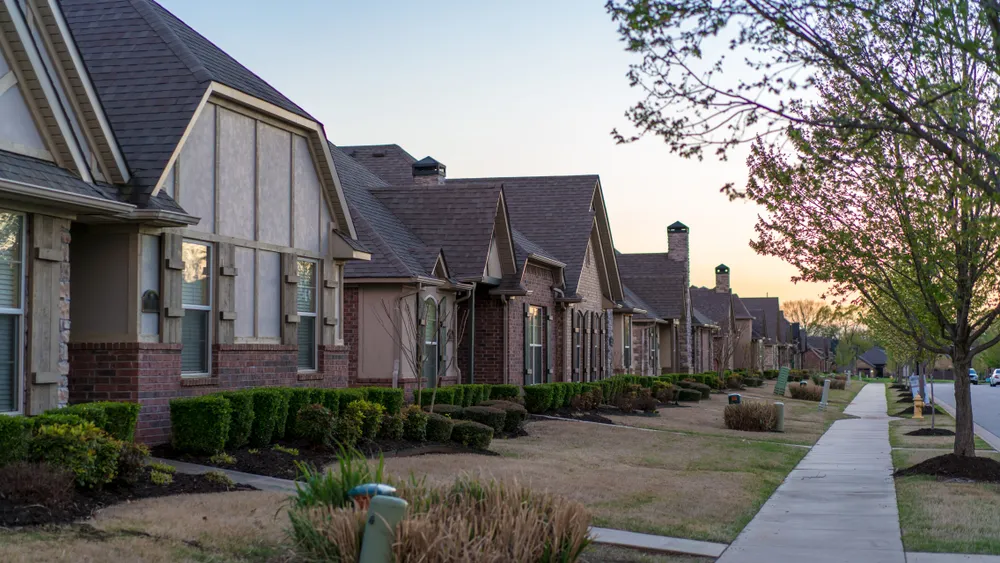
First-time buyers in Conway, Arkansas, are running out of options, and the problem is more structural than cyclical. The forces squeezing entry-level buyers are not temporary, and buyers hoping conditions will ease soon may be waiting a long time.
Emily Walter, executive broker and team lead at The Emily Walter Team under RE/MAX Elite, has worked the Conway market for 13 years. Her read on the current situation is blunt: the city has essentially run out of land.
Land Scarcity Drives Everything
Conway is bordered by the Arkansas River on one side and has developed outward in nearly every other direction as far as geography allows. A quarter-acre lot now runs around $70,000. At that price point, builders cannot make the numbers work on anything below roughly $400,000, which means new construction skips the entry-level segment almost entirely.
The only new homes being built at lower price points are production-style builds from large national builders, where floor plans are standardized, and options are limited. Custom construction for a first-time buyer is effectively off the table.
That gap is showing up in the numbers. Walter estimates Conway currently sits about 950 housing units short of what the city’s families actually need. With land scarce and single-family construction concentrated at the high end, apartment construction has accelerated; stacking units is the only way to add meaningful supply on the land that remains. That helps renters at the margins but does nothing for buyers trying to build equity.
Entry-Level Options
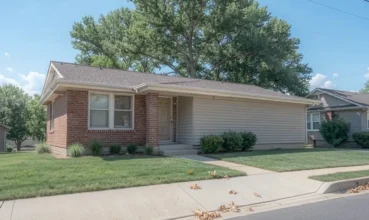
A first-time buyer in Conway is now looking at roughly $250,000 to $300,000 as a starting point – a range that reflects both the land cost problem and the broader price run-up during the pandemic years. Inventory at that level is thin, and what exists tends to be older ranch-style homes and fixer-uppers in established neighborhoods.
Some buyers are taking that route. Walter notes that entry-level buyers willing to purchase an older home and renovate it can still find a path into the Conway market. The downtown area has a stock of older homes that attract buyers comfortable with renovation projects. But that path requires either the skills to manage a remodel or the cash to hire it out, barriers that not every first-time buyer can clear.
Those who cannot are increasingly looking outside Conway altogether. Walter describes a pattern where first-time buyers move to nearby communities like Greenbrier or Maumelle – both roughly 20 minutes away – where new construction averages around $350,000 and land is more available. The idea is to build equity there first, then return to Conway later. It works as a strategy, but it means accepting a longer commute and delaying the move to the community they actually wanted.
Three Colleges Keep Demand High
What makes Conway’s supply problem harder to solve than in most markets is the demand side. The city has three colleges – the University of Central Arkansas with roughly 10,000 students, Hendrix College, and Central Baptist College – that continuously feed new residents into the local population. Students arrive from across the state and region, find jobs in the Little Rock metro area, and stay. According to Walter, the city’s population has grown from around 20,000 in the 1990s to approximately 70,000 today. That pipeline does not slow down between graduation cycles; it just keeps adding households that need somewhere to live.
Hidden infrastructure costs compound the problem. Conway Corp, the city’s co-op utility provider, delivers relatively low utility rates to residents – but the cost of extending infrastructure into new developments falls on builders, and it is steep. That cost gets passed through to home prices, adding one more reason the economics of entry-level construction do not pencil out.
Roofs and Insurance
The insurance market is layering on additional difficulty. Walter flags roof age as a growing obstacle: any roof older than ten years is increasingly difficult to insure in Arkansas, where severe weather is common. Buyers purchasing older homes, which is the primary inventory available to first-time buyers in Conway, often find that the seller must replace the roof before the deal can close, or that replacement cost needs to be factored into the purchase price. On a home already priced at the top of a first-time buyer’s range, a roof replacement can be the difference between a deal that closes and one that falls apart.
For buyers considering Conway, the surrounding market offers a telling comparison: a three-bedroom, two-bathroom home in Greenbrier or Maumelle can be had as new construction for roughly $100,000 less than comparable new construction in Conway. The tradeoff is distance from the city’s colleges, downtown, and employment base, but for buyers who need to start somewhere, that gap is increasingly hard to ignore.
None of these pressures show signs of easing. Land remains finite, the college pipeline keeps producing new households, and construction costs continue to favor higher-end builds. For first-time buyers in Conway, the window is not closing; it has already narrowed to the point where creative strategies, whether renovation, relocation, or patience, are no longer optional but necessary.
About the Expert: Emily Walter is Executive Broker and Team Lead at The Emily Walter Team with RE/MAX Elite, serving the Conway, Arkansas market for 13 years. Her team of three professionals specializes across historic and higher-end properties, land and marketing, and first-time buyer transactions.
This article is intended for informational purposes only and does not constitute legal, financial, or investment advice. The views and opinions expressed herein reflect those of the individuals quoted and do not represent an endorsement of any company, product, or service mentioned. Readers should conduct their own due diligence and consult qualified professionals before making any investment decisions.