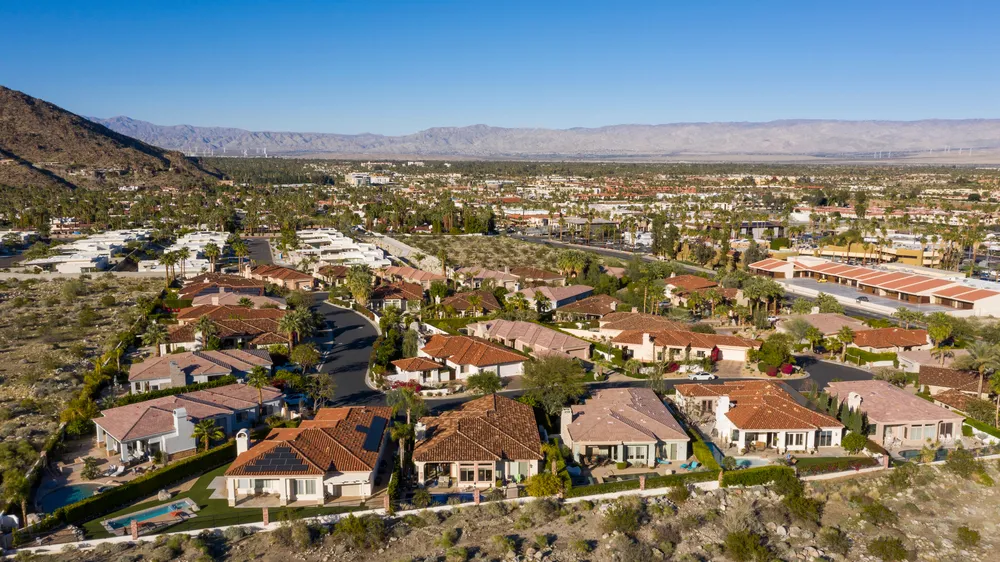
Families priced out of Los Angeles, San Diego, or Orange County are increasingly landing in the Coachella Valley, where a four-bedroom home with a pool can close for under $800,000. Vlada March is a Realtor and owner of Vlada March Real Estate Group with HomeSmart in Palm Desert, California. She says the value gap between coastal and inland Southern California has grown wide enough to reshape who buys here and why. But buyers who don’t understand what they’re giving up set themselves up for frustration.
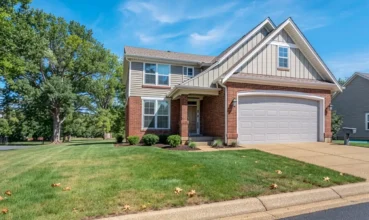
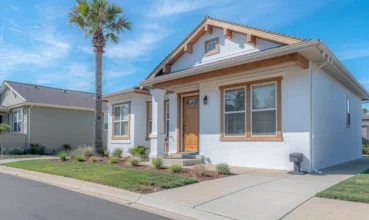
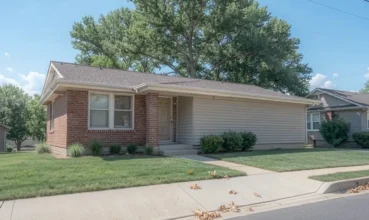
March recently closed a deal that illustrates the math. A couple purchased a 2,300-square-foot single-family home with four bedrooms, three bathrooms, a pool, a spa, a yard, and no HOA, paying $750,000 after negotiating down from $790,000. “Something like this in LA, San Diego would cost you at least $2 million,” March says.
What the Price Buys
The Coachella Valley sits about two hours east of Los Angeles. It’s desert: hot summers, mild winters, minimal rain. For that climate trade-off, buyers get significantly more square footage, larger lots, and amenities like pools that would add six figures to a coastal home’s price.
A $750,000 home isn’t cheap in absolute terms, but measured against what the same money buys two hours west, the gap is dramatic. March describes the Valley as still affordable compared to Southern California overall. Home prices span a wide range: gated communities with multi-million-dollar properties, family-oriented neighborhoods around $800,000 to $1 million, and condos or homes in neighboring cities around $500,000 to $600,000.
What You Give Up
Beaches are over an hour away. Summer temperatures regularly exceed 110 degrees, making outdoor activity brutal from June through September. The job market is smaller and more concentrated in hospitality, healthcare, and retail than a coastal metro.
If your work requires in-person presence in LA or San Diego, a two-hour daily commute isn’t sustainable. It can work for remote or hybrid arrangements, but not for five-day-a-week office jobs.
The Valley’s population also fluctuates seasonally. Prime season runs from roughly October through April, according to March. When seasonal residents leave for the summer, the area gets quieter. Some full-time residents find that rhythm isolating. Others prefer it.
Why the Value Holds
Despite those trade-offs, the case for Coachella Valley real estate rests on a straightforward comparison: what does your dollar buy, and does the lifestyle match your priorities? For families with school-age children, remote workers, or retirees, the answer is often yes. March describes daily life as calmer, with minimal traffic, no parking issues, and easy routines for getting kids to school or meeting clients.
The market is balanced right now. Palm Desert is the top-selling city in the Coachella Valley by monthly volume, with about four months of inventory. Homes sell at approximately 3% below asking price, according to March. Buyers have room to negotiate, and sellers are willing to move. March says sellers increasingly offer credits or price reductions: “they need to make the deal work because nobody knows when the next buyer is going to show up.”
That dynamic favors buyers, but it’s not a distressed market. Properly priced homes in good condition still sell quickly. Properties that sit tend to be overpriced relative to their condition. March identifies pricing as the primary factor determining how long a home stays on market, with condition second.
For investors, March points to multi-unit properties as an opportunity. She currently has an investor in escrow on a duplex. She says purchase prices for multi-unit properties in the desert are significantly lower than elsewhere in California, which translates to higher returns.
The Decision That Matters
For buyers weighing a move inland, the question isn’t whether the Valley is cheaper. It clearly is. The real question is whether you’re buying for the right reasons and the right season. March notes that while listings move faster during prime season when more people are in the desert, homes sell year-round if priced correctly. “It is a misconception that summertime real estate out here is completely dead,” she says. “It’s not true.”
The practical test is whether the lifestyle fits beyond the price tag. Have you accounted for the summer heat, confirmed your employment flexibility, and spent enough time in the area outside peak season to know what daily life actually feels like?
About the Expert: Vlada March is a Realtor and owner of Vlada March Real Estate Group at HomeSmart, serving the Palm Desert and Coachella Valley market across residential, commercial, and rental segments.
This article is intended for informational purposes only and does not constitute legal, financial, or investment advice. The views and opinions expressed herein reflect those of the individuals quoted and do not represent an endorsement of any company, product, or service mentioned. Readers should conduct their own due diligence and consult qualified professionals before making any investment decisions.