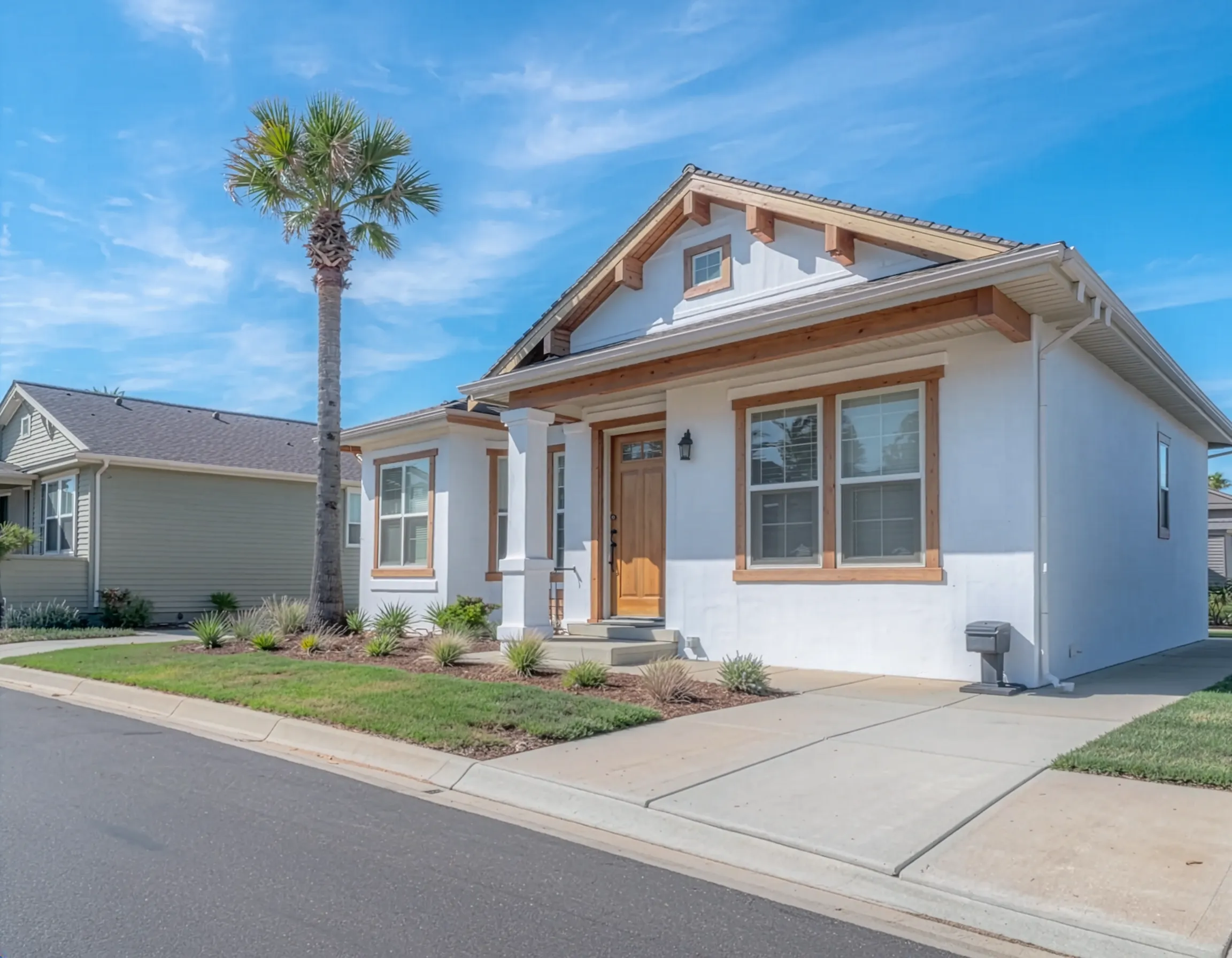
When sellers in the South Bay beach cities need new paint, fresh flooring, or updated landscaping before listing, many resist. They would rather offer the buyer a credit at closing and skip the hassle. It feels logical: give the buyer money to do the work themselves and avoid spending cash on a home you are leaving. But the credit approach consistently leaves money on the table compared to doing even modest renovations before listing – and the reason has less to do with dollars than with how buyers actually respond to what they see.
Susan Murphy has been selling homes in the South Bay since 1988 and has spent two decades running the Hoffman Murphy Real Estate Team in Hermosa Beach, California. She hears the credit argument regularly and pushes back on it every time. “Most buyers don’t actually have the vision that you think they might have,” she says.
The Vision Gap Is the Core Problem
Sellers know their home’s potential. They can look past worn carpet, dated light fixtures, or a tired kitchen and imagine the finished product. They assume buyers can do the same. Murphy says that assumption is wrong for most buyers in this market.
Today’s South Bay buyers are already stretching financially. Townhomes in Redondo Beach average in the $1.2 to $1.6 million range, according to Murphy. These buyers are not sitting on large reserves of cash for post-closing renovations. More importantly, they are not emotionally motivated by a credit on a closing statement. Walking into a freshly painted home with new flooring and staged furniture produces a reaction that a line item on paperwork does not.
Murphy says a well-presented home makes buyers feel they could move right in – and that feeling drives them to compete. Her team’s prepared listings typically draw two to four offers. A home that needs work, even cosmetic work, does not generate that same urgency. As Murphy puts it, “they don’t really want to come in and do major renovations.”
Why Sellers Resist
Murphy acknowledges the emotional barrier. She says “it’s hard to put money into a house when you’re leaving it.” Remodeling a kitchen is exciting when you plan to cook in it for the next decade. Writing a check for new carpet you will never walk on feels like a waste.
But the numbers argue otherwise. In one recent listing – a small Venice beach cottage – Murphy’s team ran the comparison explicitly. They gathered bids from contractors, collected offers from investors who would buy the property as-is, and estimated what the home could sell for on the open market after roughly $50,000 in renovations. Murphy says the net gain from renovating and selling to an owner-occupant was projected to be $100,000 to $200,000 more than the investor offers.
That gap exists because investors price in their own profit and renovation costs. An owner-occupant who walks into a finished home pays market value – or above it, if competing with other buyers. The seller who does the work captures the difference.
Not every listing requires $50,000 in work. Murphy says the typical upgrades focus on paint, flooring, landscaping, and staging – sometimes costing just a few thousand dollars. The key is that her team does not raise the listing price to account for the renovation spending. They price at market value and let the presentation generate competition. “We don’t up the price because of the renovations,” Murphy says.
The renovations are not meant to justify a higher asking price. They are meant to attract more offers at the right price, producing a higher final sale through competition rather than sticker inflation.
Staging Closes A Gap
One element sellers frequently underestimate is staging. Murphy says, “A vacant house doesn’t sell.” An empty room looks smaller, colder, and harder to imagine living in. Staged furniture gives buyers spatial context and emotional warmth.
For sellers who still live in the home, Murphy’s team sometimes works with the seller’s existing furniture, bringing in a stager to add finishing touches rather than replacing everything. The goal is not perfection – it is removing the mental work a buyer has to do to picture the home as theirs.
In a market where inventory has ticked up slightly from last year, according to Murphy, buyers are selective. Homes that are well-priced and well-presented tend to sell within the first two weeks, Murphy says. Those that do not sell in that window often sit, and once a home has been on the market for 30 days, Murphy says, “nobody’s making a full price offer.” At that point, the seller typically ends up accepting less than they would have gotten at a lower initial price with better presentation.
A credit asks the buyer to do work you could have done. A renovation removes the obstacle before the buyer ever sees it. In a market where that first two-week window determines the outcome, the difference between the two approaches is not convenience – it is the final sale price.
About the Expert: Susan Murphy runs the Hoffman Murphy Real Estate Team out of Hermosa Beach, California, serving the South Bay beach cities of Los Angeles County. She has held a real estate license since 1988.
This article is intended for informational purposes only and does not constitute legal, financial, or investment advice. The views and opinions expressed herein reflect those of the individuals quoted and do not represent an endorsement of any company, product, or service mentioned. Readers should conduct their own due diligence and consult qualified professionals before making any investment decisions.