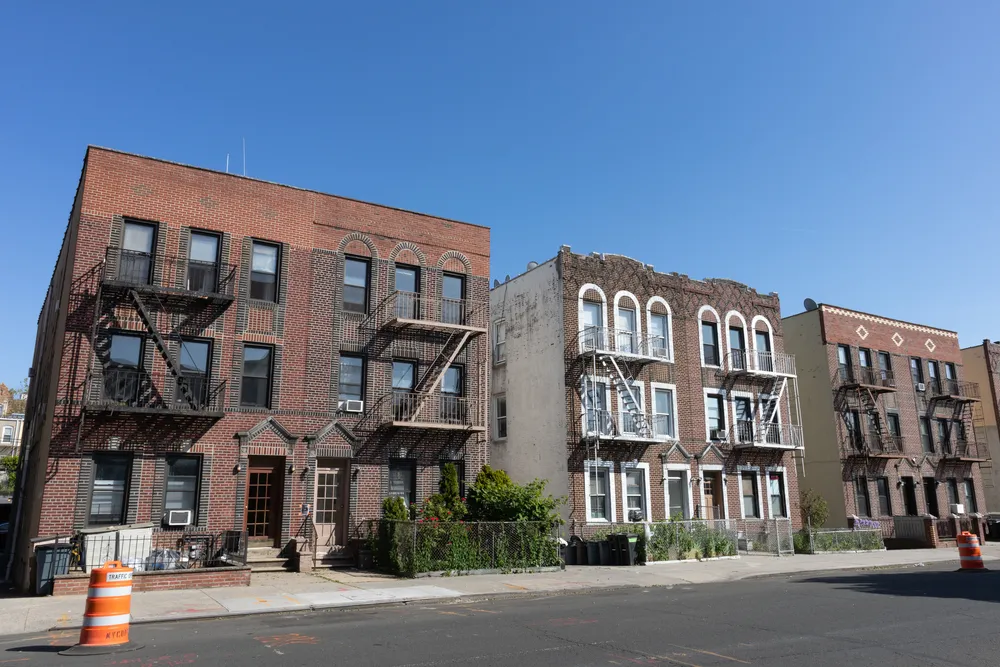
Manhattan relocators and first-time buyers are closing on properties in Queens and neighboring boroughs at prices that contradict the assumption that homeownership in New York City is out of reach. That’s true, but only when buyers look past the city’s most expensive zip codes.
Most people outside New York City assume buying a home there is unrealistic. According to Jonathan Ettricks, a Realtor with Berkshire Hathaway HomeServices Laffey International Realty covering Queens, Brooklyn, and the Bronx, that assumption is costing buyers real opportunities.
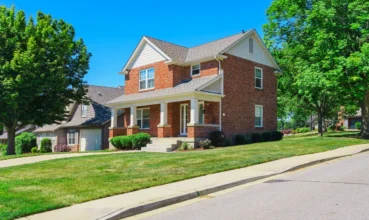
Ettricks points to two recent closings. A young couple expecting their first child purchased a co-op townhome in Bayside, Queens, for $400,000. The property is in a safe neighborhood with good schools. In the Bronx, he closed a one-bedroom co-op apartment for $150,000, purchased by a buyer relocating from Manhattan’s East Side. “There’s this myth that New York City is completely unaffordable, and that’s not the reality,” Ettricks says.
Neither transaction fits the narrative of an impenetrable market. Ettricks argues that buyers who accept the unaffordability story without investigating it are ruling themselves out of opportunities that actually exist.
Queens Isn’t One Market
Part of what makes the unaffordability narrative so persistent, Ettricks suggests, is that people treat Queens as a single, uniform market. The borough contains neighborhoods with dramatically different price levels, transportation access, density, and buyer profiles. Treating them as interchangeable leads to inaccurate conclusions about what buyers can actually afford.
“You have different neighborhoods and different property types and even sometimes different blocks,” Ettricks says. “Neighboring blocks behave so differently.”
Two distinct buyer profiles are currently active. The first wants walkability and proximity to Manhattan. These buyers gravitate toward Northwest Queens neighborhoods like Astoria and Long Island City, which carry higher prices but offer the urban density and transit access that Manhattan-adjacent buyers expect. The second profile is less interested in that environment and more focused on value, amenities, and commute reliability. For those buyers, central Queens neighborhoods like Forest Hills and Kew Gardens offer lower prices, strong neighborhood character, and subway access that makes a Manhattan commute workable.
Relocators Choose Queens Deliberately
The mix of Queens buyers is shifting in ways that challenge the idea the borough is a fallback for people priced out of more desirable areas. Ettricks says his client base runs roughly 60-40 local to out-of-market buyers, with a growing share relocating from other states for job opportunities and a notable number moving from Manhattan itself.
“I’m seeing people move around from all over the place to Queens as well as other places,” he says.
The Manhattan-to-Queens movement is particularly telling. Buyers who have lived in the city and understand its geography are choosing Queens not as a compromise but as a deliberate decision based on value and livability. Ettricks is working with a client starting a new job in Manhattan who is specifically targeting Forest Hills and Kew Gardens. These aren’t the only options, but they offer a combination of price, quality of life, and transit access that makes them genuinely competitive.
Informed Buyers, Informed Sellers
Ettricks notes that affordability in Queens does not mean buyers can approach the market carelessly. Even in neighborhoods where properties are available at $600,000 to $800,000, the transaction only works when a seller can demonstrate genuine value to a buyer who is paying close attention.
“You just have to align the value with what buyers want today,” Ettricks says.
On the seller side, Ettricks says pricing and presentation remain critical, particularly in the first 30 days on market. Despite low inventory, he pushes back on the idea that any property will sell at any price. “There’s this idea that you can just put anything on the market and it will sell at any price point. This is not the case,” he says. Buyers are scrutinizing listings closely, and properties that are overpriced or poorly presented sit longer regardless of how few competing listings exist.
Ettricks says buyers benefit from understanding their financing options before they start searching. Sellers benefit from positioning their properties for buyers who are doing careful research. In his view, the Bayside townhome and the Bronx co-op aren’t unusual. They show what’s possible when buyers approach the market with accurate information instead of assumptions based on the city’s priciest neighborhoods.
About the Expert: Jonathan Ettricks is a Realtor with Berkshire Hathaway HomeServices Laffey International Realty, working across Queens, Brooklyn, the Bronx, and Manhattan.
This article is intended for informational purposes only and does not constitute legal, financial, or investment advice. The views and opinions expressed herein reflect those of the individuals quoted and do not represent an endorsement of any company, product, or service mentioned. Readers should conduct their own due diligence and consult qualified professionals before making any investment decisions.