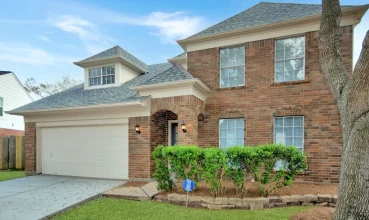
National headlines describe a housing market frozen by high rates, but Charlotte doesn’t fit that picture neatly. Homes are still selling there, and close to their asking prices. What has changed is how much separates the winners from the rest. A well-located, well-kept, realistically priced house still moves, while one that needs work or overreaches on price can linger for months. According to Lisa Archer, CEO of Live Love Homes, who has worked the Charlotte market for more than 20 years, that sorting creates different openings for buyers, sellers, and investors.
A Steady Stream of Newcomers
Charlotte’s resilience starts with who keeps arriving. Archer cites estimates that more than 150 people move to the city every day, and most aren’t moving on a whim. People generally relocate for a job transfer or for retirement, she notes, and a household that has accepted a job in Charlotte needs somewhere to live whether or not rates cooperate.
That pattern shapes how house hunting often happens. When one spouse comes to town for a job interview, the other frequently spends the day driving through neighborhoods, sometimes on a weekday afternoon. Archer says recent arrivals have come from Connecticut, New York, California, Chicago, and Florida, with no single region dominating.
Relocation is only part of the demand. Archer’s recent buyers also include empty nesters downsizing after their children left home, families who bought five or ten years ago and now need more space, and households making room for aging parents. Investors, including many cash buyers, round out the mix. Because each of these groups has a reason to move that doesn’t depend on interest rates, demand in Charlotte has a floor that more discretionary markets lack.
Why the Numbers Still Favor Sellers, Slightly
Charlotte’s economy reinforces that steady demand. Archer points to the city’s large banking sector and its international airport, which serves as a hub for American Airlines, as reasons the market has been more insulated than many others. Metro-wide, she says, homes are selling for about 96% of their asking price, and inventory sits at roughly three and a half to four months of supply.
Taken together, those figures place Charlotte in between the extremes. A balanced market is generally considered to have about six months of inventory, so Charlotte still leans toward sellers. Yet the gap between asking and sale price shows that buyers have room to negotiate, particularly on homes that have been listed for a while. Conditions also vary considerably by neighborhood, which is where the real differences emerge.
What Sells and What Sits
Archer has used the same four-part test for a home’s prospects throughout her career: location, condition, price, and marketing. Location is the one factor a seller can’t change. “I can’t pick it up and move it,” she says. Buyers weigh access to I-485, the loop around the city, along with airport proximity and the commute to and from Uptown.
Condition has become far more decisive than it was a year or two ago. Archer says buyers now skip homes that need something as basic as new carpet and paint, or they offer well under asking in the hope that the seller will cover the work. In this market, a cosmetic project a seller considers minor can become the reason a buyer moves on to the next listing.
Some areas are holding up well. Archer calls Ballantyne still very much in demand, and says listings there aren’t sitting as long as they’re priced appropriately and in good condition. Many parts of Union County are also performing well.
Condos and townhomes face a tougher time. When several units in the same complex are listed together, buyers compare them directly, and only the best-priced unit in the best condition tends to sell. Archer frames the question she poses to sellers in those situations simply: “What do we got to do to be the next one sold?”
How Buyers Are Handling Rates
Even for well-chosen homes, interest rates remain the biggest worry Archer hears from buyers. Many buyers say they’ll wait for rates to fall, but for anyone who truly needs to move, Archer argues the real question is whether the monthly payment works. Temporary buydowns, such as a 2-1 buydown that lowers the rate for the first two years, or a seller contribution toward the buyer’s rate, can bring a payment within reach now rather than leaving the purchase to an uncertain future rate environment.
Her approach is to start with the payment and work backward. If a lender can structure a loan the buyer is comfortable with, the offer can then be shaped around it, with a request for concessions or a seller-paid buydown where the market supports it.
Where Investors Find Room
The listings that frustrate sellers are often the ones that interest investors. Archer sees the biggest opportunity in Charlotte in homes that have been on the market for three months or longer and have already had a price reduction or two. Sellers who need to move quickly are most open to offers by that stage, and the price cuts have already created some built-in equity before any further negotiation.
The same dynamic works against owners whose homes have sat. Archer says sellers who were listed for three to six months without a sale often hope a cash buyer will take the property, but cash buyers typically offer less on a stale listing than on a fresh one, even when nothing is wrong with the house. For investors planning to buy and hold, Charlotte’s steady population growth adds to the long-term appeal.
The Case Against Waiting
Timing is the other question Archer hears often, as many buyers and sellers talk about waiting until after the holidays. Her experience points the other way. December has consistently been among the busiest two or three months of the year for her business.
Part of the reason lies with Charlotte-area schools. Newcomers often assume the semester ends in December and rush to move before January, but local students actually take semester exams in January. That misunderstanding still pushes many relocating families to close by year’s end. Tax considerations add another push, as investors look to complete purchases or sales before the year closes. For sellers, that means motivated buyers are still active when much of the competing inventory has been pulled for the holidays.
Buyers looking beyond Charlotte at the Carolina coast or the Mississippi Gulf Coast will notice a different pace. Archer, whose company also has teams in Charleston, Myrtle Beach, and South Mississippi, says local agents in beach markets often operate on what she calls “beach time,” responding more slowly than buyers from metro areas expect. Buyers relocating from faster-paced markets should be prepared for that adjustment and, if speed matters to them, should find representation that matches their timeline.
Across all of these markets, Archer’s advice to sellers comes down to how they respond to interest. In a slower market, any written offer signals a buyer who wants the house. “There’s a win if somebody’s taking the time to write up an offer,” she says. For a seller whose home has been listed for a while, or whose neighborhood prices are trending down, the task is to find terms both sides can accept and get to closing rather than wait for a better offer that may not come.
About the Expert: Lisa Archer is CEO of Live Love Homes, affiliated with Keller Williams Ballantyne Area, based in Charlotte, North Carolina. She works primarily in residential real estate, with some commercial work, in the Charlotte market, and her company has expansion teams in Greenville, Columbia, Charleston, Myrtle Beach, and South Mississippi.
This article is intended for informational purposes only and does not constitute legal, financial, or investment advice. The views and opinions expressed herein reflect those of the individuals quoted and do not represent an endorsement of any company, product, or service mentioned. Readers should conduct their own due diligence and consult qualified professionals before making any investment decisions.