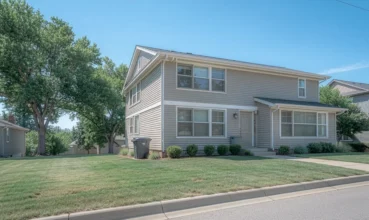
The Albany residential market stands out from broader housing conditions, sustaining price growth even as home sales slow in many parts of the country. This stability is rooted in the region’s economic composition: government jobs, a robust healthcare sector, and expanding tech companies provide a steady employment base, supporting consistent housing demand despite broader volatility.
Jeffrey Decatur, a licensed associate broker and REALTOR® with RE/MAX Capital and a veteran of the Albany market for over 30 years, offers a perspective on how local conditions can diverge sharply from wider patterns. Decatur has witnessed the industry’s shift from printed MLS books to today’s digital tools. He draws on that experience and market fundamentals to explain Albany’s distinctive path.
Albany Prices Rise Despite Slowdown
While headlines often highlight declining sales and price corrections, Albany’s housing market continues to post annual price gains despite a slowdown in transaction volume. Decatur notes that “Albany’s market is still going up. Our sales have been down, but prices are still rising, which conflicts with the rest of the nation. We’re still in a very heavy seller’s market.”
This resilience is closely tied to the region’s economic structure. As the state capital, Albany benefits from stable government employment, a large healthcare presence, and increased investment in technology and research. These factors shield the market from broader downturns and support steady housing demand.
Local markets can change faster than many realize. Decatur notes that shifts in Albany often precede broader trends, with agents and buyers sensing changes before national data catches up. This early movement can catch both buyers and sellers off guard if they rely solely on national news or outdated comparable sales.
Buyers Compete for Limited Homes
The defining feature of Albany’s current market is limited inventory, particularly in the new construction segment. With only 370 to 400 new-construction listings among all active properties, buyers face significant competition and must act quickly.
Decatur observes that buyers today are “very aggressive in that we have a very tight market.” Serious buyers are visiting properties as soon as they hit the market and making decisions rapidly. This urgency has grown since early 2026, especially below the $400,000 price point, where multiple offers are common, and homes sell within days.
Despite data showing that first-time buyers are increasingly priced out in many areas, Albany continues to attract young buyers. Decatur points to recent transactions involving buyers in their 20s who are purchasing homes at or above $550,000. He attributes this to younger buyers choosing to enter the market now rather than waiting for prices to drop.
New Builds Face Cost Barriers
New construction makes up about 10 to 15 percent of annual home sales in the Capital Region, with typical new homes averaging 1,700 square feet and starting around $550,000. This price is significantly higher than the regional median of approximately $300,000 for existing homes, reflecting both the high cost of building materials and the premium buyers place on new systems, energy efficiency, and warranties.
New construction faces persistent challenges. New York’s regulatory environment adds high cost and complexity for builders. Decatur calls the state “notoriously one of the most overregulated, overtaxed, and red tape-burdened states.” Local builders must navigate lengthy approval processes, high land costs, and strict building codes, all of which limit the pace at which new homes can be delivered.
These regulatory hurdles directly contribute to the ongoing inventory shortage, a key factor supporting price growth. Industry analysts and state economists expect the shortage to persist for two to three more years, even as policymakers discuss reforms to accelerate housing development. Until those changes materialize, the supply-demand imbalance will likely persist.
Sellers Lag Behind Market Shifts
Many sellers in Albany are still anchored to the rapid price appreciation seen during the pandemic, when annual gains reached 10 to 20 percent. Decatur notes that some property owners are slow to adjust, expecting the same momentum even though price growth has moderated. “Sellers have some apprehensions. They think it’s three or four years ago when the market was really aggressive.” Last year’s price increase was closer to 5 percent, yet some sellers continue to base their expectations on outdated headlines or anecdotes.
This mismatch between seller expectations and current market realities creates pricing challenges. Homes priced realistically for today’s market, especially in high-demand segments, still receive multiple offers and sell quickly. In contrast, overpriced listings often linger, forcing eventual price reductions or failed sales.
Why Agent Expertise Matters
The complexity of today’s market has made experienced representation more valuable than ever. Decatur sees many failed transactions resulting from poor client management rather than market fundamentals. He compares the process to car ownership: “You don’t get rid of a car because it needs new brakes, just like you don’t get rid of a house because it needs a new roof. You work something out.” The ability to negotiate repairs, manage expectations, and keep deals on track has become central to an agent’s role.
Decatur emphasizes that the industry’s evolution has shifted the agent’s value from simply providing information to serving as a skilled negotiator and transaction manager. Reflecting on the broader role of experienced agents in complex markets, Decatur says: “The knowledge and experience an agent has helps people get through transactions. Negotiating skills and market knowledge, that is where a good realtor is worth their weight in gold.”
Albany Market Outlook for 2026
Looking ahead, the Albany market is poised for continued strength through 2026, barring major global disruptions or economic shocks. Price appreciation is expected to continue, though gains will likely be more modest than during the pandemic surge. The region’s fundamental supply-demand imbalance remains unresolved, with no quick fixes on the horizon.
Regulatory reform remains a topic of discussion at the state level, but concrete changes to speed up housing development have yet to materialize. Without significant policy shifts, the inventory shortage and upward pressure on prices are expected to persist.
For buyers and sellers, Albany’s experience highlights the importance of understanding local market dynamics rather than relying solely on broader trends. The region’s unique mix of employment stability, regulatory barriers, and demographic patterns requires a nuanced approach and local expertise. Agents who can navigate these complexities and guide clients through fast-moving or competitive situations are in high demand.
The Albany market also underscores the need to distinguish between sales volume and price trends. While transaction volume may decline due to low inventory, persistent demand continues to support price growth. This pattern of declining volume alongside rising prices may become more common in other supply-constrained markets across the country.
In summary, Albany’s real estate market demonstrates how local factors can override broader headwinds. With continued demand, careful pricing, and professional guidance, the region is likely to remain resilient even as broader uncertainties shape the housing outlook. Buyers and sellers who adapt to these realities and work with experienced professionals will be best positioned to navigate what remains a complex and fast-moving market.
About the Expert: Jeffrey Decatur is a licensed associate broker and REALTOR® with RE/MAX Capital in Albany, New York, with more than 30 years of experience in the local residential real estate market. He specializes in helping buyers and sellers navigate competitive market conditions across the Capital Region.
This article is based on information provided by the expert source cited above. It is intended for general informational purposes only and does not constitute legal, financial, or real estate advice. Readers should conduct their own research and consult qualified professionals before making any real estate or financial decisions.