Austin’s commercial real estate sector is showing early signs of stabilization after several years of volatility and oversupply. The city’s office market, which struggled with high vacancy rates and shrinking tenant demand following the pandemic, posted its strongest leasing quarter since 2019. This recent uptick suggests that the worst of the correction period may be over, and the market is beginning to find its footing.
Market Fundamentals Shift
For much of the past three years, Austin’s office market has faced a challenging mix of new construction and shrinking tenant footprints. Developers delivered millions of square feet of new office space as companies across the city reassessed their needs in response to remote and hybrid work models. Many firms reduced headcounts and consolidated their office presence, leaving landlords with a growing inventory of vacant space.
Cory Camp, brokerage advisor with ECR in Austin, describes the dynamic: major office buildings kept coming online just as tenants were downsizing. This mismatch resulted in an oversupplied market, making it difficult for landlords to fill large blocks of space. One example is the 700,000-square-foot Springdale Green campus, which remains vacant despite being designed to attract major tech tenants. Even when high-profile companies like Nvidia entered the Austin market, their leased footprints were far smaller than anticipated. NVIDIA, for instance, was rumored to have taken 300,000 square feet but ultimately leased just over 100,000 square feet.
Stalled Development Pipeline
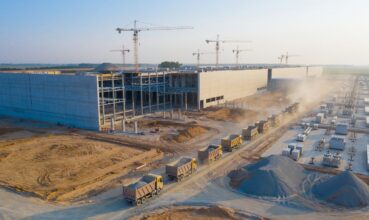
A key factor in the market’s stabilization is the near-halt in new office construction. With few new projects breaking ground, existing vacancies have a chance to be absorbed rather than compounded. This pause in development is giving the market time to rebalance.
The sublease market, which swelled to 4.9 million square feet at its peak—about 20% of Austin’s total office inventory—has contracted by 1.5 million square feet over the past year. This decline results from both sublease deals being completed and some companies withdrawing unused space from the market. The shrinking sublease inventory is a positive sign for landlords, as it reduces downward pressure on rents and vacancy rates.
Tenants Adopt Conservative Leasing Strategies
Today’s office tenants in Austin are far more cautious than in previous cycles. Instead of signing long-term leases based on aggressive growth projections, companies are scrutinizing their real estate needs and prioritizing space efficiency. Camp notes that tenants now conduct extensive financial analysis before committing, ensuring they do not lease more space than they can use.
This shift is evident in how leases are structured. Camp recently closed a deal in which a tenant started with 15,000 square feet and built in options to expand to 20,000 square feet in the second year and 26,000 square feet in the third. This staged approach allows companies to grow without overcommitting up front, reflecting a broader trend of careful, incremental decision-making.
Hybrid Work Patterns
The debate over remote versus in-office work has largely settled into a hybrid model for most Austin companies. Rather than experimenting with different arrangements, businesses are making clear decisions about their space needs based on established hybrid schedules. Camp observes that fully remote teams are becoming less common, while more employers are encouraging or requiring in-person work several days per week.
Rising real estate costs are also influencing these decisions. Companies paying high rents want to ensure their offices are being used, and many are reconfiguring layouts to support collaborative work while accommodating flexible schedules. The hybrid model is shaping both the amount and type of space companies seek, as tenants look for layouts that balance private work areas with shared collaboration zones.
Landlords Adjust Concessions
Landlords are responding to the new market realities with a range of strategies. Owners with long-term investment horizons are more willing to lower asking rents while maintaining annual escalations, aiming to keep buildings occupied and cash flows stable. Those planning to sell in the near term often prefer to keep face rents high and offer extended free rent periods, which helps maintain favorable cap rates for prospective buyers.
The spec suite market has become a focal point for competition. Landlords are investing in smaller, high-quality, move-in-ready suites—typically in the 2,000 to 3,000-square-foot range—to attract smaller tenants who need to move quickly. These turnkey spaces appeal to companies that want to avoid lengthy construction timelines and are seeking flexible, modern office environments.
New Industry Sectors
While traditional tech companies have curtailed their office requirements, new industry segments are stepping in. Artificial intelligence firms are establishing or expanding their presence in Austin, with several foreign companies choosing the city as their North American headquarters.
The defense sector stands out as an unexpected growth area. Companies like Saronic, which develops autonomous naval vessels for the U.S. Navy, have attracted related defense contractors to the region, creating a small but growing cluster of defense-related tenants.
Consumer packaged goods companies are also active, building on the momentum of local brands such as poppi and Siete Foods. The success of these brands has helped establish Austin as a hub for food and beverage startups, drawing similar businesses to the market.
After several years in which tenants had the upper hand, some Austin submarkets are seeing renewed competition for quality space. In certain areas, multiple prospective tenants are now vying for the same property—a notable change from just two years ago, when landlords often waited months for deals to materialize. Camp notes that this shift has begun to tip some of the negotiating leverage back to landlords, though overall conditions remain more favorable to tenants than during the last boom.
Looking Ahead
As Austin’s office market moves into 2025 and beyond, the central question is whether companies will continue to downsize or begin taking advantage of favorable lease terms while they last. Some companies are already acting decisively. For example, xAI recently signed a 112,000-square-foot sublease with Athenahealth, illustrating how well-capitalized tenants are leveraging current market conditions to secure large blocks of space at attractive rates.
The ongoing contraction of the sublease market may soon limit opportunities for tenants seeking below-market deals. As this inventory is absorbed or withdrawn, the economics that made subleasing attractive—such as lower rents and flexible terms—could diminish, pushing more tenants back into the direct leasing market.
Despite persistent headlines about high vacancy rates and office market distress, Camp argues that the narrative often oversimplifies Austin’s situation. While vacancy remains elevated due to the surge in new inventory, the market is showing increased transaction activity and a gradual return of competition among tenants. Landlords are making strategic adjustments rather than resorting to fire sales, and pricing decisions continue to reflect underlying economic fundamentals.
A Path Toward Sustainable Market Balance
Austin’s office sector is working through the aftereffects of rapid pre-pandemic growth followed by an equally rapid correction. The current period is defined by cautious tenant behavior, a slowdown in new construction, and the entrance of new industry segments. While deal sizes remain smaller than in previous cycles, the increase in leasing activity and the narrowing sublease inventory suggest that the market is moving toward a more sustainable equilibrium.
For tenants, the next year may represent the last window to secure favorable terms before competition intensifies and concessions diminish. For landlords, the focus will remain on creative leasing strategies and targeted investments in turnkey space to capture demand from a more discerning tenant base.
Ultimately, Austin’s office market is not returning to its previous highs. Still, it is finding a new balance—one shaped by hybrid work, evolving tenant priorities, and a broader mix of industry drivers. The coming quarters will test whether this stabilization holds, but for now, the signs point to a market that is gradually regaining its footing after a challenging period of adjustment.
About the Expert: Cory Camp is a brokerage advisor with ECR in Austin, specializing in office leasing and tenant representation within one of the country’s most dynamic commercial real estate markets. He provides insight into shifting tenant behavior, leasing strategies, and market trends as Austin’s office sector adapts to post-pandemic conditions.
This article is based on information provided by the expert source cited above. It is intended for general informational purposes only and does not constitute legal, financial, or real estate advice. Readers should conduct their own research and consult qualified professionals before making any real estate or financial decisions.