For years, lakefront real estate around Anderson, South Carolina ran on a straightforward formula: limited shoreline, steady inbound migration, and prices that moved in one direction. That formula has fractured. Persistent drought, a federal infrastructure decision that will keep Lake Hartwell’s water levels suppressed for up to a decade, and a glut of new construction have created conditions where some lakefront sellers are listing below what they paid, a pricing dynamic the area has not seen since 2012 and 2013, according to Ala Chappelear, founder of Chappelear & Associates under Keller Williams Realty in Anderson. Her team of five closed $54 million in volume last year.
Nine Feet Below Pool and Falling
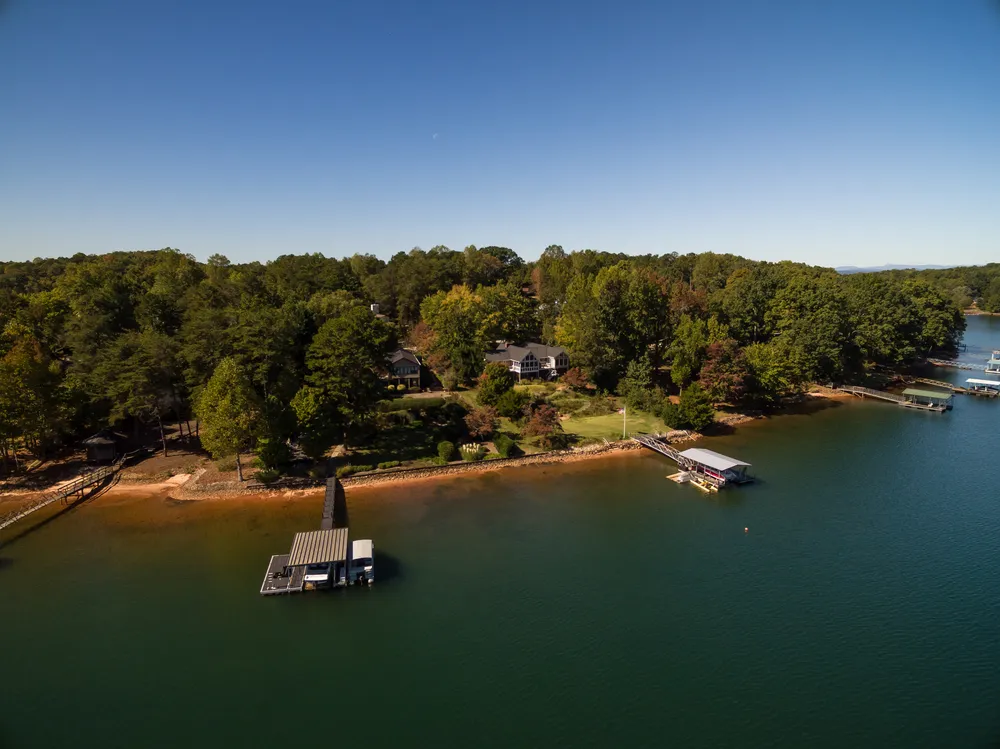
Lake Hartwell is a man-made reservoir managed by the U.S. Army Corps of Engineers. It generates energy for Duke Energy and sustains ecosystems along the Savannah River and other waterways downstream. When rainfall drops, the lake level drops with it – and right now, Hartwell sits nine feet below full pool, the lowest it has been since 2017.
For some property owners, that means docks sitting on dry ground. Whether a homeowner can extend a dock to chase receding water depends on Corps of Engineers regulations governing shoreline management. Some lots allow it; others do not.
The challenge goes beyond the current drought. Following an inspection after Hurricane Helene, the Corps determined that a dam in Pickens County has sustained more substantial water seepage damage than previously understood. To address it, the full pool level has been lowered by four feet for what Chappelear says is expected to be the next ten years while the federal government develops and funds a repair plan. Even when rainfall returns, properties that previously floated at full pool will sit four feet lower than their historical baseline.
Chappelear says she has properties she cannot sell because the water has receded from the shoreline entirely. Buyers who live locally understand the lake will refill eventually. “But a buyer coming in, especially from out of town, out of state, who’s not used to this fluctuation, does not want to buy a house that does not have water in the backyard right now,” she says. In some cases, her team has reduced listing prices below what sellers paid in 2021, when the water was at or near full pool.
The economic effects extend beyond individual sellers. Chappelear notes that Lake Hartwell hosts Bassmaster tournaments and other recreational events that bring money into the local economy. Low water levels threaten that revenue as well.
New Construction Is Compounding the Pricing Pressure
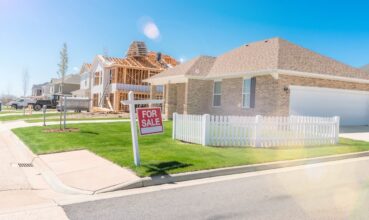
The lake level problem exists alongside a separate but reinforcing issue: builders in the Anderson area are sitting on unsold inventory and cutting prices to move it. For resale sellers, particularly those who purchased new construction a year or two ago, the competition is direct and difficult to win.
Chappelear describes situations where homes purchased for $420,000 to $430,000 are now listing at $385,000 to $400,000. Builders offering the same floor plans with fresh incentives force resale sellers into a position where matching the builder’s price still may not be enough. “If the same builder is building more houses, same floor plan, same features, naturally the buyer is going to gravitate towards new property if it’s the same price,” she says.
Her pricing advice to sellers has shifted accordingly. Rather than anchoring to recent comparable sales, she now emphasizes active inventory, what a listing competes against today, not what sold six months ago. If absorption data suggests only five or six homes will sell in the next two months, the listing needs to be priced within that bottom tier. “You need to check your value based on sales, but you really need to check your list price based on active inventory that you’re competing with,” she says.
For sellers competing directly with new construction, Chappelear recommends focusing on condition and any advantage the property offers that new builds do not, a pool, a fence, or a more desirable lot. Without a tangible differentiator, price becomes the only lever.
Who’s Still Buying
South Carolina’s inbound migration trends remain strong. The state has ranked among the top five nationally for inbound moves in recent years and has been the number one inbound migration state for the last couple of years, according to Chappelear. Anderson’s draw includes a robust job market, relatively low cost of living, mild climate, and access to lakes and mountains.
But the buyer pool has thinned. Rate increases earlier this year pushed some pre-qualified buyers out of their target ranges. Consumer confidence, Chappelear says, has been affected by tariffs, geopolitical conflict, and broader economic uncertainty. The buyers still transacting tend to be those who cannot wait, people relocating, upsizing, or downsizing on a fixed timeline.
The luxury segment is somewhat more insulated. Higher-end buyers are less sensitive to rate fluctuations, though stock market volatility can pause their activity too. Chappelear notes that the reverse also holds: “When the market is not doing well, a lot of those buyers are savvy enough to pull the money out of the stock and put it into real estate.”
Where the Opportunity Sits
For investors willing to deploy capital now, Chappelear sees two categories worth watching. The first is resale homes, particularly recent new construction selling below original purchase price. The builders’ original projections on migration and housing demand were sound, she argues, and the current discounts reflect short-term economic pressure rather than a fundamental mispricing. The second is lakefront property affected by low water levels, where sellers who must move are accepting steep reductions.
South Carolina’s tax structure introduces a constraint. Investor-owned properties carry a tax burden roughly three times that of a primary residence, and properties inside city limits add another overlay. “The numbers for some of our investors when they’re looking to lease property just don’t make sense,” Chappelear says, particularly when city taxes are layered on.
Her broader counsel: build a cash reserve, watch for deals created by motivated sellers, and be ready to act. “A lot of people did very, very well in the bad market in 2008 through 2014,” she says. “If somebody’s able to put some money aside and wait out and see some of those deals pop up and be prepared to buy them, they’ll do great.”
The lake is still a finite commodity, limited shoreline, limited docks, limited developable lots. For buyers with cash and patience, the gap between today’s distressed pricing and the lake’s long-term value is where the opportunity sits.
About the Expert: Ala Chappelear is the founder of Chappelear & Associates under Keller Williams Realty in Anderson, South Carolina.
This article is based on information provided by the expert source cited above. It is intended for general informational purposes only and does not constitute legal, financial, or real estate advice. Readers should conduct their own research and consult qualified professionals before making any real estate or financial decisions.