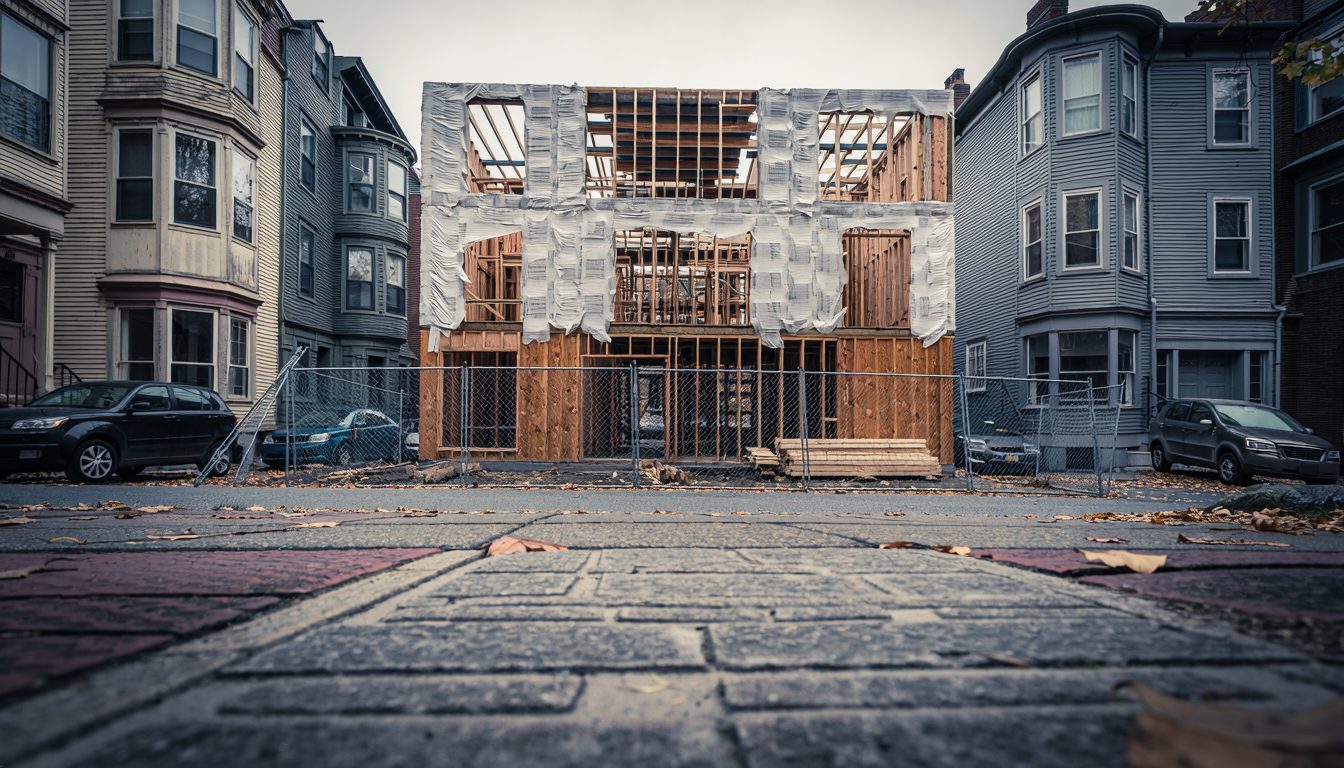
Housing debates in expensive cities tend to focus on the big projects: the tower that adds hundreds of apartments, or the subdivision at the edge of town. Less attention goes to the small buildings in between, the handful of units on a single city lot where many developers get their start. In Boston, that middle ground has gone quiet. The city requires projects of seven or more units to include income-restricted homes, and for builders working at seven to nine units, that requirement can erase the return that makes a project worth starting. Now Mayor Michelle Wu’s administration wants to loosen the rule, temporarily raising the threshold to 10 units for two years.
Melvin Vieira, who leads The Vieira Group at RE/MAX Real Estate Center in Boston and has worked in real estate since 1989, says the current rule keeps small builders from entering the market at all. Demand from universities, hospitals, technology, and biotech keeps pressure on Boston prices, according to Vieira, and the region’s incomes are high, but so is the cost of housing. In his view, the supply side is where policy can make the biggest difference.
Why Small Builders Wait
Boston’s inclusionary policy requires 17 percent of units in qualifying developments to be affordable, with another 3 percent set aside for Section 8 tenants. Vieira says that for builders at the smallest end of the range, the numbers don’t work. “When you’re a small developer, there is no money for that small developer to even want to get in the game,” he says.
Vieira supports the goal of affordable housing but argues the threshold works against the builders who could add new supply. “Don’t get me wrong, you do need to make some low to moderate housing. You need it,” he says. Raising the threshold would keep the affordability mandate for larger buildings while allowing smaller projects to pencil out.
He frames the long-term payoff in practical terms. Builders who complete several profitable small projects eventually gain the capacity to take on larger ones. “If you allow that small developer periodically to do those little small home runs, he or she’s going to say, okay, eventually … I can build a big project now because I’ve made so much money.”
The Proposed Rule Change
The proposal is a partial step back. Boston used a 10-unit threshold until 2023, when it tightened the rule to seven, and city officials expect that loosening it again could add about 100 homes a year. The number is modest, but the shift behind it is not: after years of asking new development to carry more of the cost of affordable housing, the city is now weighing whether those requirements are holding back construction itself.
The change is not final. The Boston Planning Department advanced the proposal on Nov. 12, and it now goes to the Boston Zoning Commission and the City Council for approval.
A Rejected Ballot Measure
Boston’s debate is part of a wider argument in Massachusetts over how much local rules limit housing supply. This month, voters narrowly rejected a statewide measure that would have allowed single-family homes on smaller lots everywhere except Boston.
Vieira, who also works on housing policy and consults with municipalities, says the result won’t change what buyers do in the near term. He sees measures like it as long-term bets on supply, and he expects a version to return. The principle behind them, he says, is simple: “The more homes you have on the market, the lower the prices can be. But the fewer homes you have on the market, the higher prices can be.”
Where First-Time Buyers Land
For first-time buyers, Vieira says, the shortage shows up as a series of trade-offs. Buyers who want to stay in the city often compromise on a condo or a multifamily property, where rental income can offset costs. Those willing to move just outside the city can find single-family homes.
At today’s prices, most first-time buyers can’t have everything at once, according to Vieira, and the decision about what to give up belongs to them, not their agent. “They have to know where they want to be because they need to know how close their job is to where they’re going to move, how they’re going to get back and forth.”
The most common sticking points he sees in his seminars are basic: not knowing where to start, not knowing how much they will need to spend, and not knowing where to live.
What’s Driving Sentiment Now
Vieira says buyers are more motivated now that the election cycle has ended. “People are more motivated now because the elections are over with and people feel a little more calm because they can now see what can happen possibly in the next two years.”
He identifies interest rates and inflation as the biggest headwinds. He also says creating more housing will take both new policy and a shift in community attitudes, and he points to neighborhood opposition to new development as a barrier. “Some people don’t want it in my backyard, but they also got to realize before you got there, you were actually in someone else’s backyard, and someone else opened up that backyard for you to be able to live and own your piece of property there.”
For residents who want their children and grandchildren to stay in the area, Vieira says, the choice is to accept new housing nearby or watch the next generation move away because they can’t afford to stay.
About the Expert: Melvin Vieira leads The Vieira Group at RE/MAX Real Estate Center in Boston. He has worked in real estate since 1989, and his work spans sales, housing policy, municipal consulting, and first-time buyer education.
This article is based on information provided by the expert source cited above. It is intended for general informational purposes only and does not constitute legal, financial, or real estate advice. Readers should conduct their own research and consult qualified professionals before making any real estate or financial decisions.