
Nobody wants to hear the word “foreclosure.” But if you’re a homeowner, a buyer watching the market, or someone who owns a rental property, a quiet buildup of pressure in t...

In Southwest Florida's Growth Corridor, Permit Filings Predict Price Pressure Before Construction Starts

Written by:
Date:
04 Sep 2026
Share via Facebook

Share via Linkedin

Share via X

Copy to clipboard

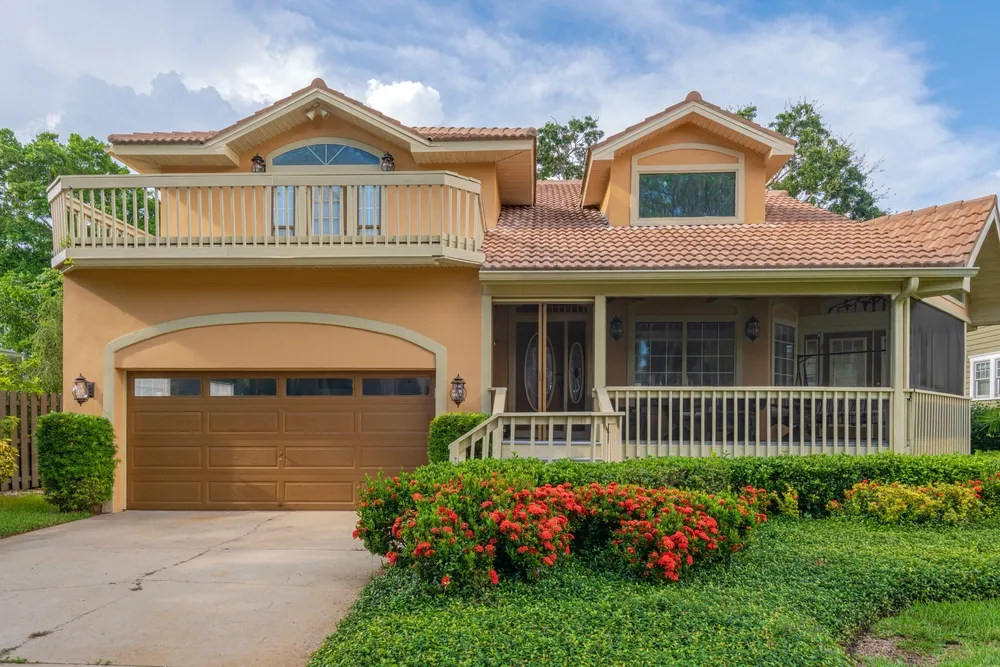
A population that doubles sounds like guaranteed appreciation. More people means more demand, which means your home is worth more, right? That is the assumption many buyers carry into fast-growing markets. But in Collier County, Florida, where local economic development officials project the population could double within the next eight to ten years, the math is more complicated than it appears. New residents also bring new construction, and the supply side of that equation is what most buyers fail to track.
Sterling Desorcy, a Realtor and appraiser at Sterling Properties of SW FL, LLC, works across Collier and Lee counties in Southwest Florida. His dual role, pricing homes as an appraiser while also representing buyers and sellers, gives him a ground-level view of how new supply affects existing homeowners.
Permits Are the Early Warning
When a builder files for permits in a new community near an existing neighborhood, the price pressure on nearby homes does not begin when those houses are finished. It begins the moment buyers start comparing a resale home to new construction with modern finishes, builder warranties, and promotional financing.
Desorcy flags building permits as the leading indicator that most buyers overlook. If a buyer is purchasing an existing home near undeveloped land or an announced community, permit data reveals how much new inventory is coming and how soon. New supply “could put some price pressure on those existing homes within a one to five mile radius,” Desorcy said.
That pressure does not need to mean a crash. It can mean slower appreciation, longer resale timelines, or the need to invest more in updates to compete with newer construction nearby. But for a buyer who stretched their budget expecting rapid equity gains, even flat appreciation can feel like a loss, especially when insurance and property taxes in Collier County are already elevated.
Growth Does Not Distribute Evenly
The population projection – doubling within eight to ten years, according to what Desorcy heard from the Collier County Economic Development Council, is a regional figure. It does not mean every neighborhood will see equal demand increases.
Some areas will absorb most of the new construction. Others will see little change. The buyers most at risk are those purchasing in existing communities adjacent to large planned developments, where new homes at similar or lower prices will compete directly for the same pool of mortgage-dependent buyers.
Naples’ upper-end market, homes above $750,000, largely purchased with cash, is somewhat insulated from this dynamic because cash buyers are less price-sensitive and more amenity-driven. According to Desorcy, roughly 50 to 60 percent of transactions in Naples are cash. The segment most exposed is the $350,000 to $600,000 range, where buyers rely on financing and are highly sensitive to monthly payment costs. Those homes are already sitting longer because buyers do not want to pay a 7 percent mortgage rate, Desorcy said.
The Carrying Cost Squeeze
Even if home prices hold steady or rise modestly, the cost of owning in Collier County is climbing from other directions. Desorcy noted that “there are people that are having to move because of the cost of insurance.” Property taxes add another layer, and while there is active discussion in Florida about eliminating property taxes, no policy change has been enacted, and the revenue replacement question remains unresolved.
Desorcy said eliminating property taxes would help buyers who currently cannot qualify for a mortgage. Removing a $500-per-month tax payment could allow some buyers to redirect that money toward a mortgage payment and afford a home they otherwise could not.
For a buyer evaluating a purchase today with a ten-year hold in mind, the growth projection alone is not enough information to make a decision. The question is what is being built within a few miles of the property, what insurance renewal costs will look like, and whether the neighborhood will be competing against brand-new inventory at a similar price within a few years.
The practical step Desorcy’s analysis points toward: before making an offer on an existing home in a growing area of Collier County, check the county’s active permit data for new residential communities nearby. If significant new units are in the pipeline at or below the same price, the resale timeline and expected appreciation may look very different from what a population-growth headline alone would suggest.
About the Expert: Sterling Desorcy is a Realtor and real estate appraiser at Sterling Properties of SW FL, covering Collier and Lee counties, Florida, with a 25-year background as a supply-and-demand analyst on Wall Street.
This article is intended for informational purposes only and does not constitute legal, financial, or investment advice. The views and opinions expressed herein reflect those of the individuals quoted and do not represent an endorsement of any company, product, or service mentioned. Readers should conduct their own due diligence and consult qualified professionals before making any investment decisions.
Similar Articles
Explore similar articles from Our Team of Experts.


Real Estate Investment, Commercial Real Estate, Industry News, Market Analysis & Policy, Perspectives
Chicago’s real estate market is experiencing an unexpected renaissance led by local investors, while international capital remains notably absent, according to a leading market expert....