
Despite economic uncertainties and recent market volatility, the Hamptons continues to demonstrate remarkable resilience, with high-end properties moving quickly and often generating multipl...

Some Lake Nona, Florida, Homeowners Who Bought in 2021–2023 Are Already Underwater

Written by:
Date:
04 Sep 2026
Share via Facebook

Share via Linkedin

Share via X

Copy to clipboard

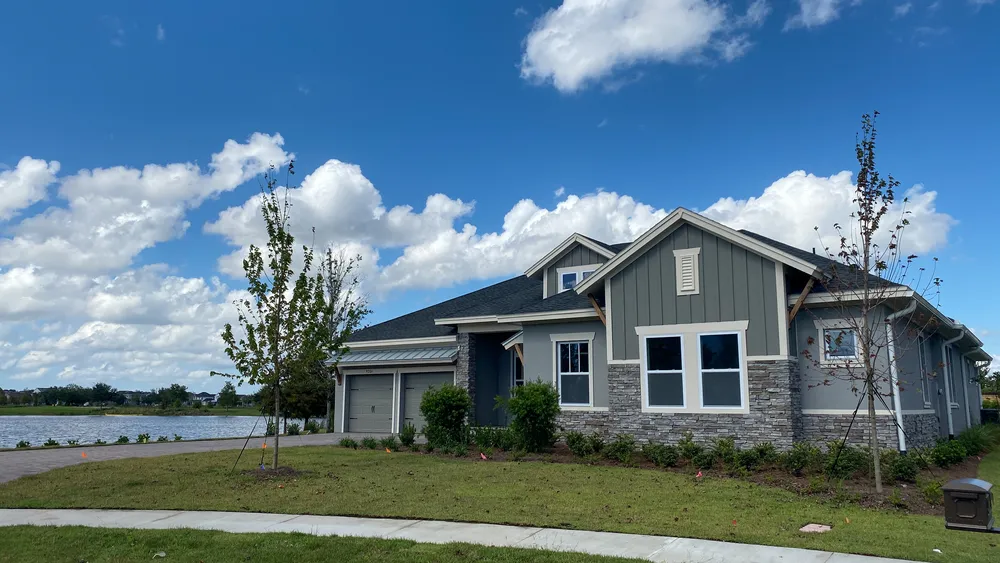
Homeowners in Lake Nona, Florida, who purchased between 2021 and 2023 and then refinanced to pull out equity are now discovering they cannot sell without writing a check at closing. The pattern is still small in scale, but it carries echoes of a much larger crisis, and it is already showing up in closed transactions.
Sophia Rogers, Broker Associate & Team Founder with Jeff + Sophia at SERHANT., has worked the Lake Nona market since 2012. She has personally handled three sales this year where the seller had to bring money to closing, not because the home had a defect, but because the mortgage balance exceeded what the market would pay.
The Refinance Trap
The pattern Rogers describes is specific. A buyer purchased a home in 2021 or 2022 when prices were rising fast. As the home’s appraised value climbed, they refinanced and pulled cash out. That felt rational at the time; values were going up, and interest rates were still historically low.
But Lake Nona’s price appreciation has stalled. Rogers describes current conditions as flat: “It’s not going up, it’s not going down.” When a homeowner who already extracted equity needs to sell because of a job change, a divorce, or a relocation, they find their mortgage balance exceeds what the market will pay.
In one transaction this year, Rogers says the seller had to bring $40,000 to closing. In another, $10,000. A third seller had to part with a portion of the down payment they originally invested. These are homes in desirable communities where the owner simply owes more than the home is currently worth.
Rogers connects this to a deeper memory. She has worked in Central Florida real estate since 2004 and lived through the last housing collapse. “If you remember ’05, ’06, I have scars,” she says. She is careful to distinguish this from 2006 repeated at scale; people are not walking away from homes, but the mechanics are familiar at a subtle level.
Short Sales Are Appearing
The pattern extends beyond individual transactions. Rogers points to a specific pocket in the 32832 zip code where homes have sat on the market for close to a year. Some of those listings have now transitioned into short sales, meaning the lender has agreed to accept less than what is owed. She notes two short sales currently under contract in one community, both five-bedroom homes.
Two short sales in a single neighborhood do not constitute a crisis. But in a market where prices are flat, and builder incentives are pulling buyers toward new construction instead of resale, it is a signal worth watching.
Rogers frames the situation directly: “They’re stuck. They cannot sell unless they are willing to take a risk.” That risk means accepting a loss, bringing cash to closing, or negotiating a short sale with the lender, none of which are outcomes these buyers anticipated when they purchased just a few years ago.
What Buyers Should Watch For
For buyers considering a resale home in Lake Nona, this dynamic matters in two ways. First, it explains why some sellers are holding firm on prices that seem disconnected from the market; they cannot afford to sell for less without taking a loss. Second, pockets of motivated sellers may emerge over the coming months, particularly in the 32832 zip code where Rogers is already seeing distress.
The risk for buyers is purchasing into a micro-market where values have not yet fully corrected. A home priced at what the seller needs is not the same as a home priced at what the market supports. Rogers says buyers today are more discerning; they can look up what a seller paid, assess whether improvements were made, and walk away if the numbers do not add up. “Buyers can see what you bought it for and they can see if you have done anything to the home, so they won’t purchase,” she says.
Rogers also sees new construction intensifying the pressure on resale sellers. Builders in the area, including David Weekley Homes and ICI Homes, offer closing cost assistance and other incentives that resale sellers cannot match. As fourth quarter approaches and builders work to clear inventory before year-end, Rogers expects those incentives to become more aggressive, further widening the gap between what resale sellers need and what the market will bear.
For sellers who bought during the 2021–2023 window and have not extracted equity, the calculus is different; they may still have room to price competitively. But those who refinanced and now owe more than the home’s current value face a narrowing set of options: hold and wait for appreciation that may not come soon, or sell at a loss to move on.
About the Expert: Sophia Rogers is a Broker Associate and Team Founder at SERHANT and has lived and worked in the Lake Nona area of Orlando, Florida, since 2012.
This article is intended for informational purposes only and does not constitute legal, financial, or investment advice. The views and opinions expressed herein reflect those of the individuals quoted and do not represent an endorsement of any company, product, or service mentioned. Readers should conduct their own due diligence and consult qualified professionals before making any investment decisions.
Similar Articles
Explore similar articles from Our Team of Experts.