
After more than four decades in the business, Jim Myrick has watched Silicon Valley reinvent itself several times, from hardware and personal computers to the dot-com era, social media, biot...

In Weber and Davis County, Utah, the School Calendar Still Dictates When Homes Sell

Written by:
Date:
26 Aug 2026
Share via Facebook

Share via Linkedin

Share via X

Copy to clipboard

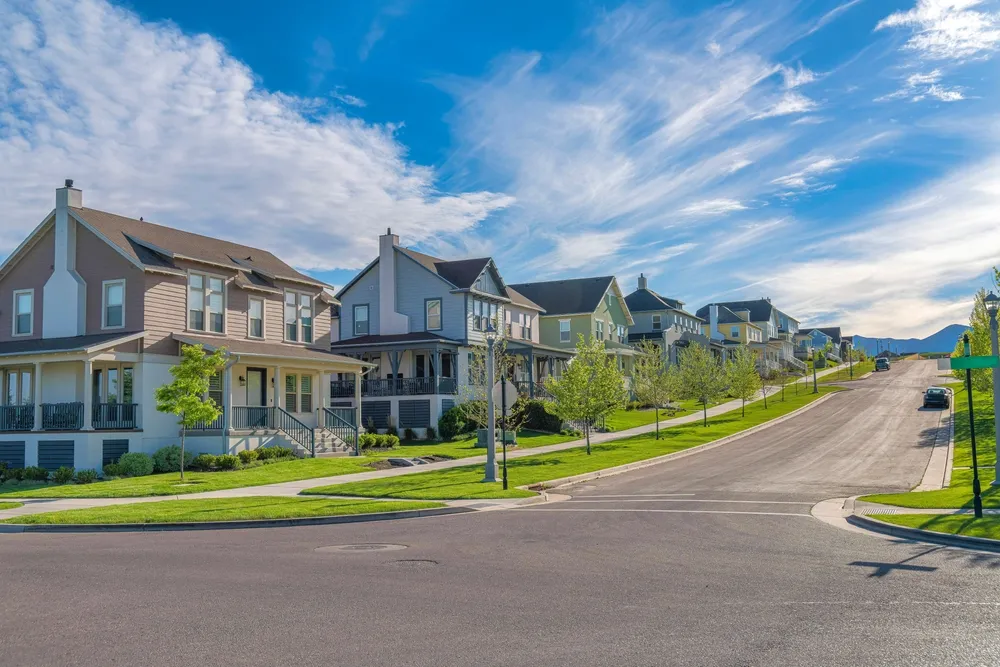
Most housing markets follow interest rates, inventory cycles, or seasonal weather patterns. In Weber and Davis County, Utah, the dominant variable is simpler: when school starts and when it ends. In a region defined by large families and strong ties to local school systems, real estate activity compresses around the academic calendar in ways that catch outside buyers and investors off guard.
According to Jen Fischer, an associate broker with Ascent Real Estate Group who has worked the area for years, this timing pattern is the single most common surprise for people unfamiliar with the market. “It’s the first of September, it’s the fall, shouldn’t we be having some activity? No, because everybody just went back to school,” she says.
The pattern is straightforward: families want their children enrolled before the year begins, so buying peaks in late spring and early summer, then drops sharply once classes resume. Sellers listing in early fall often find themselves waiting longer than expected, not because of pricing or condition, but because the buyer pool has temporarily contracted.
Condition Is Beating Price as the Deciding Factor
Across price ranges, one dynamic stands out: well-maintained homes are selling and poorly maintained ones are not, regardless of how aggressively they’re priced. Fischer describes a market where buyers, including first-time buyers coming out of the area’s many universities, will accept dated finishes but reject deferred maintenance.
“Nobody wants to take on a project right now,” she says. “It can be dated, but it’s got to have good bones.”
A home with a failing roof, an aging HVAC system, or visible water damage will sit on the market no matter how low the price drops, according to Fischer. The problem compounds with time. Listings that linger develop a stigma; buyers begin to assume something is wrong with the property, pushing it further to the margins. Fischer describes overpricing as one of the biggest mistakes sellers can make in this market. A home priced above where it should be forces eventual price reductions that signal distress rather than opportunity, and by that point buyers have already moved on to other options.
The flip side played out in a recent transaction Fischer closed. Two sisters were selling their father’s home after he moved to an assisted living facility. The house was dated but immaculate; mechanicals, including the roof, HVAC, and water heater, were all newer, and the home was clean and well-cared-for. Fischer priced it precisely at market value, drew a strong showing count in the first week, and accepted a full-price offer. The deal closed in 21 days.
“Everybody was super happy,” Fischer says. “They got the most for their property because they did what we asked them to do.”
The lesson for sellers in this market is specific: buyers will pay full price for a home that is clean, mechanically sound, and honestly priced – even if the finishes are outdated. But they will not pay any price for a home that needs significant work.
New Construction Is Setting the Terms for Resale
Builders in Weber and Davis County are offering financing incentives that individual sellers cannot match, rate buydowns, landscaping, and window coverings, creating a competitive gap that resale listings struggle to close. These incentives lower the total cost of ownership for buyers in ways that don’t show up in the list price alone.
“We can’t buy down a rate as they can,” Fischer says. “A lot of these guys are big builders and their pockets are a little bit deeper than your average homeowner’s.”
Seller concessions have become routine across the resale market as a result. Multiple-offer situations still occur but are no longer the norm. Fischer tells her sellers to expect that they will need to contribute something, whether closing cost assistance or other concessions, to compete with what builders are offering at every price level.
Geography Creates Distinct Micro-Markets
Not all areas within the two counties perform equally. East Layton and the far east bench – close to the mountains, offering a more rural feel with easy freeway access, consistently sell quickly. The west side, where former farmland is being converted to new development, attracts buyers drawn to new construction. The middle corridor, where homes sit closer together without views or significant land, moves more slowly.
That middle ground, however, is where Fischer sees the strongest investment opportunity. She recently helped an investor purchase a home well below list price because the sellers had already relocated and were making payments on an empty house. “The indicator is if someone’s making a payment on an empty house, they’re likely making two payments, and they don’t want that payment anymore,” she says. The longer those sellers carry the cost – mortgage, utilities, lawn care – the more motivated they become.
Fischer says finding these opportunities requires an experienced agent who knows what signals to look for. She points to her own investment experience as part of what informs her ability to distinguish a genuine deal from a property that’s cheap for a reason.
An Unpredictable Horizon
Asked about what’s ahead for the market, Fischer is direct about the limits of her visibility. Despite years of experience, she says the current environment lacks the indicators she would normally use to forecast direction.
“I have never been at the point where I feel like it is absolutely unpredictable, and that is where I am right now,” she says. “I would love to tell you what it’s going to look like next year, but I really just don’t have the indicators that I usually have to give me any information about that.”
Fischer frames her current role as primarily educational, helping buyers and sellers understand a market that is not behaving the way most people expect. “This is a market where people think it’s not; it’s not a normal market,” she says. “It’s not what it seems.”
For buyers and sellers in Weber and Davis County, the practical implication is that timing, condition, and pricing precision matter more than they have in recent memory, and that the familiar seasonal rhythms of this family-driven market remain the single most reliable pattern in an otherwise uncertain environment.
About the Expert: Jen Fischer is an Associate Broker with Ascent Real Estate Group, working in Weber and Davis County, Utah.
This article is based on information provided by the expert source cited above. It is intended for general informational purposes only and does not constitute legal, financial, or real estate advice. Readers should conduct their own research and consult qualified professionals before making any real estate or financial decisions.
Similar Articles
Explore similar articles from Our Team of Experts.