After more than four decades in the business, Jim Myrick has watched Silicon Valley reinvent itself several times, from hardware and personal computers to the dot-com era, social media, biotech, and now artificial intelligence. Through each cycle, the region’s real estate market has followed its own logic, one that doesn’t always match the national narrative. As Operating Principal and Broker of the Myrick Estates Team at KW Bay Area Estates, Myrick leads one of the more productive offices in the Keller Williams California network, overseeing roughly 225 agents and approximately $1.7 billion in sales volume last year across close to 980 transactions.
His read on the current market pushes back on some of the more pessimistic takes circulating about California real estate, and it’s grounded in that long view.
A Market Defined by Geography and Industry
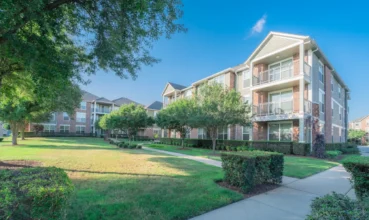
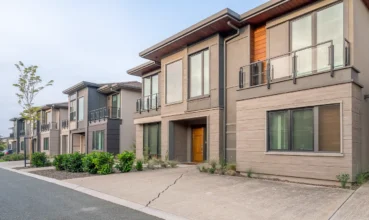
Unlike sprawling metros such as Dallas, where development can expand outward almost indefinitely, Silicon Valley sits in a series of narrow valleys hemmed in by hills and mountains. The practical result is a chronic undersupply of housing. Most new residential development takes the form of infill projects, tearing down older structures and replacing them with townhomes or condominiums.
In Los Gatos, where the Myrick Estates Team is based, the former Los Gatos Lodge site is being converted into approximately 155 townhomes. The North 40 project added a cluster of condominiums to another underutilized parcel. Even these projects face friction, as existing homeowners push back against density near their properties.
However, a recent change in California development law has begun to alter this dynamic. Where cities lack a specific development plan for a given parcel, builders can now move forward more quickly by meeting existing building codes, bypassing the public input process that previously created delays. “The builders are now using this loophole that allows them to develop relatively quickly,” Myrick notes, “because as long as it fills the requirements and the building codes, they can push these projects through.”
Where the Market Is Moving
With AI-driven gains lifting tech valuations and executive compensation, the effects are showing up unevenly across price segments. At the top end, properties over $5 million are seeing strong activity, driven largely by executives and senior engineers at companies like Nvidia, Apple, and Google.
“The luxury market in Los Gatos has more than doubled,” Myrick says. “Properties over $5 million are doing very well because you have execs and engineers who’ve worked for Nvidia and Apple and Google, just fantastic stuff with AI.”
The mid-range – roughly $2 million and above – is also holding up reasonably well. It’s the $1.1 million to $1.9 million segment where softness is appearing. Cancellation rates in that range have climbed from around 1% to roughly 10%, which Myrick attributes in part to anxiety about AI’s impact on employment, a concern more prevalent at that price point than among senior executives.
Myrick acknowledges there is some truth to the idea that AI is displacing certain roles. Still, he notes that adoption of the technology is also creating tens of thousands of new opportunities for workers ready to adapt.
Condominiums present the clearest challenge. Myrick describes that segment as difficult, citing slower demand and ongoing concerns about HOA finances and special assessments. Single-family homes remain the primary driver of activity across the region.
The Outmigration Question
The idea that Silicon Valley is losing residents to lower-cost states like Texas and Arizona has become a familiar talking point. Myrick doesn’t dismiss it entirely, but he puts it in context. He recently attended an economic update at San Jose State University, where the gap between the narrative and the actual data was striking.
His view is that outmigration is largely driven by affordability pressure, not by dissatisfaction among high earners. “I don’t see anybody saying, ‘I’m making a ton of money, I’m doing very well, I live in a nice area with an abundance of resources, and now I’m going to move to Texas or Arizona,'” he says. “Those decisions are made by people who want a different lifestyle or just need to make ends meet.”
In his framing, California’s cost of living is a “toll” for access to a specific set of lifestyle assets. For those whose incomes are tied to the tech industry, that toll is manageable. For those outside it, it often isn’t.
One area that has notably slowed is corporate relocation. Myrick’s wife and co-team leader, Denise, previously handled a significant volume of relocation work, but that pipeline has thinned considerably. He attributes the slowdown in part to the current climate around H-1B visas, which has reduced the flow of international tech workers being placed into the market. “People are staying put as opposed to moving things around,” he says.
ADUs as a Practical Opportunity
For homeowners looking to generate income from their existing property, Myrick sees accessory dwelling units (ADUs) as one of the more practical options in the current environment. Adding a one- or two-bedroom unit to an existing property typically costs between $150,000 and $300,000, and can generate rental income that helps offset mortgage costs. Given that roughly 40% of adults under 32 are still living with their parents nationally, demand for smaller, more affordable housing options is real.
Former California Governor Jerry Brown’s push to streamline ADU approvals was, in Myrick’s view, a meaningful policy move that could meaningfully expand housing supply if adopted at scale.
A Note of Caution for Investors
For investors considering Silicon Valley, Myrick’s advice is measured. Single-family homes remain a sound long-term hold given structural supply constraints. But rental properties require careful navigation.
Rent control legislation has expanded across California, with San Francisco, Oakland, and increasingly San Jose placing limits on rent increases and adding tenant protections that can complicate ownership decisions. “In San Francisco and Oakland, there are people renting units that have more rights to the home than the homeowner does,” Myrick cautions. Investors who underestimate the compliance complexity of multi-unit rentals in California can find themselves in difficult positions.
The Underlying Case for Silicon Valley
Myrick is candid about Silicon Valley not being for everyone. The cost of entry is high, and for workers outside the tech ecosystem, the numbers rarely pencil out. But for those in the industry, or building businesses around it, he argues that the region’s combination of climate, natural amenities, and concentrated economic activity is hard to replicate elsewhere.
“If you’re willing to pay the price, there’s amazing abundance for the money you invest here,” he says.
After four decades of watching the valley move through multiple technology cycles, Myrick’s outlook remains steady. The underlying drivers, constrained land, concentrated wealth, and an economy that continues to generate new demand, show no signs of weakening, even as headlines suggest otherwise.
About the Expert: Jim Myrick is the Operating Principal and Broker of the Myrick Estates Team at KW Bay Area Estates, overseeing approximately 225 agents and roughly $1.7 billion in sales volume annually across close to 980 transactions. He has been active in Silicon Valley real estate for more than four decades.
This article is based on information provided by the expert source cited above. It is intended for general informational purposes only and does not constitute legal, financial, or real estate advice. Readers should conduct their own research and consult qualified professionals before making any real estate or financial decisions.