After several years of rapid growth, markets along the Texas Hill Country corridor are entering a more measured phase. Inventory has increased, sales cycles have lengthened, and buyers now have greater leverage — but demand remains intact, supported by steady in-migration and regional economic strength. The shift is less about decline than about adjustment, as both buyers and sellers recalibrate expectations in a more competitive environment.
Yitzchak Pierson, an agent with eXp Realty in New Braunfels, has been working through this transition on the ground. His experience reflects how a cooling market is changing what drives success — placing greater emphasis on local knowledge, adaptability, and relationship-based business in a landscape where transactions no longer come as easily.
The Market Is Cooling — Not Collapsing
The shift in New Braunfels is most visible in the pace of transactions. Homes are taking longer to sell, inventory has climbed to several months of supply, and a growing share of listings remain on the market well beyond the initial listing period. After years of rapid turnover, the market has slowed into something more deliberate.
But the slowdown does not signal a collapse. Demand remains supported by steady migration into the Austin–San Antonio corridor, and buyers are still active — just more measured in how and when they act. What has changed is the balance of power and the timeline of decisions.
Pierson describes a clear departure from the recent peak. “We had a crazy market in 2021, 2022, 2023 — the peak,” he says, contrasting that period with today’s conditions, where patience has replaced urgency. Transactions that once closed quickly now take months, and listings must compete for attention rather than relying on momentum.
The result is a market that is cooling, but fundamentally intact — one where activity continues, but at a pace that demands more strategy and realism from both sides.
Buyers Have Regained Leverage
As the pace has slowed, negotiating power has shifted back toward buyers. With more options on the market and less competition for each listing, buyers are in a stronger position to shape the terms of a deal — something that was nearly impossible during the peak years.
Pierson notes that buyers are now routinely asking for concessions that would have been dismissed outright just a few years ago. “Buyers have so much more opportunity to get lower cost, lower price points,” he says, pointing to price reductions, closing cost assistance, and more flexible terms as increasingly common outcomes.
For sellers, this shift can be difficult, particularly for those who purchased at the height of the market. Some are now facing the reality of breaking even — or even bringing money to the closing table — in order to complete a sale. The expectation of quick profits has been replaced by a need for flexibility.
This rebalancing does not mean buyers have full control, but it does mark a significant change: transactions are now negotiated, not assumed.
New Construction Is Changing Competition
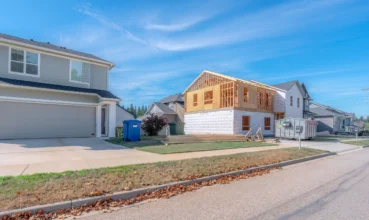
One of the most significant shifts in the current market is the growing influence of new construction. Builders are not just adding supply — they are actively reshaping competition by offering incentives that many resale sellers struggle to match.
Pierson notes that buyers who initially consider existing homes often pivot to new builds once they compare terms. Builders are offering below-market interest rates, contributing to closing costs, and providing additional perks that reduce upfront expenses. These advantages can make new homes more financially attractive, even when base prices are similar.
This dynamic is raising the bar for resale properties. Sellers are no longer competing only on location and condition, but against a bundled offering that includes financing advantages and lower immediate costs. As a result, homes without clear pricing alignment or standout features are more likely to sit on the market.
For investors, the equation is shifting as well. New construction offers predictability — modern layouts, fewer repairs, and warranties — making it easier to place tenants quickly and manage risk. In a more competitive and cost-sensitive environment, these factors are becoming increasingly difficult to ignore.
Local Expertise Is the Advantage
As conditions become more complex, broad market knowledge is no longer enough. Outcomes increasingly depend on understanding the nuances of specific neighborhoods, pricing pockets, and buyer segments — details that are often invisible at a distance.
Pierson emphasizes that New Braunfels operates as a distinct market within the larger corridor. “We are our own market,” he says, pointing to meaningful differences in pricing, demand, and development patterns across the area. Knowing how these submarkets behave — and how they respond to shifting conditions — can shape everything from pricing strategy to investment decisions.
That local precision also extends to relationships. Much of Pierson’s business comes from referrals and in-person connections, built through consistent involvement in the community. In a market where buyers are more cautious and sellers face more pressure, those relationships provide both trust and access — including opportunities that never reach the open market.
The result is a clear shift in advantage: as the market cools and competition increases, agents with deep local insight and strong networks are better positioned to guide clients through a more demanding landscape.
About the Expert: Yitzchak Pierson is an agent with eXp Realty based in New Braunfels, Texas. His work focuses on residential sales across the Texas Hill Country corridor, with an emphasis on hyperlocal knowledge and relationship-driven business development.
This article is based on information provided by the expert source cited above. It is intended for general informational purposes only and does not constitute legal, financial, or real estate advice. Readers should conduct their own research and consult qualified professionals before making any real estate or financial decisions.