Real estate standoffs usually resolve themselves, prices drift, expectations adjust, and transactions eventually clear the backlog. In California’s Coachella Valley, some sellers are s...

Home Condition Creates $100,000 Price Gaps in Coachella Valley, California

Written by:
Date:
22 Aug 2026
Share via Facebook

Share via Linkedin

Share via X

Copy to clipboard


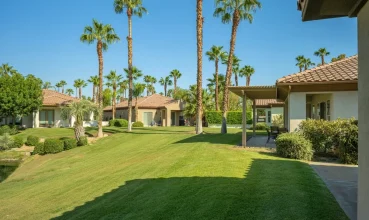
In the retirement communities of Coachella Valley, two homes with the same floor plan, the same square footage, and the same street can sell $100,000 apart. The difference has nothing to do with location or timing. It comes down to whether the owner kept up with maintenance or let it slide for decades.
John Gonnello, a Realtor with HomeSmart Professionals who focuses exclusively on senior living communities in Palm Desert and La Quinta, has watched this pattern repeat for years. He recently handled two listings of the same model home inside Sun City Palm Desert. The maintained home sold for $650,000. The neglected one could not find a buyer at $550,000.
That is not a small spread for a cosmetic difference. It represents years of deferred decisions compounding into a six-figure loss.
Why Maintenance Matters Most
In a typical suburban neighborhood, deferred maintenance shows up as a discount of 5% to 10% off the asking price. In age-restricted communities like Sun City Palm Desert, the effect is magnified because the buyer pool skews older, and older buyers are less interested in renovation projects.
Gonnello’s clients are mostly retirees relocating from Los Angeles or San Francisco after selling homes they owned for 20 years. They arrive with cash, and 75 to 80 percent of his buyers pay without a mortgage. They want a move-in ready home, not a fixer-upper they can renovate over time.
A property with outdated systems, worn finishes, or visible neglect does not just sell for less in this market. It may not sell at all during a soft period. The buyer who might tolerate a project at age 35 simply does not exist in this pool.
Inspection Reports Kill Deals
Condition does not just reduce value. It can kill deals outright. Gonnello describes a recent escrow that collapsed last month. The inspection revealed a failing 20-year-old air conditioning system, mold, windows that needed replacement, and dozens of smaller issues. “There were 96 items on the list,” he says. The buyers walked away entirely.
They did not counter with a repair credit. They simply left. In Gonnello’s experience, financing issues rarely derail transactions in this market because most buyers pay cash. “Nine times out of 10, it’s the property itself that causes some people to walk away,” he says.
For sellers, a deal that falls out of escrow due to condition does not just cost time. It signals to future buyers that something is wrong with the property. The listing accumulates days on market, and in a market where properties are already sitting longer than normal, that accumulation becomes its own deterrent.
Cost of Deferred Maintenance
The sellers most exposed to this problem are those who have owned their homes the longest. “Some people moved here in 1991 and never did anything to their house,” Gonnello says. No upgrades, no system replacements, no cosmetic refreshes.
Major systems can all reach end-of-life at once when nothing has been replaced in 30-plus years. When that happens, the cost to bring a home to sellable condition can exceed what the seller gains by listing at a higher price. This creates a painful choice. Sellers can invest tens of thousands of dollars before listing, with no guarantee of a full return. Or they can list as-is and accept a price that may be $100,000 below what the neighbor’s identical, maintained home fetched.
The data from Gonnello’s listings is clear: the maintained home commands a premium that dwarfs the cumulative cost of upkeep over the years. The neglected home does not simply sell at a discount. It stalls.
What Sellers Can Control
Coachella Valley’s retirement segment is currently experiencing lower-than-normal inventory, lower buyer traffic, and longer days on market, according to Gonnello. Prices have slipped an estimated 3% to 4% across the board. In that environment, condition becomes the single variable sellers can control. A home that shows well and passes inspection without a long repair list will still move. A home that does not may sit indefinitely. Buyers in this market have cash, so they can be selective and feel no urgency to compromise.
Gonnello’s comparison offers a concrete benchmark: two identical models, one maintained and one not, separated by $100,000 in final sale price. The gap between those two outcomes was not created at listing. It was created over years of small decisions, or the absence of them.
About the Expert: John Gonnello is a Realtor with HomeSmart Professionals in Palm Desert, California, specializing in senior living communities in the Coachella Valley for close to 40 years.
This article is intended for informational purposes only and does not constitute legal, financial, or investment advice. The views and opinions expressed herein reflect those of the individuals quoted and do not represent an endorsement of any company, product, or service mentioned. Readers should conduct their own due diligence and consult qualified professionals before making any investment decisions.
Similar Articles
Explore similar articles from Our Team of Experts.