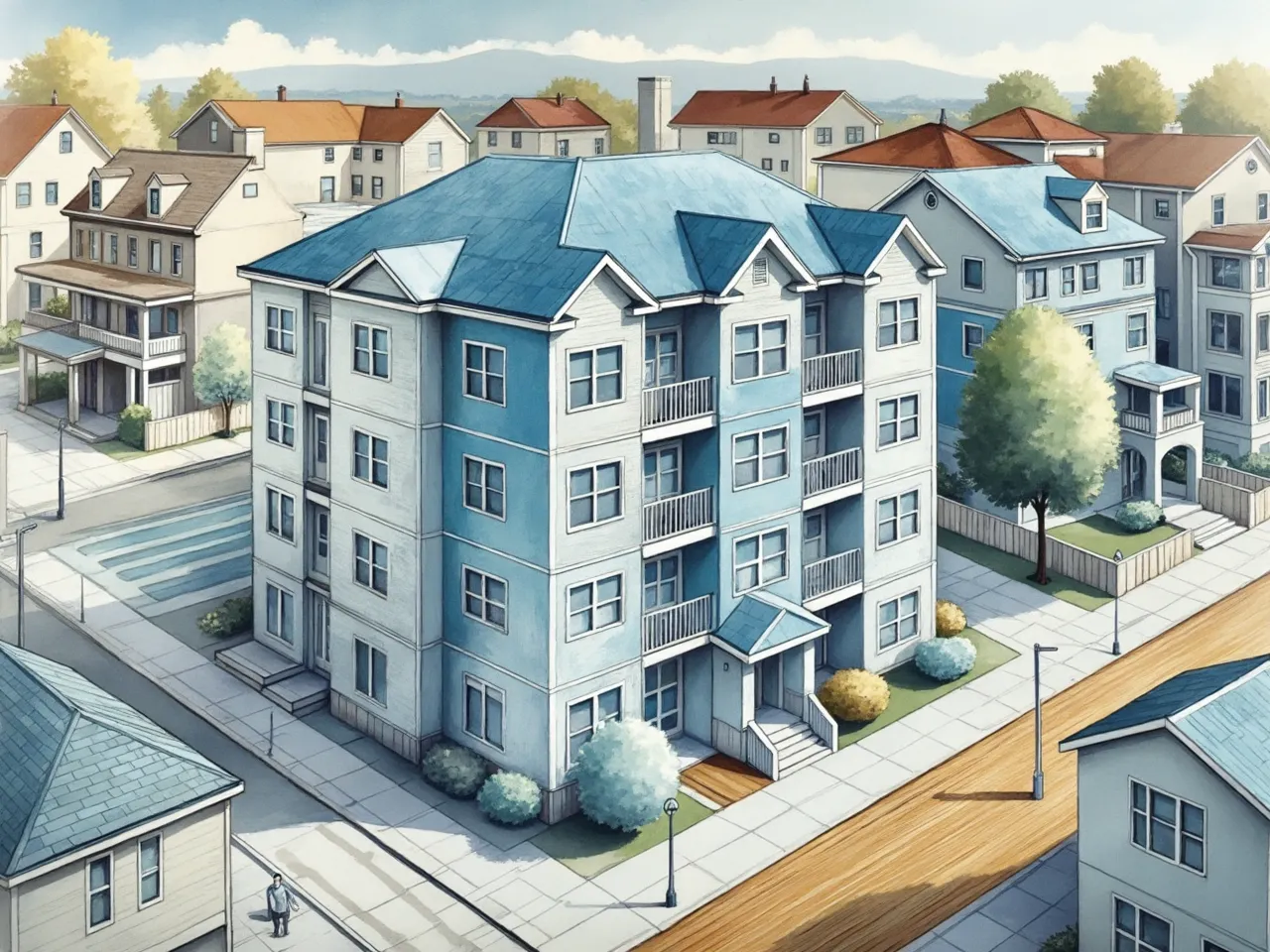
Condominium sales in Connecticut are lagging behind single-family homes in similar price ranges. Rising HOA fees and concerns about aging building infrastructure are prompting buyers to reconsider the value of condos. Divya Kataria, a Realtor with Berkshire Hathaway HomeServices New England Properties, says buyers are conducting detailed cost analyses and often conclude that single-family homes offer better long-term value, even when initial prices are nearly identical.
“The condos have slowed down. At higher price points, days on market are longer,” Kataria says.
Rising HOA Fees Erode Condo Value
Buyers are increasingly focused on the cumulative cost of HOA fees, comparing that total with the equity and land-ownership advantages of single-family homes. As HOA fees have risen across Connecticut, the gap in monthly costs between condos and single-family homes has narrowed or disappeared. This shift has diminished the traditional affordability advantage of condos.
In the $300,000 to $700,000 range, first-time buyers and move-up purchasers are directly comparing two-bedroom condos with single-family homes that carry similar monthly payments, Kataria notes. Once HOA fees are factored in, condos often lose their edge, and buyers prefer properties with land and greater control over maintenance decisions.
“People can buy a single-family home in the same price range. When they add up the HOA over the years, they see single-family as a better investment in the long run,” Kataria explains.
This trend is especially pronounced among buyers wary of future HOA increases, particularly in older buildings where deferred maintenance or upcoming capital projects could trigger special assessments. The unpredictability of these costs makes condos riskier compared to single-family homes, where owners manage their own maintenance and expenses.
Aging Buildings Deter Condo Buyers
Beyond monthly costs, buyers are examining the condition and management of condo associations more closely than in previous years. Older buildings with outdated systems or a history of poor maintenance are difficult to sell. Buyers are concerned about the risk of special assessments or declining property values.
“Not every association is maintaining or updating its buildings. The houses are old, the associations are getting old, and buyers are factoring that in,” Kataria says.
Buyers now routinely request association financial statements, reserve studies, and maintenance records before making offers. Units in associations with low reserves or deferred capital projects are often rejected outright, regardless of the individual condo’s condition. This heightened due diligence reflects a shift toward more informed, cautious buyers who understand the long-term risks of poorly managed associations.
This level of scrutiny is a recent development, Kataria notes. During the pandemic, buyers were less selective and more willing to overlook association issues to secure a property. Now, with more inventory and less urgency, buyers are taking their time and avoiding condos with any financial or maintenance uncertainties.
Buyers Choose Single-Family Over Condos
The main driver is the perception that single-family homes provide superior equity growth and ownership benefits. When a two-bedroom condo costs nearly as much as a single-family home, buyers almost always opt for the latter.
“A two-bedroom condo costing almost the same as a single-family home, where you also get the land, buyers are choosing the house,” Kataria says.
Land ownership is a key factor, especially for first-time buyers who view real estate as a long-term investment. Single-family homes offer the possibility of expansion, greater control over landscaping and personalization, and more flexibility at resale. In contrast, condos are seen as restrictive, with association rules limiting what owners can do with their property.
Single-family homes in the $300,000 to $700,000 range are selling faster than condos, even when condos are offered at a lower price, Kataria notes. This suggests that the slowdown is not about affordability, but about buyers’ perceptions of long-term value and control.
What Sellers and Developers Must Do
The current slowdown in condo sales presents challenges for sellers and developers in Connecticut’s markets. Condo sellers may need to lower prices more aggressively to compete with single-family homes, especially if their associations have high fees or deferred maintenance. Developers planning new condo projects must consider how HOA structures and building quality will affect long-term marketability.
Kataria’s firm advises condo sellers to highlight low HOA fees, healthy reserve funds, and recent building upgrades to make their properties stand out. However, Kataria acknowledges that even well-managed condos face headwinds in a market where single-family homes are competitively priced and offer clear ownership advantages.
The Gap Between Condos and Houses
As the Connecticut market becomes more discerning, the divide between condo and single-family home sales may widen unless condo associations address concerns about cost and maintenance. Today’s buyers are making careful, long-term financial decisions and are less willing to accept uncertainty around fees or building upkeep.
Condos that cannot compete on total cost of ownership or association quality will likely continue to face longer marketing periods and greater price pressure. Sellers and developers must adapt to these realities or risk seeing their properties linger on the market.